
The UXO Team Lift: Why a Crew Makes You Stronger
By Jon Klipstein, U.S. Army Combat Veteran & Founder of Die Tryin Co.
THE TEAM LIFT WASN'T ABOUT THE LIFTING
Listen up. The best training session most people ever have isn't the one with the perfect program. It's the one where somebody else was watching.
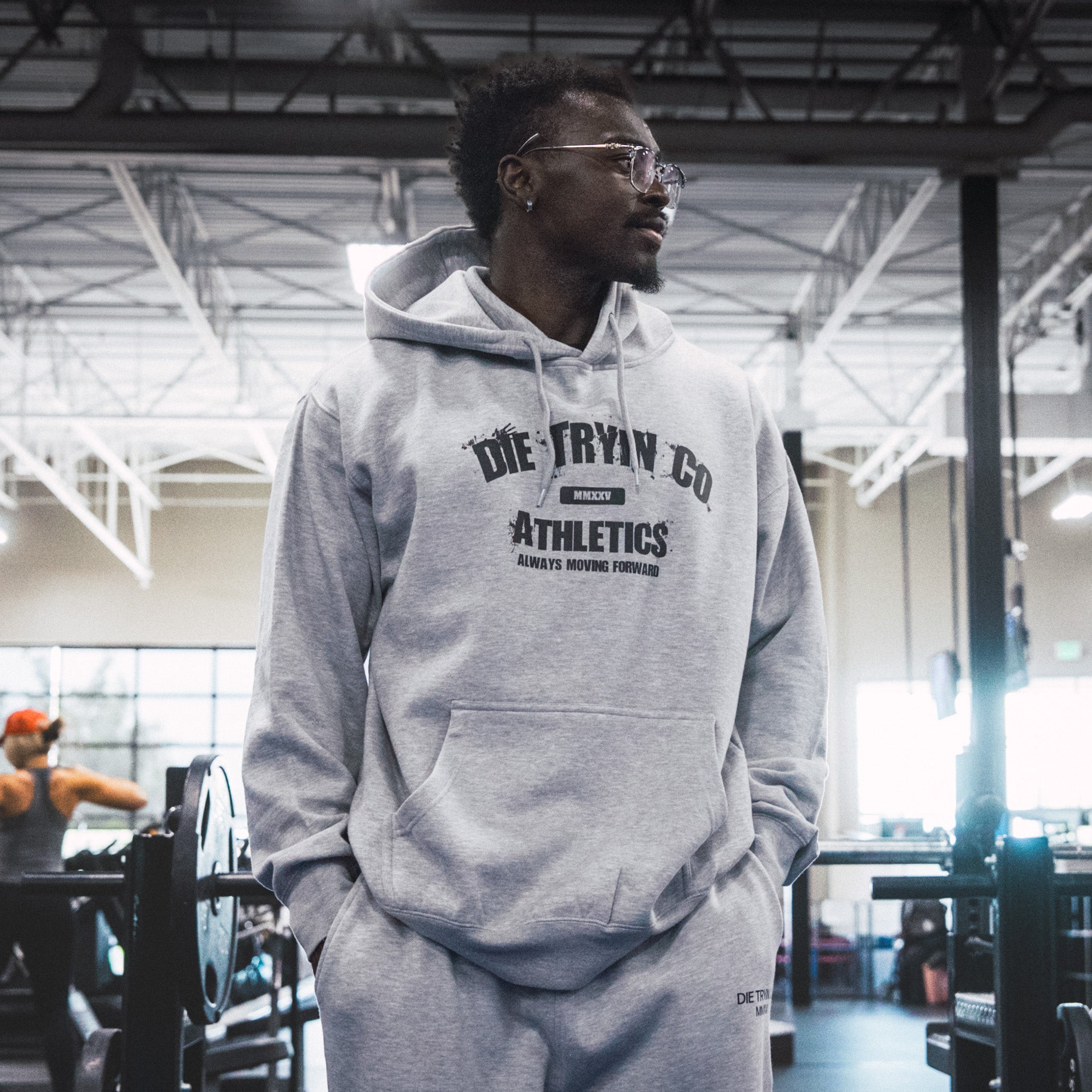
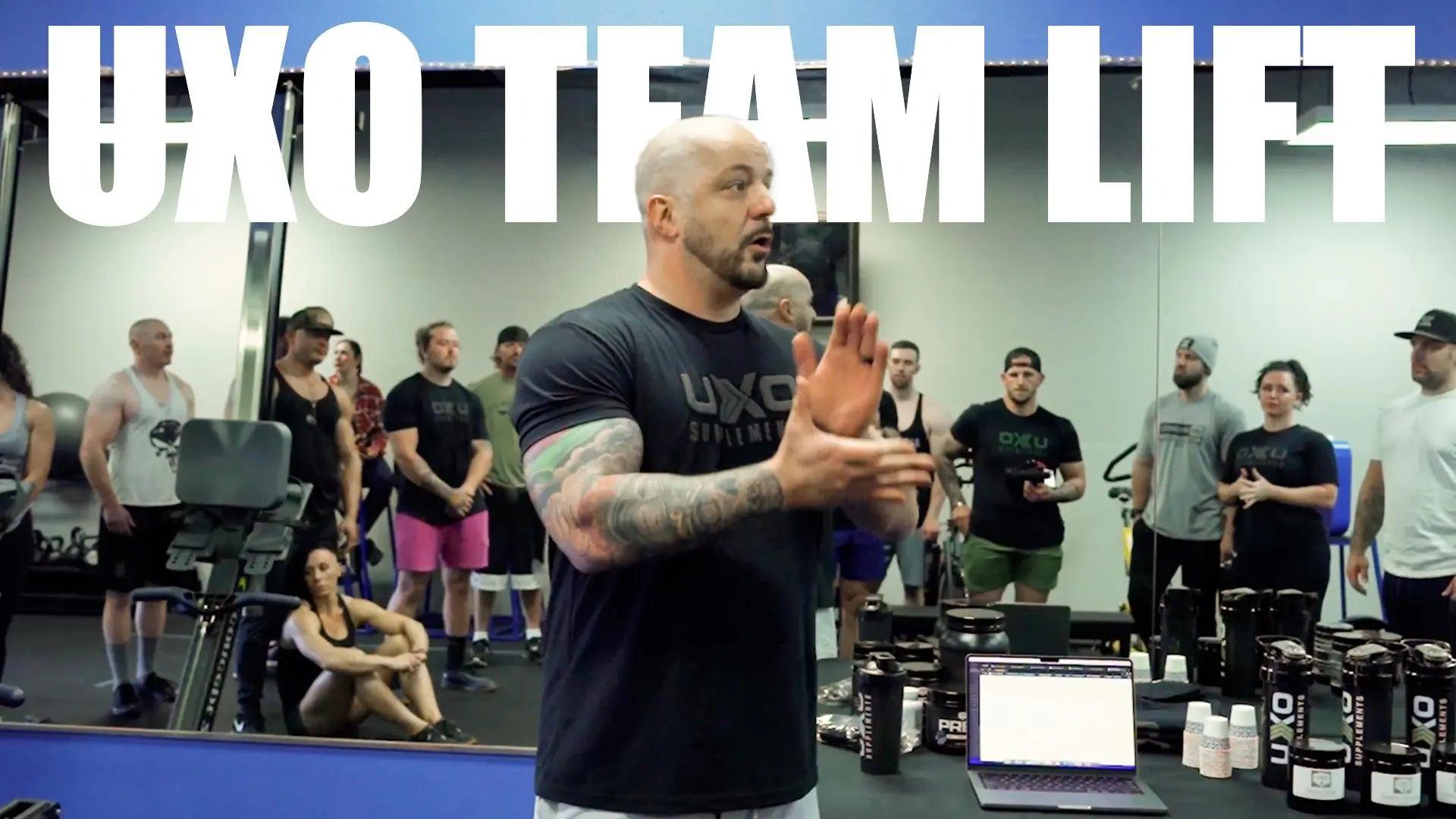
Back in the UXO Supplements days we ran a team lift. Whole crew in one gym, bars loaded, free product going out the door, everybody training in the same room at the same time. On paper it was a marketing event. In practice it was the clearest proof of something the brand had been built on since day one: a team makes you better than you are alone.
That's not a feel-good line. It shows up in how much weight moves, and in whether you're still training six months from now, which is the part almost nobody talks about.
Here's what a training crew actually does for you, what the research says, and how to build one if you're currently training alone in a corner with headphones in.
| THE ROLE | WHAT IT LOOKS LIKE | WHY IT MATTERS |
|---|---|---|
| The spotter | Hands on the bar, eyes on the last rep | You attempt the rep you'd otherwise skip. See 5 benefits of a training partner |
| The accountability | Texts you at 5 a.m. when you'd rather not | Attendance is the whole game. See Weak Habits Create Weak Men |
| The standard-setter | Trains harder than you and doesn't mention it | Your normal quietly resets upward |
| The teacher | Fixes your setup before it costs you | Kills the errors behind why most people never see results |
| The new guy | Asks you why you do it that way | Teaching a thing is how you find out you actually know it |
WHAT GOT WRITTEN THE DAY AFTER
Here's the post that went up right after that team lift, lightly cleaned up for readability:
"I owe a lot to the team that supports our mission. They have helped us grow substantially year over year and have helped us spread the word of our mission and vision. Die Tryin Co. is bigger than me, bigger than them. But it takes all of us to drive it forward. I am humbled by the group that we have and honored to have each one of them on the team. They make me want to do better every day, to push new limits, and grow this company into the juggernaut it deserves to be. The team lift was amazing. Got to hang out, learn, engage, lift heavy shit, hand out a bunch of FREE products. Cannot wait until the next one."
Note: this event and video are from the UXO Supplements era. UXO Supplements is now Die Tryin Co. Same founder, same standards, same people. New name.
A SPOTTER MAKES YOU STRONGER. THAT'S MEASURABLE.
Researchers ran a clean deception study on this. Trained lifters did three sets of bench press to failure on two separate days, same load, same protocol. The only thing that changed was whether the spotters stood in plain view or stayed hidden, and nobody was told that was the variable.
With the spotters visible, lifters completed about 4.5 more total reps, moved roughly 210 kg more total weight, rated the effort as easier, and reported higher confidence going into the sets (Sheridan et al. 2019, Journal of Strength and Conditioning Research). Twelve subjects is a small sample, so don't treat it as gospel. But the direction is what anyone who's trained in a real gym already knows. You don't bail on the grinder rep when somebody's hands are on the bar.
SHOWING UP IS THE PART PEOPLE ACTUALLY LOSE
Strength isn't usually lost in the set. It's lost in the sessions that never happened.
A meta-analysis pooling 27 studies on program adherence found the overall stick rate was about 60 percent, and that two things moved it more than anything else: supervised attendance, and built-in social support. Programs with social support held people significantly better than programs without it (Lemstra et al. 2016, Patient Preference and Adherence). Straight framing: those were weight-management programs, not powerlifting clubs, so the transfer isn't one to one. The mechanism still travels. Being expected somewhere beats wanting to go there.
That's the whole argument. Motivation is weather. A crew that notices your absence is infrastructure. If you've read Train Smarter, Not Harder, this is the same idea from a different angle. The smallest thing that keeps you consistent beats the biggest thing you can't sustain.
WHAT A REAL CREW LOOKS LIKE
Not every group of people in a gym is a team. Some of them are a social hour with dumbbells nearby. The difference is standards.
- They train, then talk. Rest periods are for breathing, not storytelling.
- They tell you the truth about your form. A crew that only compliments you is a fan club.
- Nobody's ego runs the session. Your program is your program. Nobody talks you into a max you didn't plan.
- They show up in the bad weeks. Anyone can train when it's going well.
- Somebody knows something you don't. Different lifts, different experience, different mistakes already made.
HOW TO BUILD ONE FROM ZERO
You don't need a team lift and a full roster. You need one other person and a repeatable time.
- Pick the time first, then the person. Fixed days beat "we'll figure it out."
- Start with one. One reliable partner outperforms a group chat of five flakes.
- Ask whoever is always there. Consistency is the credential. Ignore how much they bench.
- Share the standard out loud. Say what the session is before you walk in. No renegotiating at the rack.
- Make missing cost something. A text you have to send explaining yourself is enough friction to fix most no-shows.
Training with people also does something that has nothing to do with the bar. Connection is one of the more durable levers on mental health, and for a lot of us the gym is where it happens without anyone having to call it that. More on that in Training and Mental Health.
FROM UXO SUPPLEMENTS TO DIE TRYIN CO.
This company started with ten thousand dollars and a founder who had just left the Army with a specific problem to solve. What kept it alive wasn't the launch. It was the people who kept showing up: the athletes, the crew who ran the events, the customers who told somebody else. That's what the original post was about, and it's still true under the new name.
The military framing isn't decoration here. You don't run a mission alone. There's a team, different roles, everyone checking everyone else, and the objective doesn't care how anybody felt that morning. More on that in What Combat Training Taught Me About Fitness, and the same team culture shows up every Memorial Day in Why We Murph On Memorial Day.
FAQ
Do you need a training partner to make progress?
No. Plenty of people build serious strength training solo. A partner isn't a requirement, it's a multiplier, and it's worth the most on the two things solo lifters lose first: attendance and the last hard rep.
Does a spotter really make you lift more?
Research suggests yes. In a deception study where spotters were either visible or hidden, lifters did more total reps and more total volume with spotters in view, and rated the same work as easier. Small sample, consistent direction.
What makes a good training partner?
Reliability first, honesty second, matching schedule third. Strength level matters less than you'd think. The best partner is the one who's there every session and will tell you your setup is trash.
What if nobody I know lifts?
Recruit at the gym, not in your contacts. Find whoever is there at your time every week and ask to work in. Working in for six weeks is how most training partnerships actually start.
How do you stop a training group from becoming a social hour?
Set the session before you walk in and put a clock on rest periods. If the group can't hold that, train alongside them but run your own session. Company is fine. Drift is not.
What is a team lift?
An open session where a whole crew trains together in one place at one time. Ours mixed training, coaching, product handouts, and hanging out. The point isn't the workout, it's the room.
READY TO GEAR UP?
Gear the crew runs on:
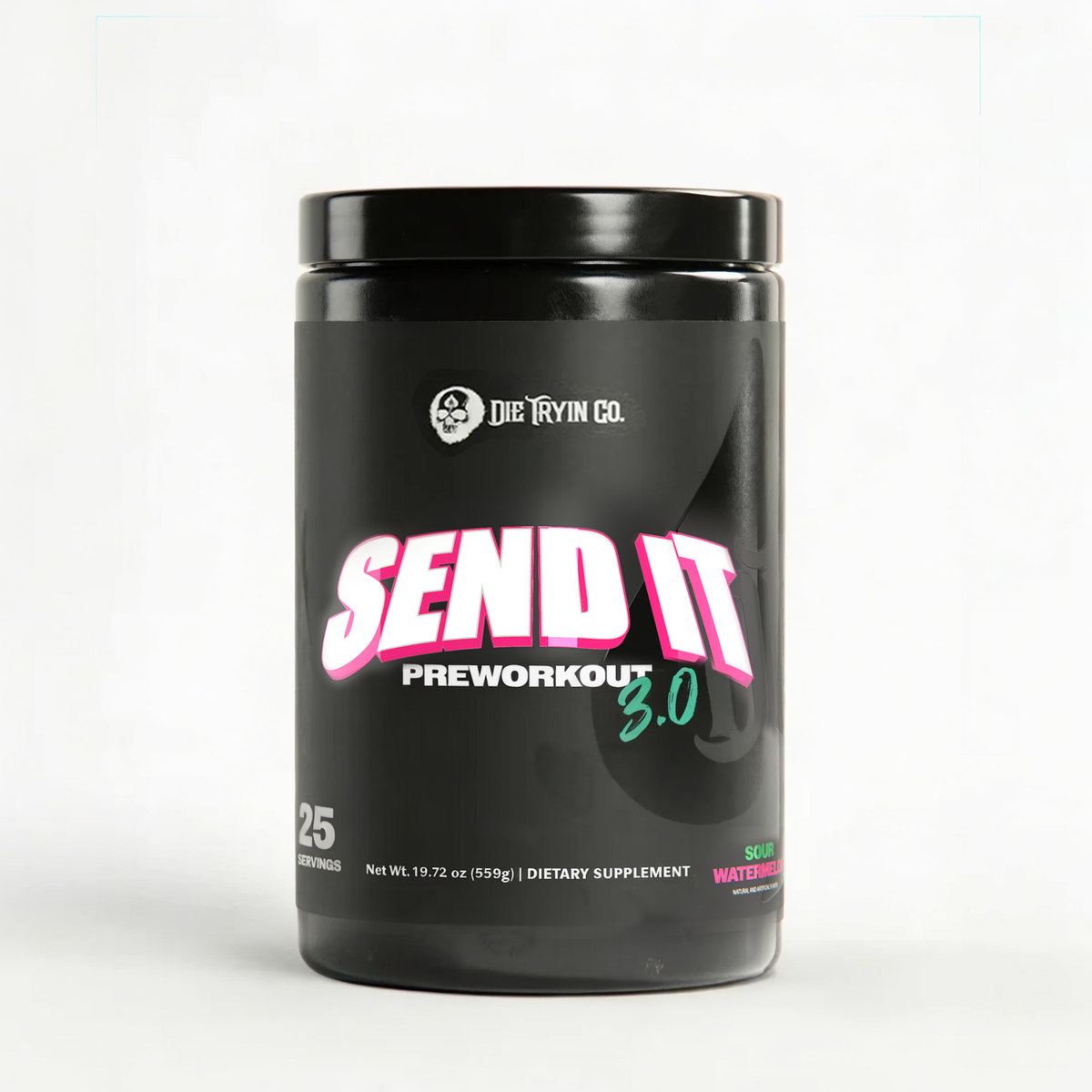
- SEND IT 3.0, the daily driver pre-workout for the session everybody shows up to.
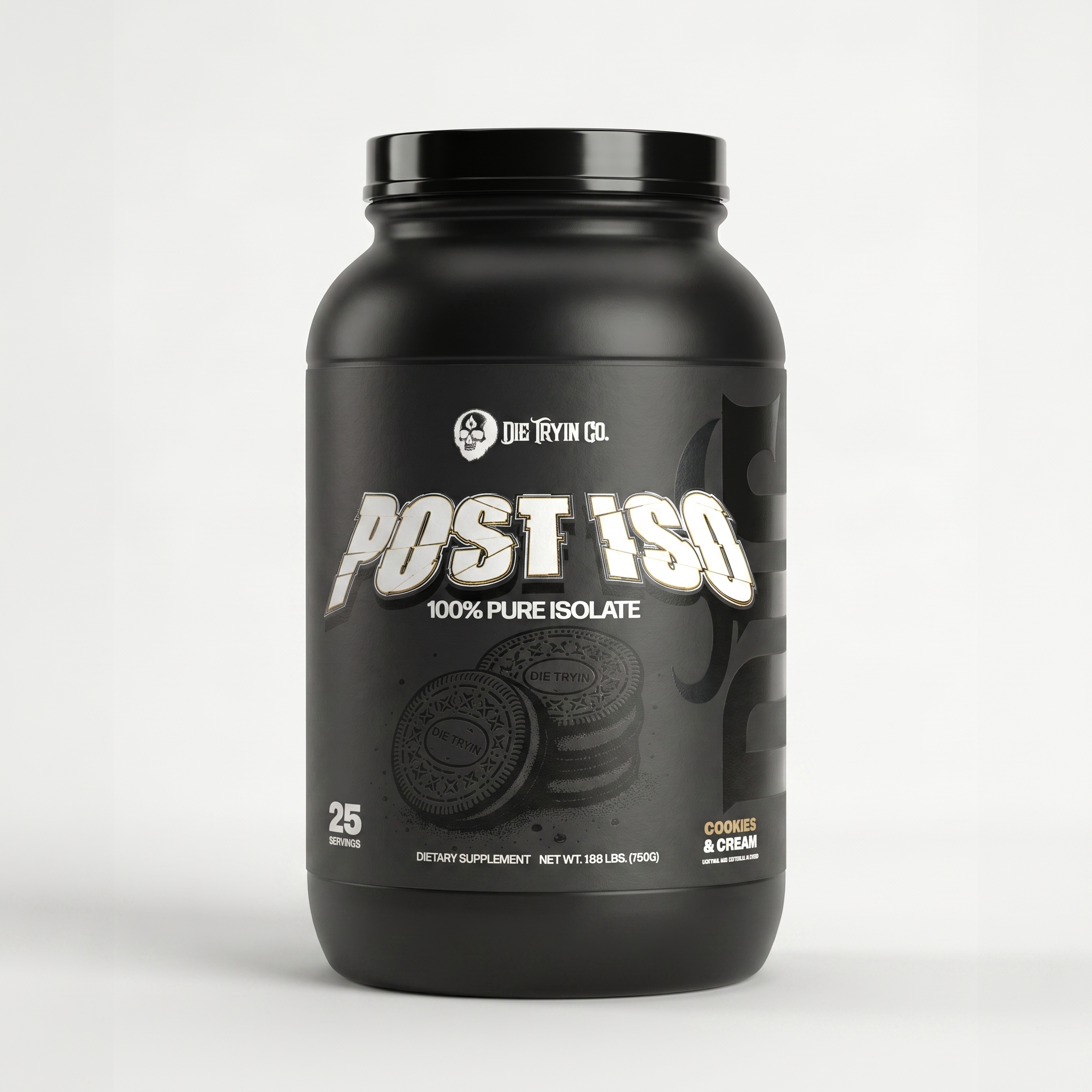
- Post Iso, 24g whey isolate per scoop. The one thing everyone in the crew should own.
- Creatine, 5g Creatine Monohydrate daily. Boring, cheap, most-researched.
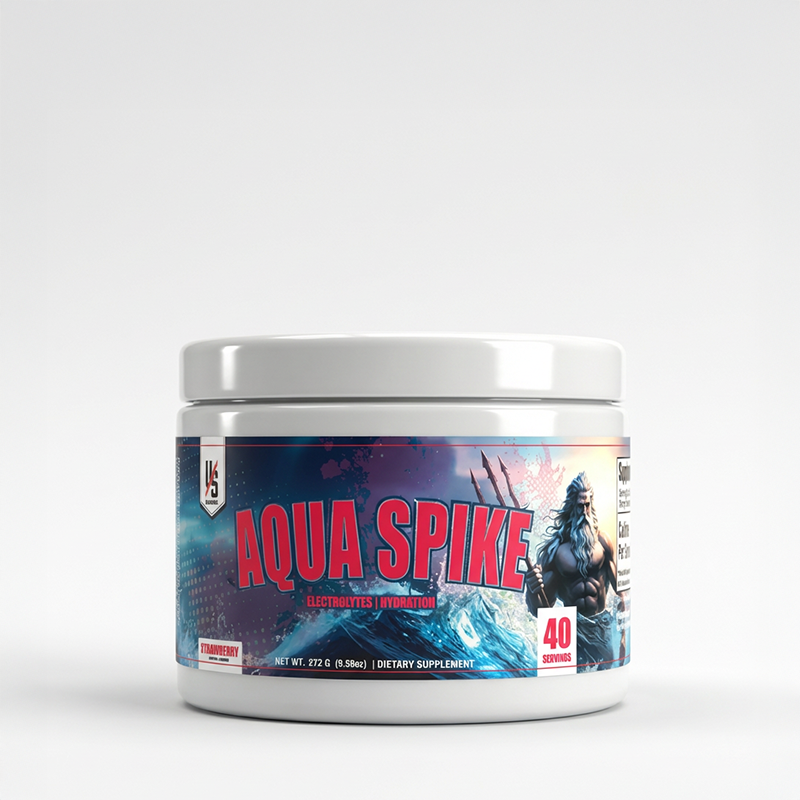
- Aqua Spike, for the long group sessions where everybody ends up staying two hours.
- DTC tees, because a crew that shows up in the same colors trains like one.

Not sure what fits your training? Take the DTC supplement quiz. Then find your people, pick a time, and hold it. Discipline beats motivation, and a crew beats both. For the mindset side of that, read Always Forward.
ALWAYS FORWARD.
Read more
Solo training clears your head. The right partner moves the bar. Here are 5 benefits of training with a buddy, plus what the spotter and competition research actually measured.
Nobody becomes weak overnight — it happens through small habits repeated daily. The weak vs. strong habit framework, plus the 8 non-negotiables that build men who hold up under pressure.
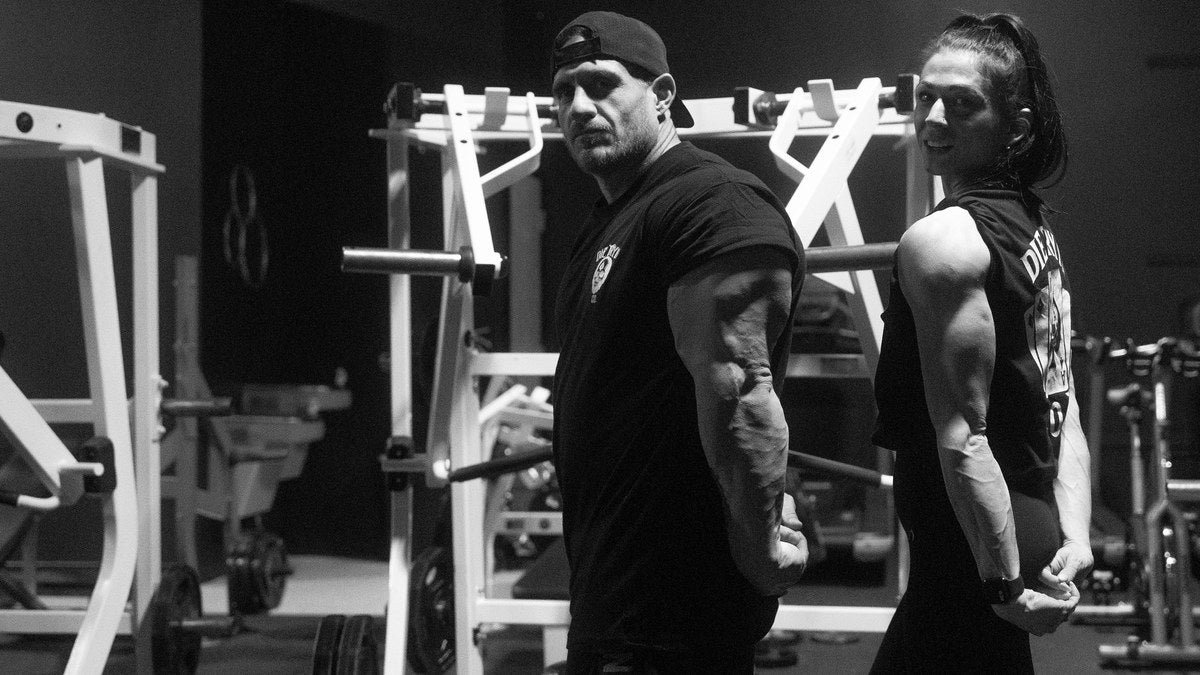
The reason most lifters never see results isn't a bad program or weak motivation. It's inconsistency. Here's what actually builds physiques — and why the basics work.
Overtraining doesn't build faster results — it builds injuries and burnout. The minimum effective dose principle for training, recovery, and smart supplementation.
Movement isn't a cure, but for many veterans it's a lifeline. An honest look at how training supports mental health, what the research says, and where to get help.
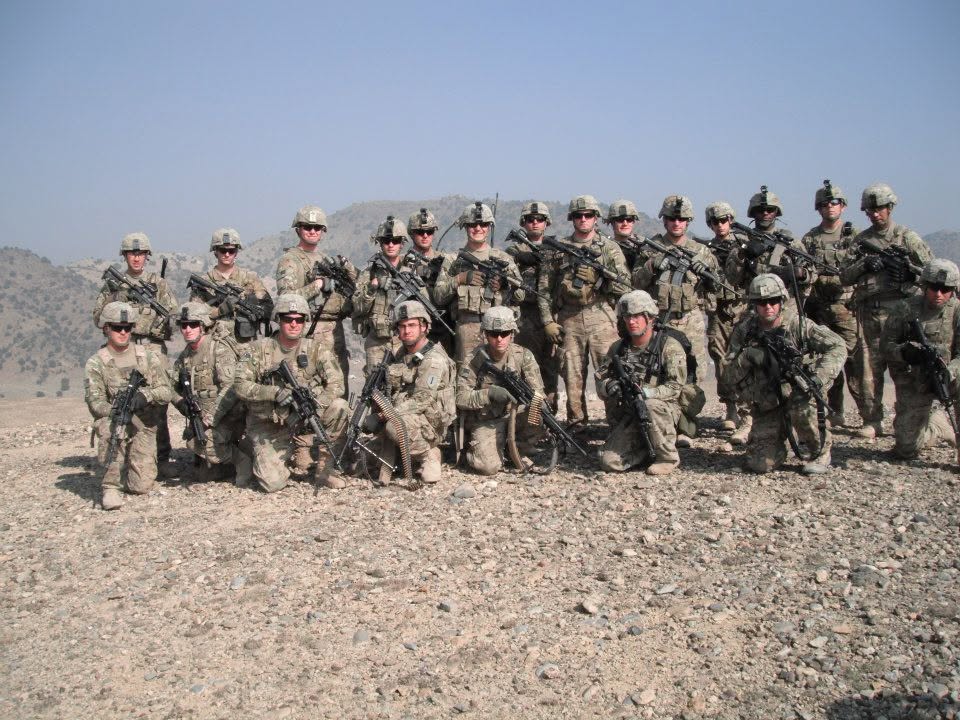
Dragging dummies, 24-mile rucks, sprinting in full gear. A combat veteran on the brutal drills that built real strength — and how to apply them in the gym.
GEAR THAT FITS THIS POST
The products this article actually talks about. Real doses, disclosed labels, veteran owned.