

Seated vs Lying Leg Curl: Which Builds More?
By Jon Klipstein, U.S. Army Combat Veteran & Founder of Die Tryin Co., and Garrett Ussery, NASM-CPT & 2025 Idaho Cup Overall Champion
Science reviewed by Onur Oncer, BS Physiology and peer-reviewed published researcher.
TWO CURLS, ONE WINNER
Most people get this wrong. They squat heavy twice a week, add a few sets on whichever leg curl machine happens to be open, and then wonder why the back of their legs looks exactly the same as it did two years ago while their quads keep filling out.
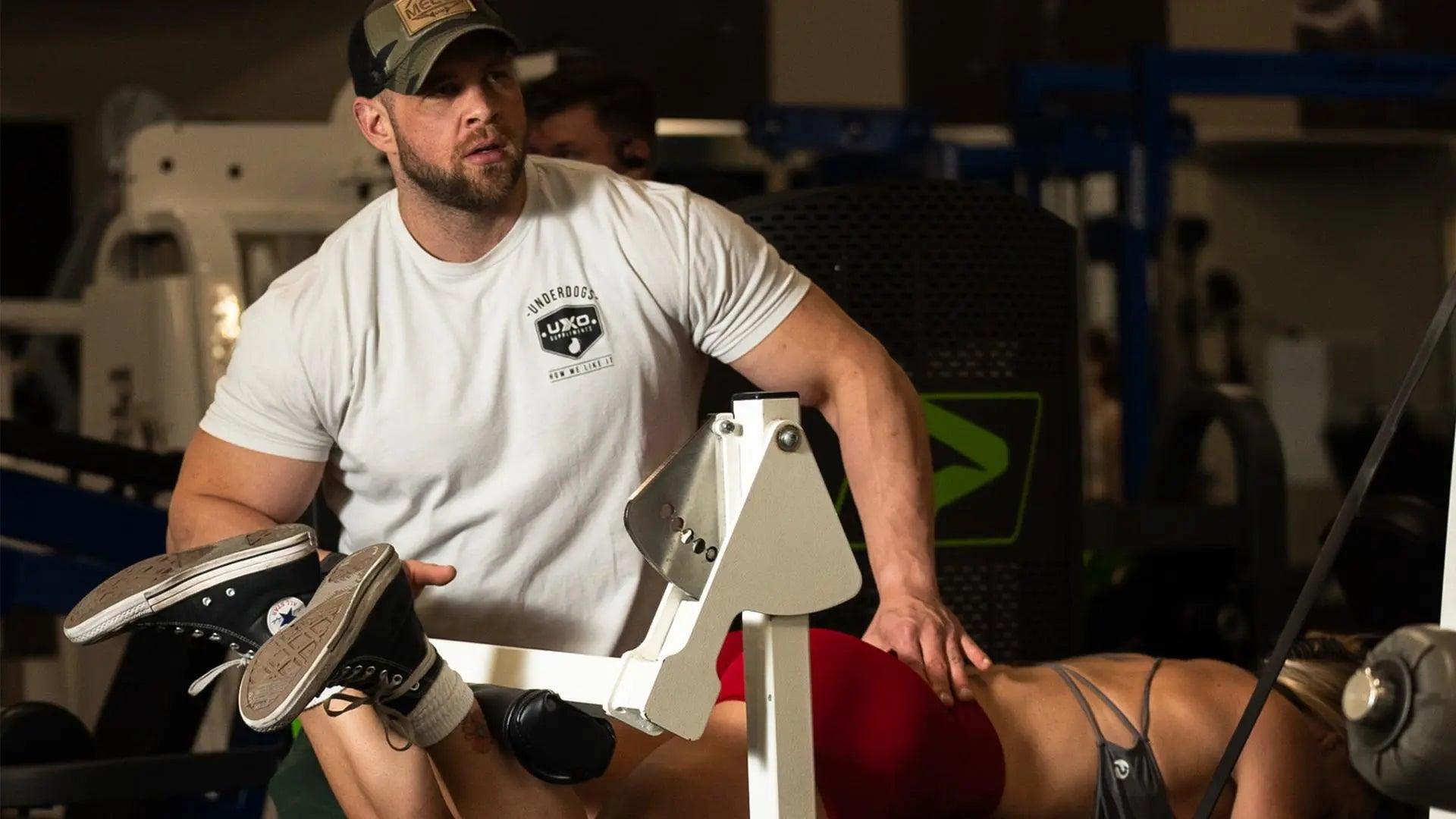
Here's the truth: those two curl machines are not interchangeable. The seated leg curl and the lying leg curl move the same joint through the same range, but they hold your hip in completely different positions, and that one difference changes how much muscle you build. A 12-week trial put both on the same person, one machine per leg, and the seated side won by roughly 50 percent.
The squat is not the fix either. It is one of the best exercises on the planet for quads, glutes, adductors and bracing strength. As a hamstring builder, it barely registers. That is not a reason to stop squatting. It is a reason to stop counting squats as hamstring work.
Below is what the hamstrings actually are, why the squat misses them, what the seated versus lying research found, and how to set the machine up so you get the version that grows.
| EXERCISE | WHAT IT ACTUALLY TRAINS | HAMSTRING VERDICT |
|---|---|---|
| Seated leg curl | Knee flexion with the hip bent, so the hamstrings work long | Best single builder. Lead your knee-flexion work with it |
| Lying (prone) leg curl | Knee flexion with the hip flat, so the hamstrings work short | Good, not best. Use it as the second curl |
| Standing single-leg curl | Knee flexion one leg at a time, hip near neutral | Useful for evening out a side-to-side gap |
| Back squat | Quads, glutes, adductors, trunk | Poor. Keep it, but count it as quad work |
| Walking lunge | Quads and glutes, with the hamstrings assisting | Accessory only. Not a size driver back there |
TWO JOINTS, ONE MUSCLE GROUP
The hamstrings are three muscles: biceps femoris, semitendinosus and semimembranosus. What separates them from almost everything else you train is that most of that tissue crosses two joints, the hip and the knee. Anatomists call that biarticular. Only the short head of the biceps femoris is monoarticular, crossing the knee alone.
Crossing two joints means the length the hamstrings work at depends on what both joints are doing at once, not just one of them. Bend the hip and they lengthen. Bend the knee and they shorten. That single fact explains almost everything else in this article, including why two machines that look like they do the same thing do not.
DO SQUATS WORK HAMSTRINGS?
Barely. During a squat, the hip and knee bend together on the way down and extend together on the way up. The hamstrings lengthen at the hip and shorten at the knee at the same time, so overall length hardly changes. They contract hard to stabilize, but they never travel through a meaningful range under load, and very little length change means very little stimulus for growth.
You do not have to take that on faith. In a 2023 randomized trial published in Frontiers in Physiology, 34 untrained lifters trained either the back squat or the hip thrust for nine weeks, with muscle size measured by MRI before and after. Quadriceps and adductor cross-sectional area climbed clearly in the squat group. Hamstring cross-sectional area showed little to no growth in either group. Nine weeks of supervised squatting moved the hamstrings essentially nowhere.
So keep squatting. It is still the best return on investment in the gym for the front and center of your body, and it belongs in every serious leg day. Just stop expecting it to do a job it was never built for.
THE SEATED CURL ADVANTAGE
Here is where the two-joint thing pays off. On a lying leg curl your hip is flat, which puts the hamstrings in a shortened position before you even start. On a seated leg curl your hip is bent to roughly 90 degrees, which pre-lengthens the hamstrings and keeps them loaded at a long muscle length through the whole rep.
Researchers tested exactly that. In a 2021 study in Medicine and Science in Sports and Exercise, 20 healthy adults trained one leg on the seated curl and the other leg on the prone curl for 12 weeks, five sets of ten reps at 70 percent of one-rep max, twice a week. MRI measured hamstring volume before and after. The seated leg, trained at the longer muscle length, gained about 14 percent whole-hamstring volume versus about 9 percent for the prone leg. Same person, same load scheme, same effort, roughly 50 percent more growth on the seated side.
The programming call that falls out of that is small and specific: the seated curl leads your knee-flexion slot, and the lying curl is the second curl, not the first. How many hamstring sets you run in a week and how you lay the sessions out is a bigger conversation, and our guide to growing thicker legs already covers weekly volume and session layout in full.
WHAT HIP ANGLE ACTUALLY DOES
The headline number is not the interesting part. Where the extra growth landed is. In that same trial, the seated advantage showed up in each of the biarticular heads, the ones crossing both the hip and the knee. The monoarticular short head of the biceps femoris grew about the same either way, roughly 10 percent seated versus 9 percent prone. That is exactly what the muscle-length argument predicts: the short head cannot tell what your hip is doing, because it does not cross the hip. Every other head can, and those are the heads that responded to being held long.
Loading a muscle in its stretched position is the same lever that drives growth elsewhere in the body, which is why we push it on back training and why it runs all through our complete muscle-building guide. Hip angle is just the cheapest way to buy it on the hamstrings. You are not adding load or sets. You are changing chairs.
HOW TO SET UP THE SEATED CURL
The machine gives away most of its advantage if you set it up lazily. Four things decide whether you actually train long, and all four take about ten seconds to fix.
- Sit tall, do not recline. Reclining opens the hip angle and shortens the hamstrings, which throws away the whole reason you chose this machine. Back flat against the pad, torso upright.
- Line the knee up with the pivot. Slide the seat until your knee joint sits on the machine's axis of rotation. Too far forward or back and the resistance curve stops matching your leg.
- Lock the lap pad down hard. If your hips lift off the seat under load, the hip angle opens mid-rep and the stretch disappears exactly when it matters.
- Own the bottom. Lower for two to three seconds and let the knee straighten fully instead of banging the weight into the stack. That bottom position is the position doing the work. Ramp into it with two warm-up sets, per our warm-up protocol.
WHERE THE LYING CURL STILL EARNS ITS SPOT
None of this makes the lying curl a bad exercise. It grew hamstrings by roughly 9 percent over 12 weeks, which is a real result. It also matched the seated version on the durability side: in the second half of that study, both trained legs were far more resistant to eccentric muscle damage than an untrained control leg, and neither curl beat the other.
Run it as your second knee-flexion movement, run it when the seated machine is occupied, and run it when you want a different feel late in a session. Just stop letting it be the only curl you do.
THE HALF A CURL CANNOT TRAIN
A curl trains knee flexion. It cannot train hip extension. If curls are all you run, you are training half of what the hamstrings do. A curl loads the hamstrings at long length, but it never asks them to extend the hip against load, which is the other half of their job and the pattern the biceps femoris long head is built for. That half belongs to the hinge, and we break down how to program it in the hamstring hip job.
FREQUENTLY ASKED QUESTIONS
Are seated leg curls really better than lying leg curls?
For size, the evidence favors seated. In the 12-week within-subject trial above, the seated leg gained roughly 14 percent hamstring volume versus roughly 9 percent for the prone leg, with the same person training both. Lead with seated, then use lying curls as your second knee-flexion movement.
Does hip angle change which hamstring heads grow?
Yes, and that is the clearest signal in the data. The seated advantage appeared in every biarticular head, the ones crossing both the hip and the knee. The monoarticular short head of the biceps femoris grew about the same on both machines, roughly 10 percent versus 9 percent, because it does not cross the hip and cannot sense the change.
Do seated leg curls cause more muscle damage than lying leg curls?
No. In the second part of that study, participants performed eccentric-only curls after the training block, and both the seated-trained and prone-trained legs showed far smaller damage markers and far smaller strength drops than an untrained control leg. There was no significant difference between seated and prone at any time point. You get the extra size without paying for it in soreness.
Should I lead my leg day with the seated curl or the hinge?
Lead the knee-flexion work with the seated curl, since that is the movement it wins. Where the hinge sits in your session, and how you balance both patterns across a training week, is a programming question our thicker-legs guide answers in full.
What if my gym has no seated leg curl machine?
Use a lying curl and find hip flexion somewhere else. A seated band curl with your torso upright, or a lying curl performed with your hips bent over the edge of an inclined pad, both push the hamstrings toward the longer position the research favors.
Why do my hamstrings cramp on leg curls?
Usually muscle fatigue and load jumping too fast. Cramping tends to show up when a muscle is worked hard in a shortened position, which is why the top of the curl triggers it more often than the stretch does. Worth knowing: the old dehydration and electrolyte explanations for exercise-associated cramps are poorly supported by the prospective evidence, with altered neuromuscular control looking like the more likely mechanism. Ramp your sets, control the full range, and back the load off if it fires mid-set.
READY TO GEAR UP?
Long-muscle-length training is brutal work. It deserves real tools, not proprietary-blend fairy dust. Every product below is dosed at amounts research actually uses.
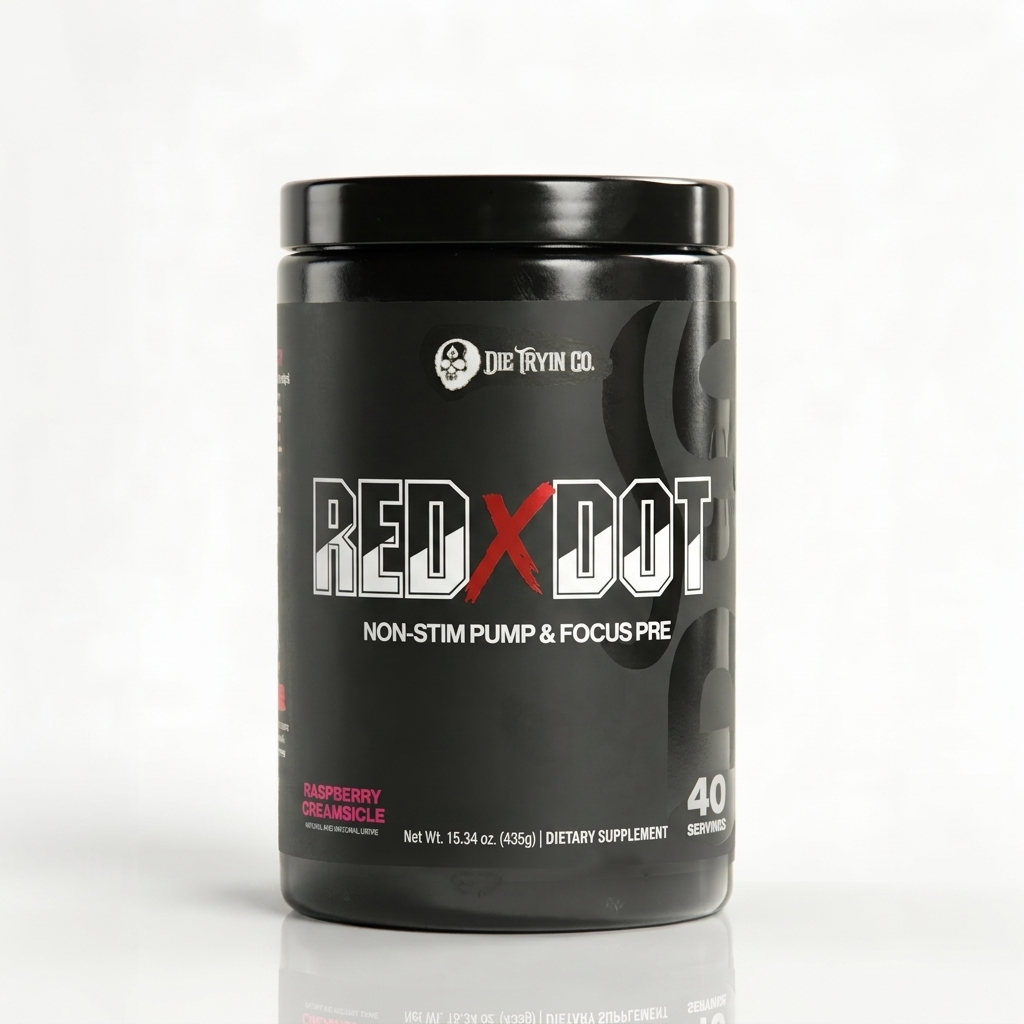
- Red Dot for zero-caffeine pump and focus, with 9,000mg L-Citrulline and 4,000mg L-Tyrosine per scoop.
- Creatine Monohydrate at 5g per serving. Micronized, single ingredient, no novel-form marketing.
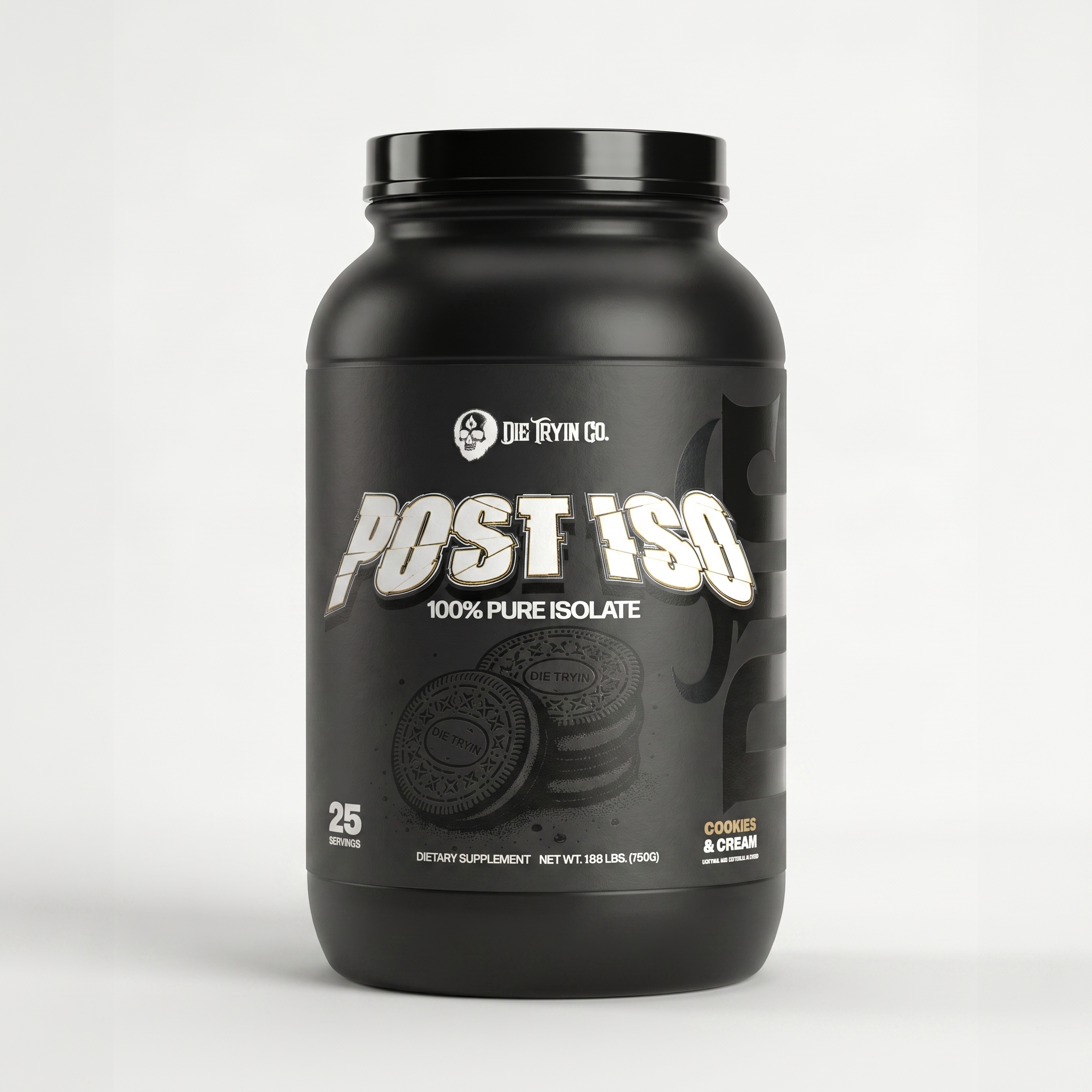
- Post Iso whey isolate, 24g protein per scoop with digestive enzymes.
- Not sure where to start? Take the product quiz and get matched to the right stack.
Squat because it builds your legs. Curl seated because that is where the hamstrings grow. Train smart. Train hard.
ALWAYS FORWARD.
GEAR THAT FITS THIS POST
The products this article actually talks about. Real doses, disclosed labels, veteran owned.

Read more
The best leg exercises that actually build wheels — 8 moves for quads, hamstrings, glutes, and calves, plus a complete leg-day plan.
Most leg training is all quads. Thickness comes from the half nobody programs properly.
The secret to a bigger back isn't more weight — it's the stretch. Here's how to train your lats at long muscle lengths, demoed on the barbell row.
The complete playbook for building muscle that actually lasts. Training, nutrition, recovery, and the supplements that move the needle — no hype.
Five minutes on a treadmill is not a warm-up. Here is the four-phase ramp that actually preps you to lift heavy, plus what the research says about foam rolling and static stretching.
Your gut lining runs the same creatine energy system as your muscles. Here is what the research shows on stomach upset, IBS, colitis and leaky gut, and exactly where the human evidence stops.