

Taurine
By Jon Klipstein, U.S. Army Combat Veteran & Founder of Die Tryin Co.
Science reviewed by Onur Oncer, BS Physiology and peer-reviewed published researcher.
THE AMINO ACID THAT DOES NOT REWARD A BIGGER SCOOP
Taurine is one of the most abundant free amino acids in skeletal muscle, and unlike leucine or valine it is never built into protein. It sits free inside the fiber as an osmolyte governing cell volume, and takes part in the calcium handling behind contraction.
Here's the truth: the mechanism is well established, and the effect it produces is real and small. Taurine is also the rare ingredient whose dose curve does not run straight: more is not better, and the research says so.
Where it sits in the line, exactly as the labels print it:
| Product | Taurine per serving | Role in the formula |
|---|---|---|
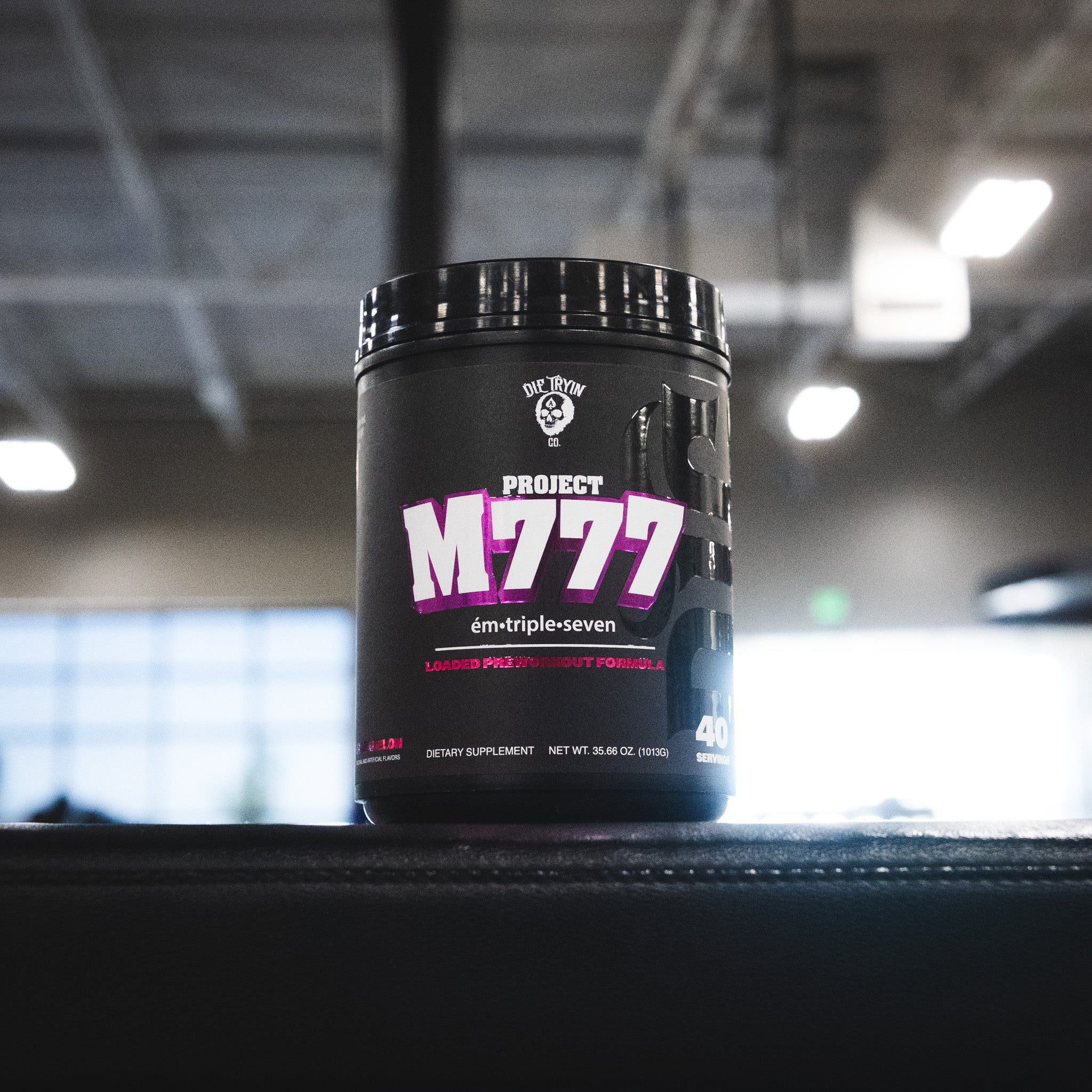
| Project M777 (per scoop) | 1,000 mg (2,000 mg at two scoops) | Support ingredient under the heaviest load in the line |
| SEND IT Sport | 1,000 mg | Long, hot, low-stim sessions |
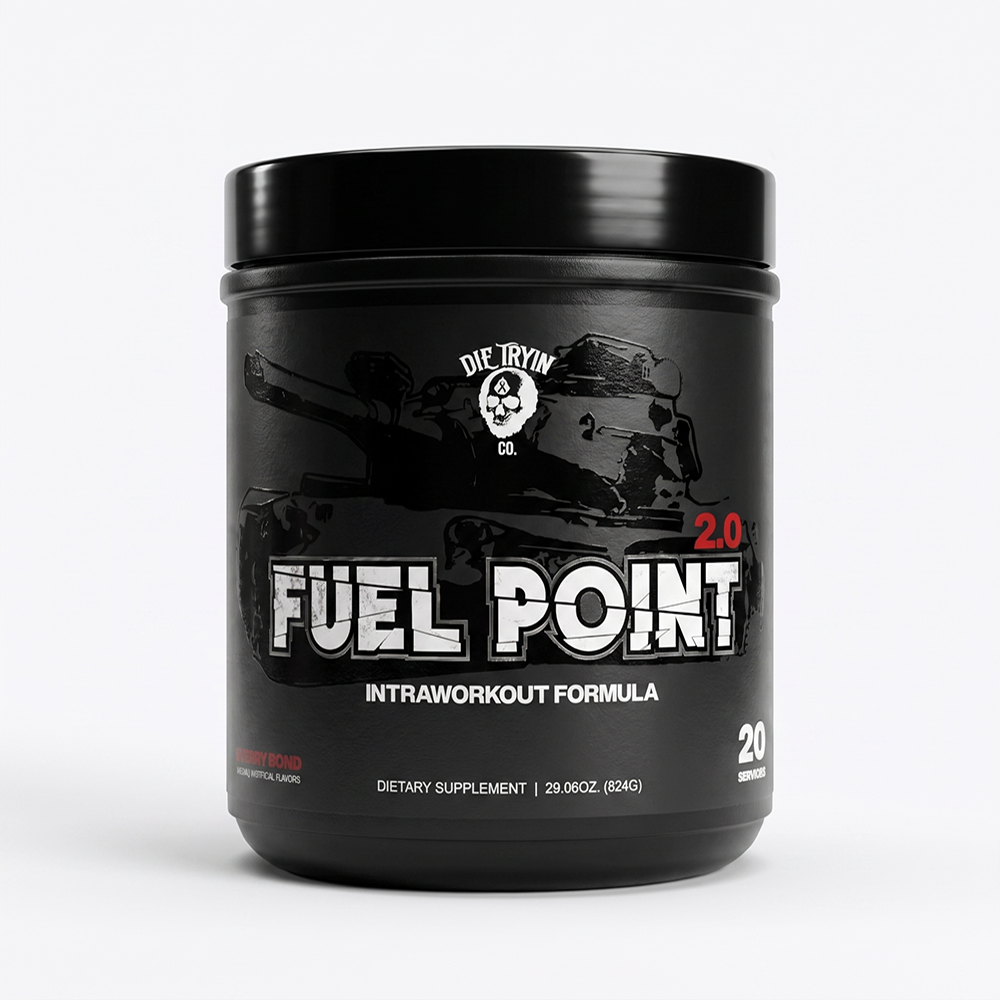
| Fuel Point 2.0 | 1,000 mg | Intra-workout, next to the carbs and electrolytes |
No percentage to unpack here. Taurine ships free-form: no carrier, no salt form, no standardization behind the number. Label unit and study unit are identical.
WHAT THE RESEARCH SHOWS
The best current summary is a three-level meta-analysis of 23 randomized trials (69 effect sizes, 308 participants). Acute taurine was associated with a small overall benefit, Hedges' g = 0.25 (95% CI 0.10 to 0.39), clearest in aerobic endurance, strength and power, and agility. No dose-response appeared across 1 to 6 g, which the authors read as a possible threshold rather than a linear effect.
Endurance and jump move most. Buzdağlı et al. 2022, in the Strength and Conditioning Journal, pooled 15 randomized trials and found jump gains (mean differences 3.60 vertical, 8.50 countermovement, both p<0.00001) with no change in VO2max or perceived exertion. Balshaw et al. 2013 in Amino Acids gave 1,000 mg to eight trained middle-distance runners, who ran a 3 km time trial 1.7% faster (p=0.013).
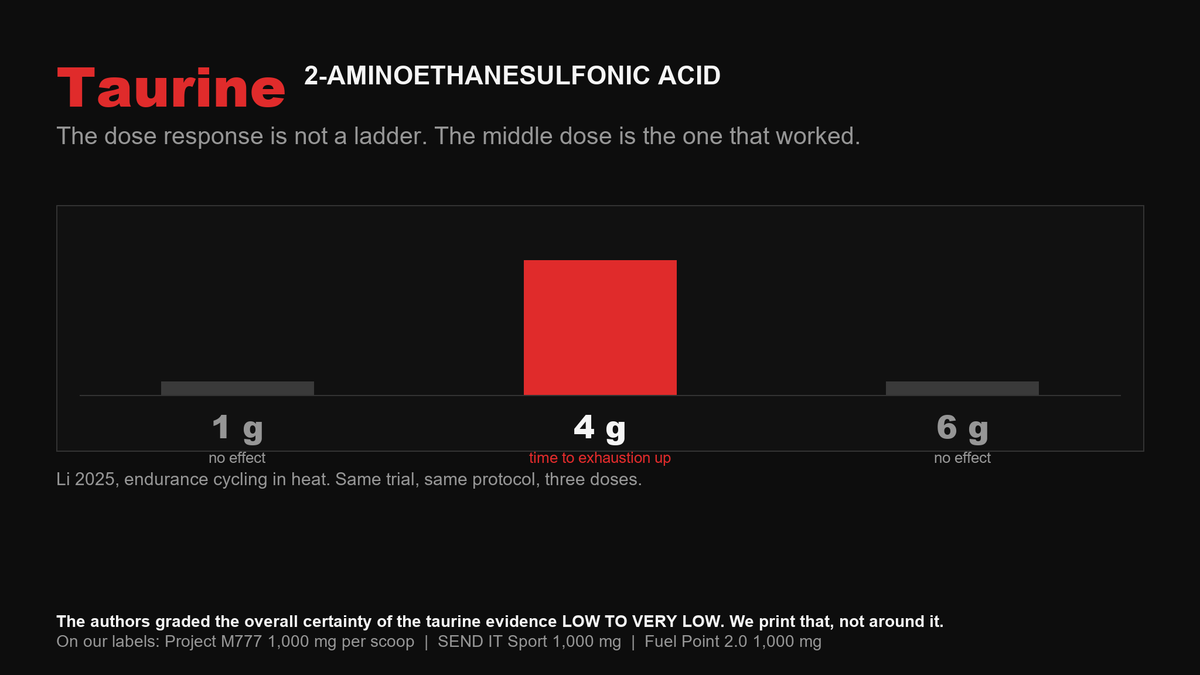
Where the evidence stops: that meta-analysis graded this literature low to very low certainty, with prediction intervals frequently including the null. A dose-response trial in the heat ran 1 g, 4 g and 6 g at 35 °C; only 4 g extended time to exhaustion, by 12.4% (p=0.031). A triple-blind crossover at 6 g in 11 runners moved none of maximal fat oxidation, FATmax, VO2peak or time to exhaustion, and raised the oxygen cost of running. Taurine is not a fat-loss ingredient, and we do not sell it as one.
| Dose | What the number counts | |
|---|---|---|
| In the trials | 1 to 6 g, no dose-response across the range | Free-form taurine as the studies report it |
| On our labels | 1,000 mg per serving (M777 per scoop, 2,000 mg at two scoops) | The same free-form taurine, as printed |
Our 1,000 mg sits at the bottom of the studied range, and we print it rather than round up. Two results bracket it: the trial run at exactly 1,000 mg moved a 3 km time trial, and the 1 g arm of the heat protocol did not. With no dose-response across 1 to 6 g, the low end is not automatically the weak end.
THE CONDITIONS THAT SHOW IT BEST, AND THE DOSE THEY USED
Taurine's strongest results come under thermal load. Page et al. 2019 in the European Journal of Sport Science dosed 50 mg/kg before cycling at 35 °C in 11 men and recorded time to exhaustion up 10% and blood lactate down 16.5%. Read that dose: 50 mg/kg is 3,500 to 4,000 mg for a 70 to 80 kg athlete, three to four times what we print. That result belongs to a dose we do not sell, and we say so rather than borrow it.
What the 1 g earns is a place beside the ingredients doing the heavy lifting: SusCarb HBCD, L-Citrulline, Betaine Anhydrous, Creatine Monohydrate and a full electrolyte panel. In the heat, the electrolyte side carries more of that load than taurine. One last correction: taurine is not a stimulant and has no caffeine-like action, whatever energy drinks implied.
FREQUENTLY ASKED QUESTIONS
What is taurine and what does it do?
A free amino acid, abundant in skeletal muscle and not incorporated into protein. Inside the fiber it acts as an osmolyte governing cell volume, and participates in the calcium handling behind contraction.
How much taurine does Die Tryin Co. use?
1,000 mg per serving in Project M777 (per scoop, so 2,000 mg at two scoops), SEND IT Sport and Fuel Point 2.0. Free-form taurine, printed on the label, with no proprietary blend hiding the number.
Does taking more taurine work better?
No, and that is the unusual part. The 2025 meta-analysis found no dose-response across 1 to 6 g, and in a heat trial 4 g extended time to exhaustion while 1 g and 6 g did not. A bigger panel number is not a bigger effect.
Does taurine burn fat?
No. A triple-blind crossover at 6 g measured maximal fat oxidation, FATmax, VO2peak and time to exhaustion, changed none, and increased the oxygen cost of running. Any fat-loss claim on taurine runs ahead of the data.
READY TO GEAR UP?
Every dose above is printed on the label, in the form you actually receive. See every ingredient we use in the Ingredient Index, or take the 60-second quiz to match a formula to your training.
ALWAYS FORWARD.
Read more
Flavor doesn't change what creatine does; taking it every day is what counts. How to pick flavored or unflavored, what to mix it with, and how long it lasts once mixed.
Whey protein concentrate now costs more than four times its early-2023 low. Here is what is driving it, what the 2027 forecasts actually say, and how to pay less per gram of protein without getting...
Four days, 1,400 miles on the road, 17 new products and 500 new customers. Here is what went down at the Die Tryin Co. booth at the 2026 Olympia World Fitness Expo.
Two tubs both say 9 g of citrulline. One gives you 9 g, the other gives you 6 g. The 2:1 ratio explained, plus the 2024 trial that tested whether the malate does anything at all.
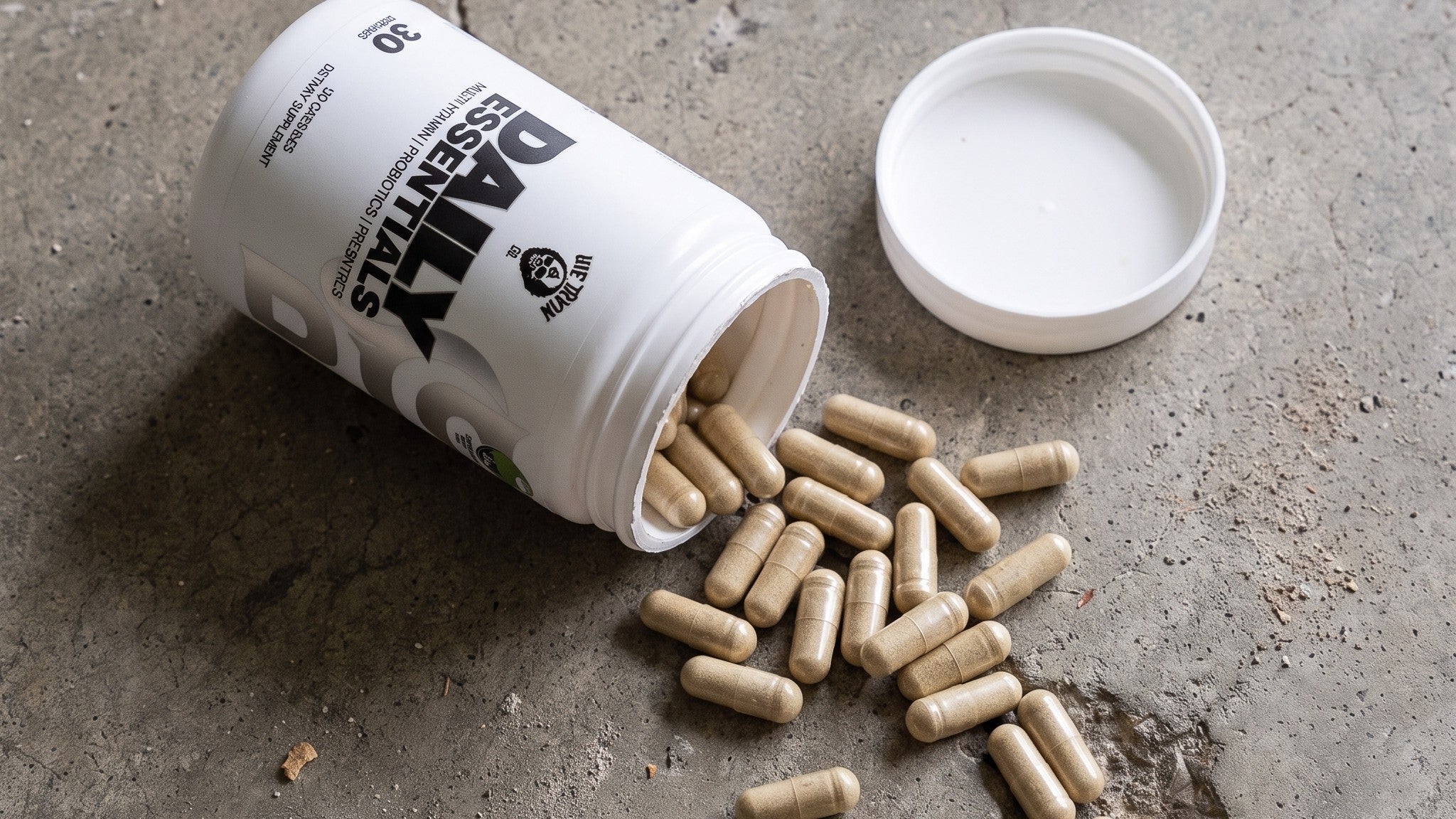
The honest case for a multivitamin when you train hard: where the evidence stops, where the gaps are real, and why chelated minerals plus a gut stack change the math.
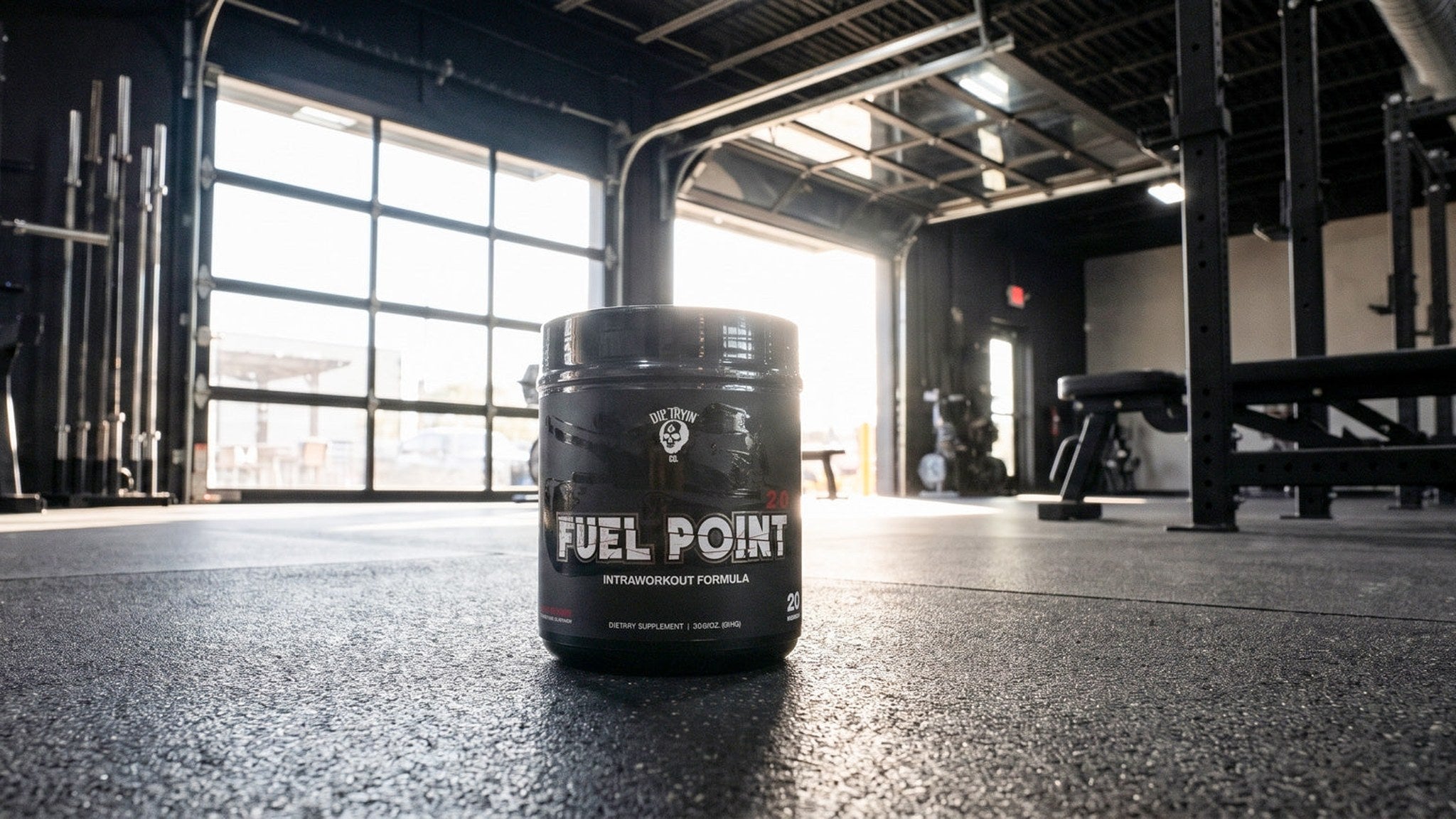
Most people buy carbs, aminos and electrolytes as three separate tubs. Fuel Point 2.0 is one scoop that does all three jobs, with every dose printed where you can read it.