

L-Tyrosine
By Jon Klipstein, U.S. Army Combat Veteran & Founder of Die Tryin Co.
Science reviewed by Onur Oncer, BS Physiology and peer-reviewed published researcher.
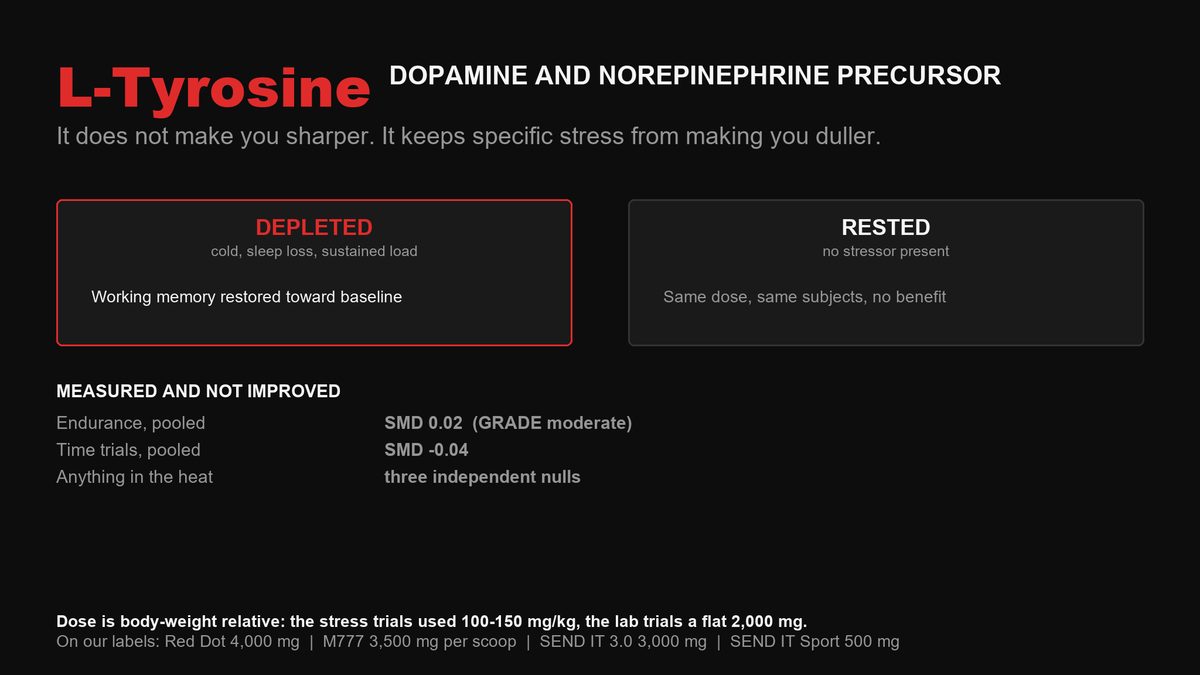
IT DOES NOT MAKE YOU SHARPER. IT KEEPS DEPLETION FROM MAKING YOU DULLER.
L-Tyrosine is the amino acid your body converts into dopamine and norepinephrine, using an enzyme called tyrosine hydroxylase. That is the whole mechanism, and it has a ceiling built into it.
Tyrosine hydroxylase already runs near saturation at ordinary plasma levels, so extra L-Tyrosine becomes extra dopamine and norepinephrine only once neurons have fired hard enough to draw those stores down. The useful data sit in depleted states and demanding tasks.
This is a depletion-repair ingredient, not an enhancer. The field's most-cited review sets the boundary: it enhances cognition only when neurotransmitter function is intact and dopamine or norepinephrine are temporarily depleted.
Where it sits in the line, exactly as the labels print it:
| Product | L-Tyrosine per serving | Where it sits |
|---|---|---|
| Red Dot | 4,000 mg | The line's largest dose, in the formula with no caffeine in it |
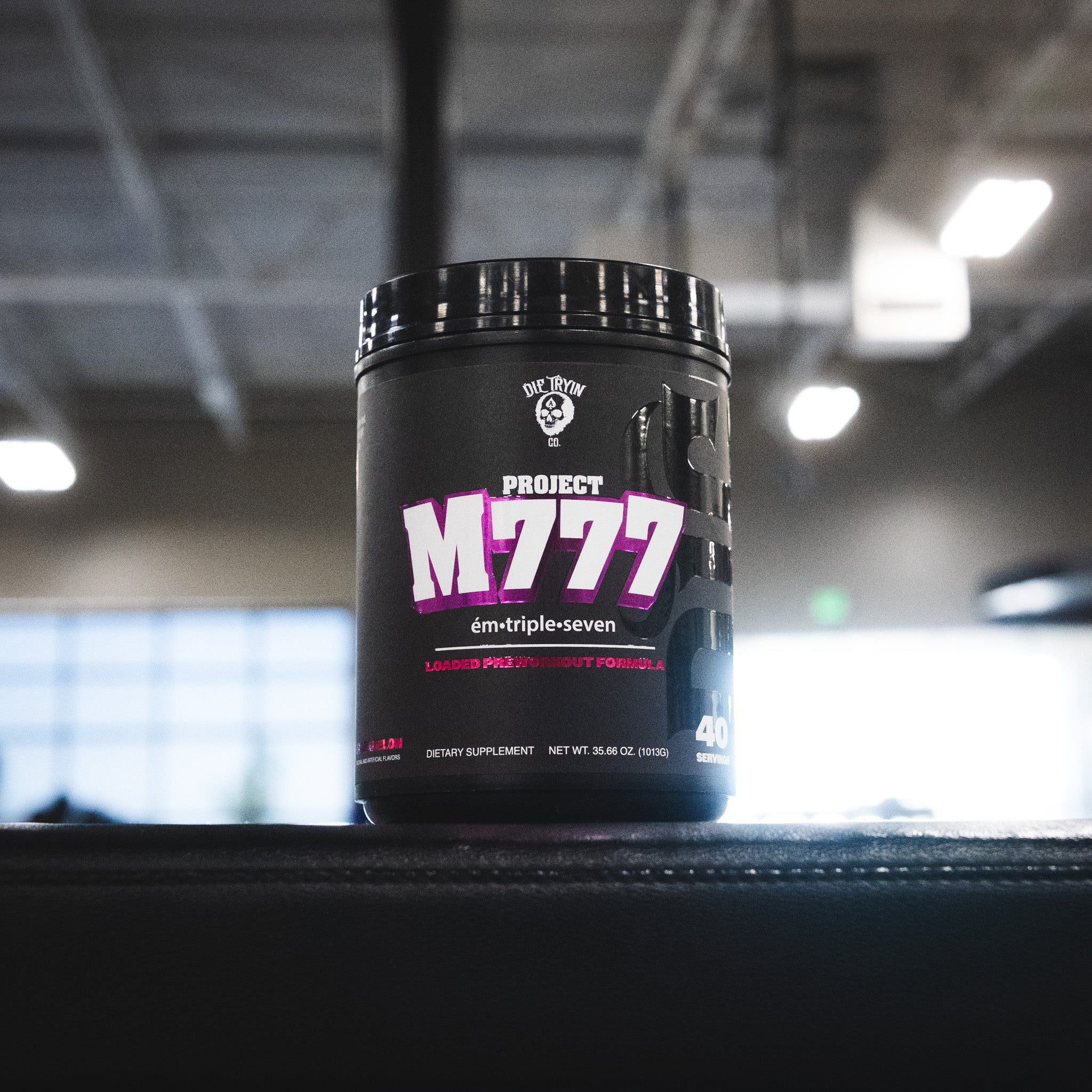
| Project M777 (per scoop) | 3,500 mg (7,000 mg at two scoops) | Catecholamine substrate under a high-stim load |
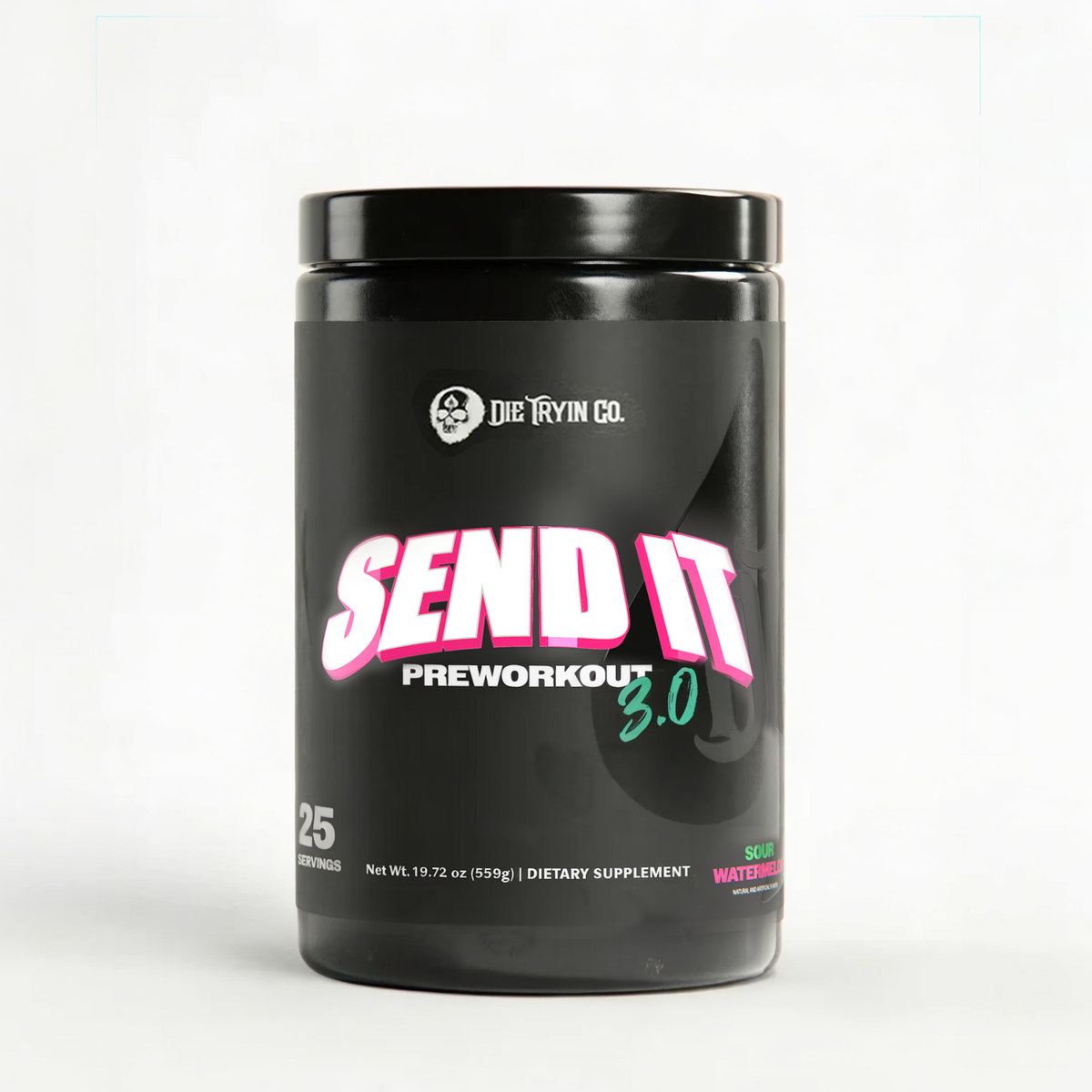
| SEND IT 3.0 | 3,000 mg | Daily driver, above the 2 g laboratory unit |
| SEND IT Sport | 500 mg | The line's smallest inclusion, in the low-stim formula |
No carrier percentage to back out here: an L-Tyrosine figure counts the amino acid itself, so the milligrams printed are the milligrams you swallow.
WHAT THE RESEARCH SHOWS
The supported claim is narrow. A single acute dose limits the cognitive decline caused by a stressor that has actually drained catecholamines, and the replicated stressors are cold and sleep loss. In a within-subject crossover at 4°C, cold degraded working-memory accuracy on placebo while 150 mg/kg returned accuracy at the longest delay to thermoneutral levels. Neri 1995 cut vigilance lapses for about three hours after 20 hours awake. The one formal GRADE appraisal, Attipoe 2015, gets both halves: a weak recommendation in favor for cognitive stress, because all studies showed a positive effect, and the same authors calling the evidence insufficient for confident recommendations.
Where the evidence stops: endurance. Pooled across ten interventions in physically active people, L-Tyrosine returned a standardized mean difference of 0.02 for time to exhaustion (p = 0.94) and −0.04 for time trials (p = 0.85) in a 2024 meta-analysis, GRADE moderate. Tumilty 2019 dose-ranged to 400 mg/kg and performance still did not move (p = 0.579). It is not an output ingredient, and we do not sell it as one.
Heat is split rather than settled: Coull 2016 and Donnan 2025 found nothing on time trials, peak power or decision-making, while Coull 2014 improved vigilance hits (p = 0.015). It can run the other way too: Robson 2020 found 2,000 mg worsened cognitive flexibility under load, and Jongkees 2019 found an inverted-U, weak performers improving and strong performers impaired.
On dose, the honest comparison is body-weight relative, because the two literatures were never dosed the same way:
| Dose | What the number counts | |
|---|---|---|
| Military stress trials | 100–150 mg/kg, single acute dose | Roughly 8,000–13,500 mg for an 80–90 kg lifter, 60–120 min before the stressor |
| Fixed-dose cognitive trials | 2,000 mg | The standard laboratory unit, with mixed results |
| On our labels | 4,000 mg · 3,500 mg · 3,000 mg · 500 mg | L-Tyrosine per serving, as printed on each panel |
Run it yourself. For an 80 kg lifter, M777's 3,500 mg is about 44 mg/kg: above the 2 g fixed-dose literature, below the 100–150 mg/kg trials. That middle position is deliberate, and it is not a claim that we match military dosing.
THE STRESS THAT ACTUALLY APPLIES TO YOUR TRAINING
Be clear about the transfer question, because most brands are not. The stressors that produced benefit were 4°C water immersion, altitude near 5,950 m, mock interrogation, and 24-plus hours awake. A hard session in a climate-controlled gym is none of those.
What the mechanism points at is the depleted end of your week: the session you start already drained. That is an extrapolation from the tested stressors, not a trial anyone has run, and we label it as one. The essential pre-workout ingredients guide covers the rest.
FREQUENTLY ASKED QUESTIONS
What does L-Tyrosine actually do?
It supplies the raw material for dopamine and norepinephrine, which only matters once demand or depletion has drawn those stores down. Shurtleff 1994 makes the point cleanly: same dose, same subjects, same task at a comfortable 22°C, no effect.
How much L-Tyrosine do you need?
That depends on what you weigh, which is why we publish milligrams instead of a threshold. The stress trials dosed 100–150 mg/kg; the laboratory trials use a flat 2,000 mg. Our labels run 4,000, 3,500 per scoop, 3,000 and 500 mg, so you can place your serving against both.
Does L-Tyrosine improve endurance or strength?
No. The pooled endurance data returned 0.02 and −0.04 at GRADE moderate, and dose-ranging found nothing even at 400 mg/kg. On strength and anaerobic output, the one controlled test (Sutton 2005) found no effect on stair-step power or handgrip. Output is the job of L-Citrulline, Creatine Monohydrate and Betaine Anhydrous.
Does it reduce stress itself?
No. Lieberman 2014 and McAllister 2024 measured no change in cortisol, heart rate or state anxiety. This is not an adaptogen. It works on what depletion does to cognition, not on the stress response.
READY TO GEAR UP?
Every dose above is printed on the label. See every ingredient we use in the Ingredient Index, or take the 60-second quiz to match a formula to your training.
ALWAYS FORWARD.
Read more
Flavor doesn't change what creatine does; taking it every day is what counts. How to pick flavored or unflavored, what to mix it with, and how long it lasts once mixed.
Whey protein concentrate now costs more than four times its early-2023 low. Here is what is driving it, what the 2027 forecasts actually say, and how to pay less per gram of protein without getting...
Four days, 1,400 miles on the road, 17 new products and 500 new customers. Here is what went down at the Die Tryin Co. booth at the 2026 Olympia World Fitness Expo.
Two tubs both say 9 g of citrulline. One gives you 9 g, the other gives you 6 g. The 2:1 ratio explained, plus the 2024 trial that tested whether the malate does anything at all.
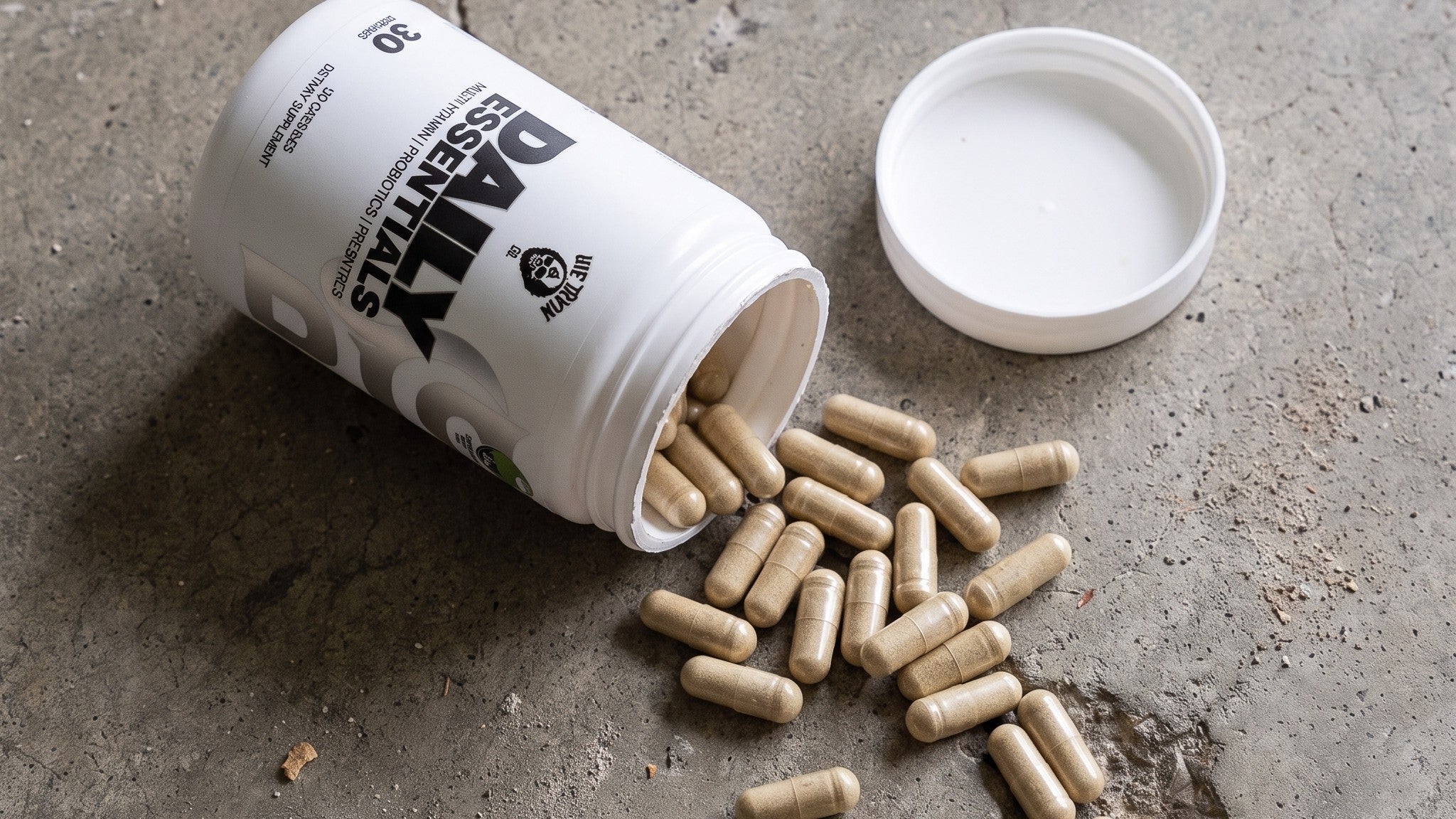
The honest case for a multivitamin when you train hard: where the evidence stops, where the gaps are real, and why chelated minerals plus a gut stack change the math.
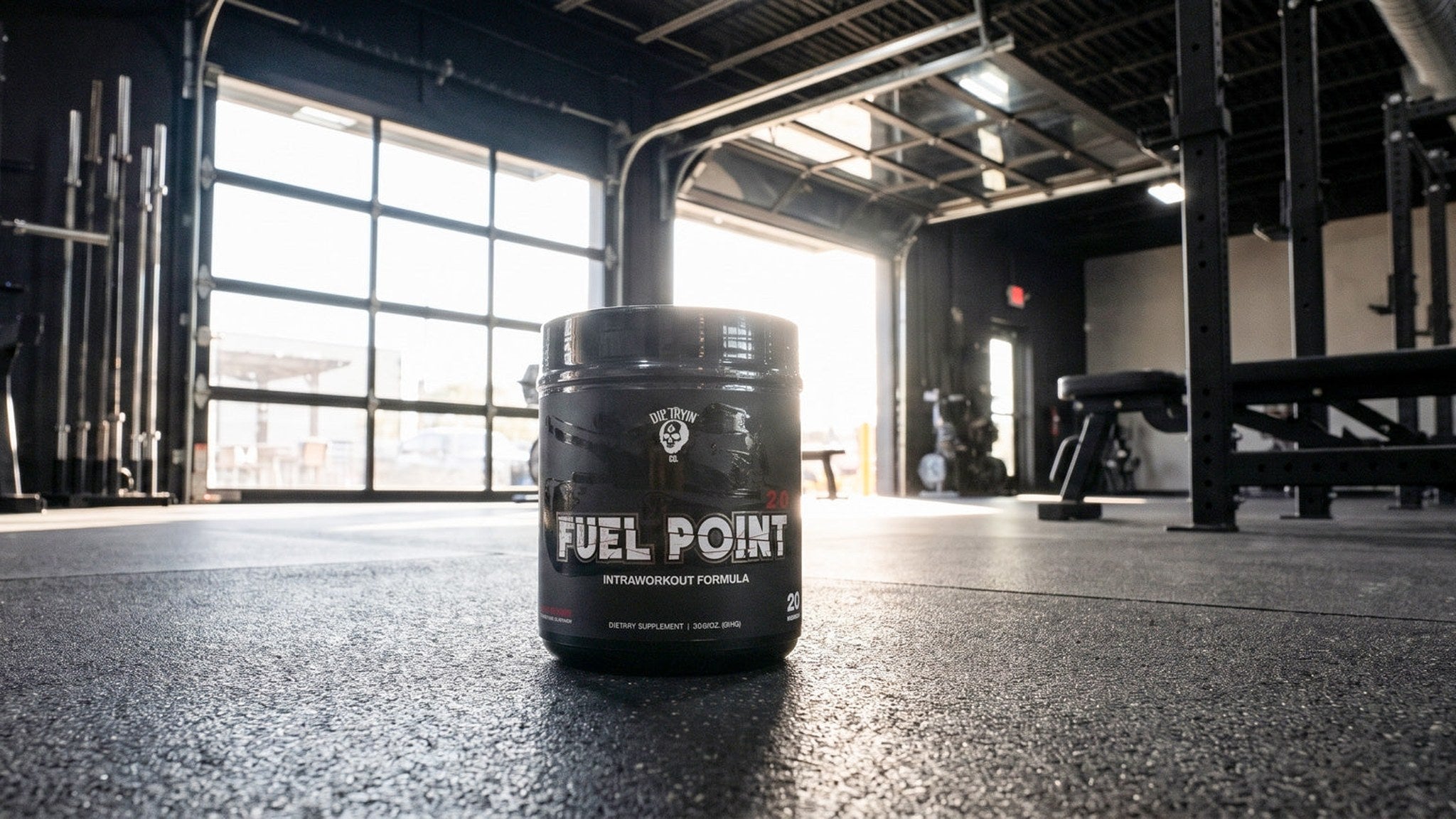
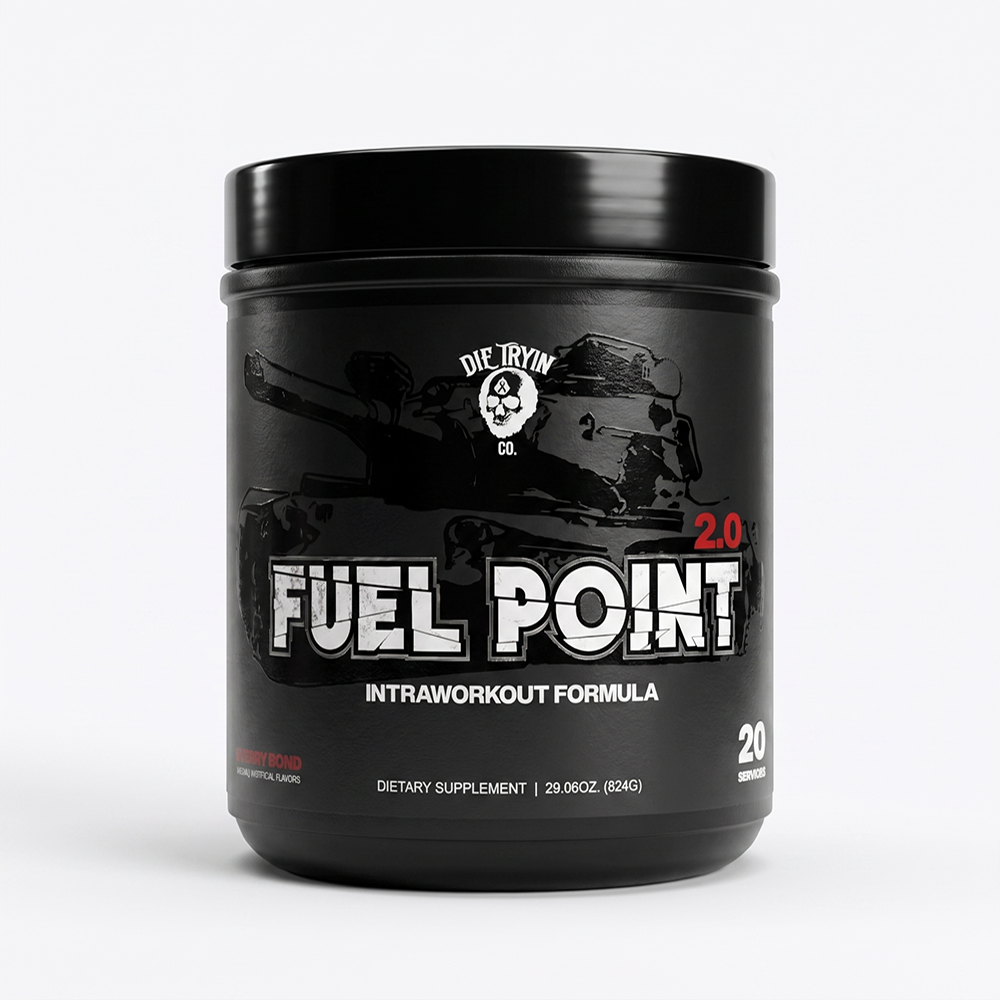
Most people buy carbs, aminos and electrolytes as three separate tubs. Fuel Point 2.0 is one scoop that does all three jobs, with every dose printed where you can read it.