



7 Grams of L-Tyrosine: What It Really Does for Focus
By Jon Klipstein, U.S. Army Combat Veteran & Founder of Die Tryin Co.
Science reviewed by Onur Oncer, BS Physiology and peer-reviewed published researcher.
7 GRAMS IS REAL. HERE'S WHAT IT ACTUALLY DOES.
Most people get this wrong. They see 7 grams of L-Tyrosine on a label and assume it buys seven times the focus. That is not how this amino acid works, and selling it that way is how this industry earned its reputation.
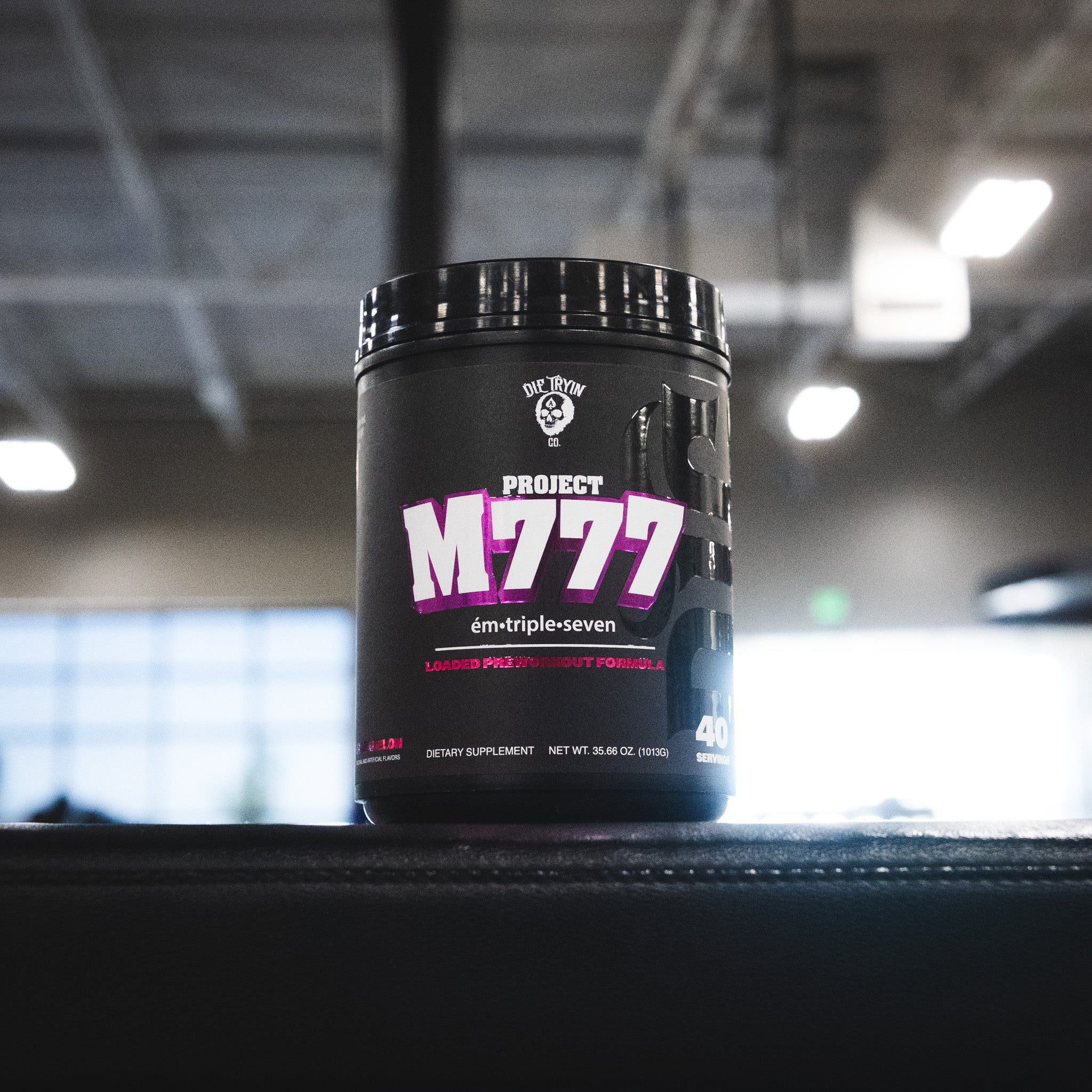
Here's the truth. 7,000 mg of L-Tyrosine is a real number on a real label. It is the full two-scoop serving of Project M777. What it is not: a megadose, a magic threshold, or a reason to reach for the second scoop of a high-stim pre-workout. For a well-rested lifter on an easy session, research suggests it does close to nothing.
What it does do is hold your focus together when conditions work against you. Underslept. Overheated. Fried from a full workday before you touch a barbell. That is the job it was studied for. Here is where every dose in the lineup lands.
| FORMULA | L-TYROSINE | STIMULANTS | WHO IT'S FOR |
|---|---|---|---|
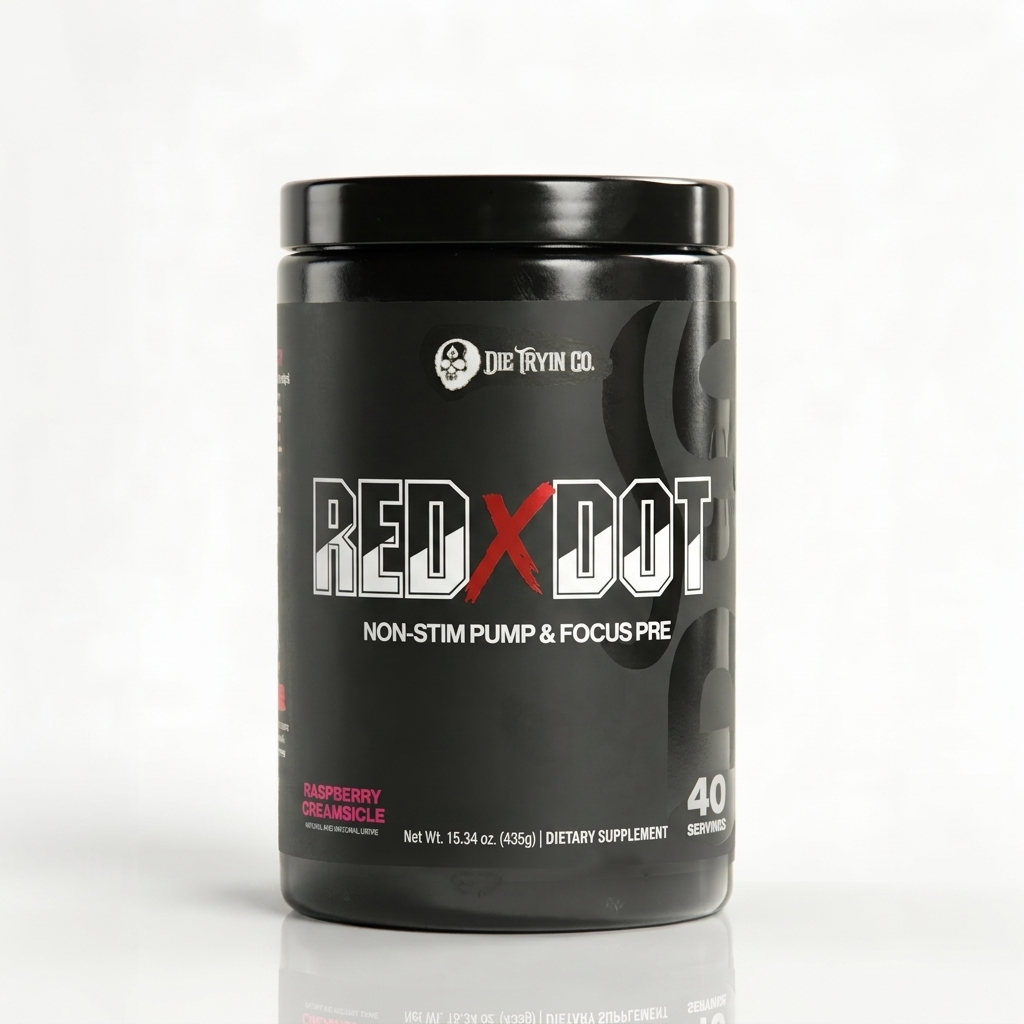
| Red Dot | 4,000 mg | Zero caffeine | Highest L-Tyrosine dose with no stimulant decision to make |
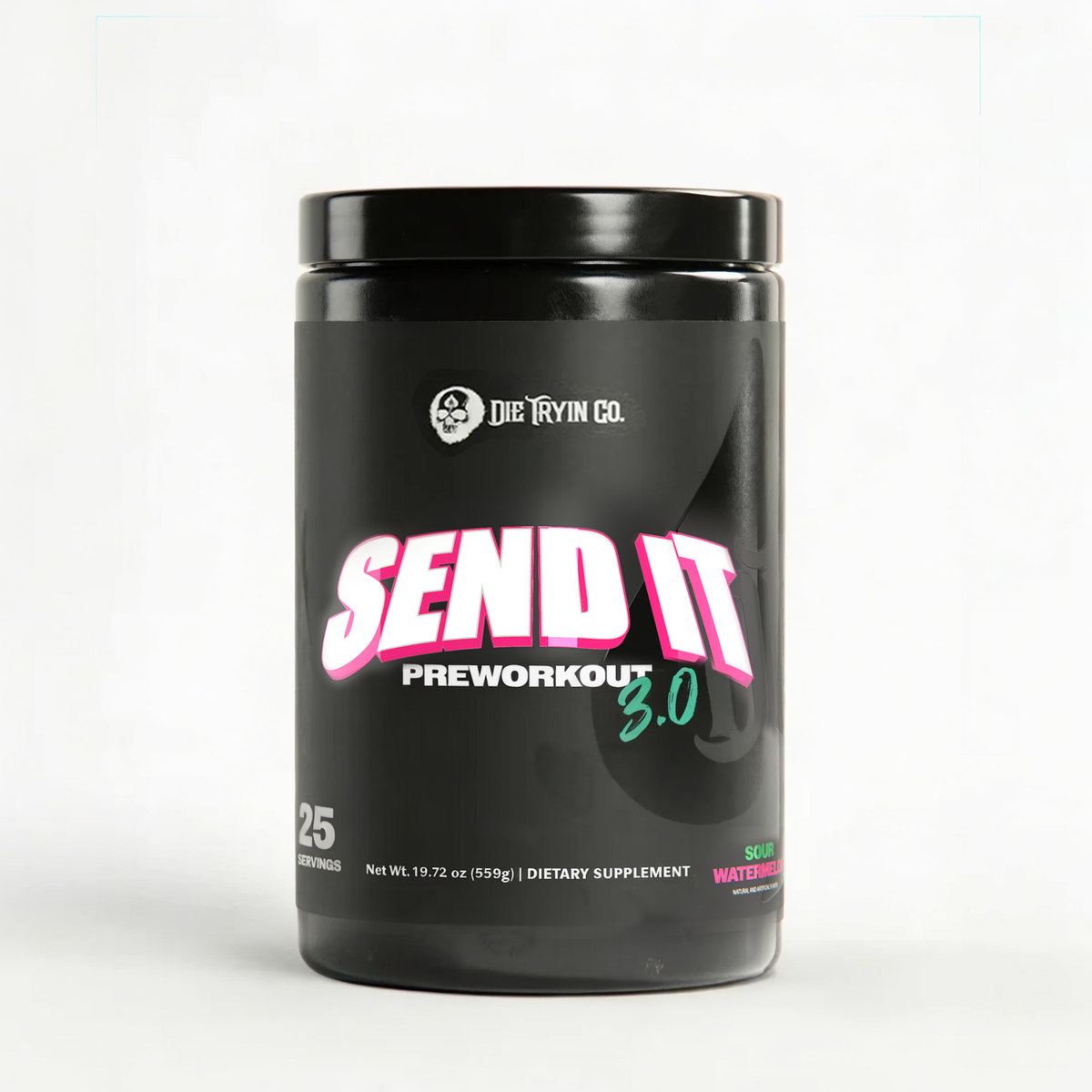
| SEND IT 3.0 | 3,000 mg | ~286 mg caffeine | The daily driver. Balanced stim load, focus dose already covered |
| Project M777, one scoop (half the full serving) | 3,500 mg | Half of the 425 mg caffeine, plus 1 mg rauwolscine | Hardest training days for lifters with an established stimulant tolerance |
| Project M777, full two-scoop serving | 7,000 mg | 425 mg caffeine, plus 2 mg rauwolscine | Experienced stimulant users only. Not a daily practice. Read the fine print below |
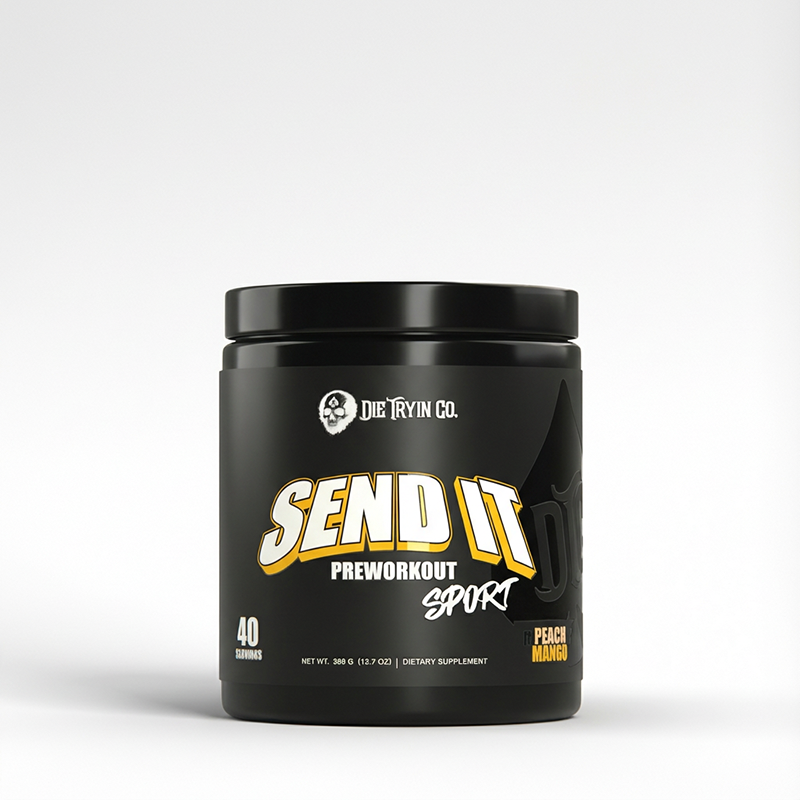
| SEND IT Sport | 500 mg | 145 mg caffeine | Long endurance sessions. Built for a different job, not the focus pick |
WHAT L-TYROSINE ACTUALLY IS
L-Tyrosine is a conditionally essential amino acid. Your body builds it from phenylalanine, so you only run short when phenylalanine runs short or demand spikes. It is the raw material your brain uses to build three chemicals that decide whether you are dialed in or checked out:
- Dopamine for drive and motivation
- Norepinephrine for alertness and attention
- Epinephrine for the acute stress response
WHY THE DOSE ON MOST LABELS IS A ROUNDING ERROR
Open ten pre-workouts and most will show you 500 mg to 1 g of L-Tyrosine. That is label dressing. If a brand won't tell you the dose, they're hiding something. If they tell you and it's 500 mg, they're telling you it's decoration. Here's the scale problem nobody explains: the research runs on two tracks. Acute lab doses scale to bodyweight and run high, roughly 8 g to 12 g for a 176 lb lifter, given once on a test day. Daily-use trials run flat grams, 1 g to 4 g, for weeks. A 500 mg scoop is an order of magnitude below the first and sits at the bottom of the second.
WHAT THE RESEARCH ACTUALLY MEASURED
The foundational work is Banderet and Lieberman, 1989, at the U.S. Army Research Institute of Environmental Medicine. Double-blind, placebo-controlled, 100 mg per kg of bodyweight, four and a half hours of cold and low oxygen. L-Tyrosine reduced symptoms, adverse mood, and performance impairment in the subjects who were actually being stressed by the conditions.
The cleanest demonstration came ten years later. In Thomas and colleagues, 1999, twenty subjects each took 150 mg per kg on one test day and ran two test batteries. In the multitasking battery, working memory accuracy improved. In the simple battery, nothing changed on any measure. Same dose, same people, same day. Cognitive load is what switched the effect on.
Lower doses land too when the stress is real. Deijen and colleagues, 1999, put 21 military cadets through a week of combat training: 10 on 2 g of L-Tyrosine a day, 11 on a calorie-matched carbohydrate drink. The L-Tyrosine group performed better on memory and tracking. A fraction of 7 grams, and it worked, because the stressor was doing the heavy lifting.
MORE IS NOT BETTER, AND THE DATA IS BLUNT ABOUT IT
Every 7-gram article on the internet implies a ladder: more grams, more focus. Three findings say otherwise. Absorption plateaus. Coull and colleagues, 2016, found a single 150 mg per kg dose raised serum L-Tyrosine as much as a doubled dose did. Brain uptake plateaus too. Tumilty and colleagues, 2020, tested 150, 300, and 400 mg per kg and found the transporter ratio that determines brain entry was not statistically different between the top two doses. There is a ceiling, and it sits well below the top of the tested range.
It can also run backwards. The only within-subject dose-response trial on cognition, van de Rest and colleagues, 2017, tested 100, 150, and 200 mg per kg in adults aged 60 to 75. Working memory under load got worse as the dose climbed, and worst in the people whose blood levels rose the most. Generalize across ages carefully, but stop pretending the curve only goes up.
Now the part both older versions of this article got wrong. L-Tyrosine is not an endurance ingredient. A 2015 systematic review by Jongkees and colleagues concluded the potential for enhancing physical exercise "seems minimal," and a 2020 trial found no effect on time-trial performance at any of three doses. There is no evidence for L-Tyrosine and strength, hypertrophy, or added reps. It is the focus ingredient sitting beside the pump and output ingredients in a complete pre-workout, doing a different job than either.
IF YOU'RE FRESH, IT DOES ALMOST NOTHING
This is the sentence no supplement brand wants to write. That same 2015 review put the boundary in plain language: L-Tyrosine enhances cognition only when dopamine or norepinephrine has been temporarily depleted. Rested and unchallenged is the definition of not depleted. Thomas proved it the hard way, running a full research dose through a simple task battery and measuring nothing at all.
So be honest about your own day. A 5 a.m. lift on five hours of sleep, a session in a freezing garage or a hot gym, a heavy day after nine hours of mental work: those are the conditions the research describes. A well-slept Saturday session is not. This ingredient earns its place on your hardest days and coasts on your easiest ones. Basics beat hype.
WHERE 7 GRAMS COMES FROM, AND THE FINE PRINT
7,000 mg of L-Tyrosine is the full two-scoop serving on the Project M777 panel, and one scoop is exactly half. The tub holds 20 full servings, or 40 single scoops. Here's what nobody mentions when they quote the number: that full serving also carries 425 mg of total caffeine and 2 mg of rauwolscine, and it belongs to experienced users with an established stimulant tolerance.
Read that as the flat instruction it is. Do not take the full two-scoop serving of a high-stim pre-workout to chase an amino acid. The stimulants riding along with those 7 grams are the real decision, and they belong in your total caffeine budget for the day. The deeper version of that conversation lives in the real risks of pre-workout.
On the amino acid itself, single doses in this range have been given to humans in controlled trials since 1989 without serious adverse events. Daily use is a separate question. A 2026 randomized crossover trial ran 30 healthy men through graded daily doses for four weeks at a time and set the no-observed-adverse-effect level at 4 g a day, the highest dose it tested. Worth knowing who ran it: the authors work for an amino acid manufacturer. It is still the best safety data that exists, and you should weigh it knowing that. Taking 7 grams every day sits above that. Not shown to be harmful. Simply never tested.
THE STIM-FREE ROUTE TO A HIGH DOSE
Here is the recommendation, and it is not the one that sells the most scoops. Red Dot carries 4,000 mg of L-Tyrosine with zero caffeine. That is the highest dose in the lineup that asks nothing of your stimulant tolerance, and it lands exactly on the 4 g daily figure the safety research cleared. Add 9 g of L-Citrulline, Alpha-GPC and Rhodiola and you have a focus formula that doesn't borrow against tomorrow. The full Red Dot breakdown covers the rest of the panel.
Want stimulants with it? SEND IT 3.0 at 3,000 mg is the daily driver, and one scoop of Project M777 at 3,500 mg covers the hard days. Both sit six to seven times above the 500 mg the industry calls a focus dose, and both land inside the 1 g to 4 g a day range the four-week tolerability trial actually tested. Real doses of real ingredients. None of it works if your sleep, food, and basic focus habits are a mess. See how L-Tyrosine stacks up against the rest of the panel in the four ingredients that actually earn their place.
FREQUENTLY ASKED QUESTIONS
How much L-Tyrosine should you take before a workout?
Somewhere between 3 and 4 grams covers the practical range, which is where every Die Tryin Co. focus formula already sits. Research doses scale to bodyweight and run higher, but higher has not been shown to produce more benefit, and the safety data for daily use tops out at 4 grams.
Is 7 grams of L-Tyrosine safe?
Single doses in that neighborhood have been used in controlled human trials for decades without serious adverse events. Every day is untested territory: the four-week tolerability data stops at 4 grams. And the dose number hides something. The only route to 7 grams in the lineup is the full two-scoop serving of Project M777, which also carries 425 mg of caffeine and 2 mg of rauwolscine. That stimulant load, not the amino acid, decides whether it is right for you. Talk to your doctor first if you take thyroid medication, levodopa or other dopaminergic medication, or an MAO inhibitor, and skip high doses entirely if you're pregnant, nursing, under 18, or have an inherited disorder of L-Tyrosine metabolism.
Does L-Tyrosine give you energy like caffeine?
No. It is not a stimulant, it has no acute kick, and you will not feel it hit. It supplies the raw material your brain uses to rebuild focus chemicals it has been burning through. Caffeine pushes. L-Tyrosine restocks. Different mechanisms, different jobs.
Can you take L-Tyrosine every day?
At the doses in a normal pre-workout serving, yes: four-week human tolerability data covers up to 4 grams a day. Whether it's worth it daily is a separate question. The benefit shows up under stress, load, heat, or sleep loss, so on easy days you're mostly buying nothing.
How long before training should you take it?
About 60 minutes ahead, which is what the working-memory trial used and what a normal pre-workout timing window already gives you. In a separate trial on subjects awake more than 24 hours, the measured benefit lasted roughly three hours. Set expectations for one session, not one day.
Which Die Tryin Co. pre-workout has the most L-Tyrosine?
On paper, Project M777's full two-scoop serving (7,000 mg). But that serving also carries 425 mg of caffeine and 2 mg of rauwolscine, so it is experienced-users-only, not a daily practice, and not a way to chase an amino acid. The real answer for most people is Red Dot at 4,000 mg: the second-highest dose, zero caffeine, no stimulant tolerance required. Not sure which formula fits your training? Take the quiz.
READY TO GEAR UP?
Pick the tool for the job:
- Red Dot for 4,000 mg of L-Tyrosine with zero caffeine. The focus pick.
- SEND IT 3.0 for 3,000 mg with a balanced stim load. The daily driver.
- Project M777 for 3,500 mg in one scoop on your hardest days, if your stimulant tolerance is established.
- SEND IT Sport for long endurance work, where 500 mg is the right call.
- Not sure? Take the quiz.
Train smart. Train hard. And stop paying for label dressing.
ALWAYS FORWARD.
GEAR THAT FITS THIS POST
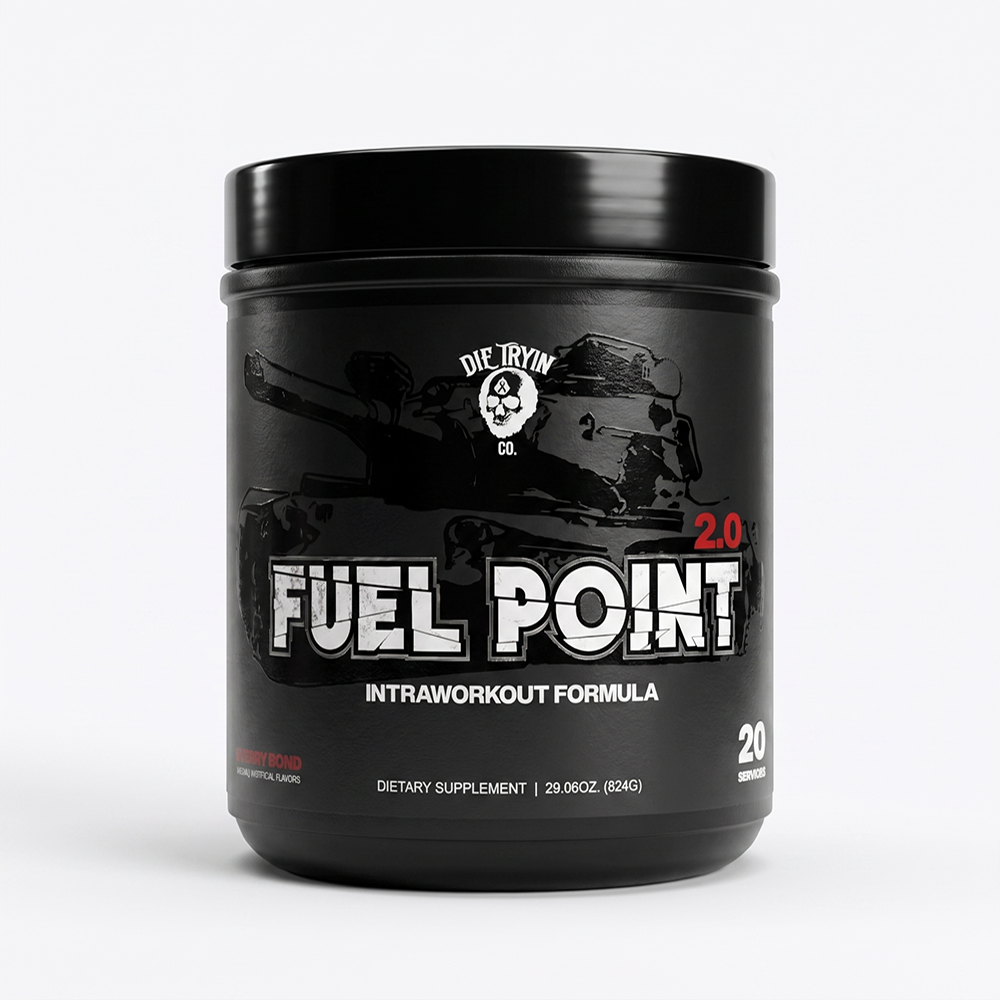
The products this article actually talks about. Real doses, disclosed labels, veteran owned.

Read more
What actually works in pre-workout — ingredients, doses, timing, and how to pick the right one. Cut through the marketing. Get the real answer.

Coffee isn't the problem. Your total caffeine budget is. Here's what the research actually supports, and how to run coffee and pre-workout in the same day without wrecking your sleep.
A well-dosed pre-workout is safe for most healthy adults — but the wrong formula causes the side effects everyone fears. Crash, addiction, sensitive stomach, cardiovascular concerns: which are real...
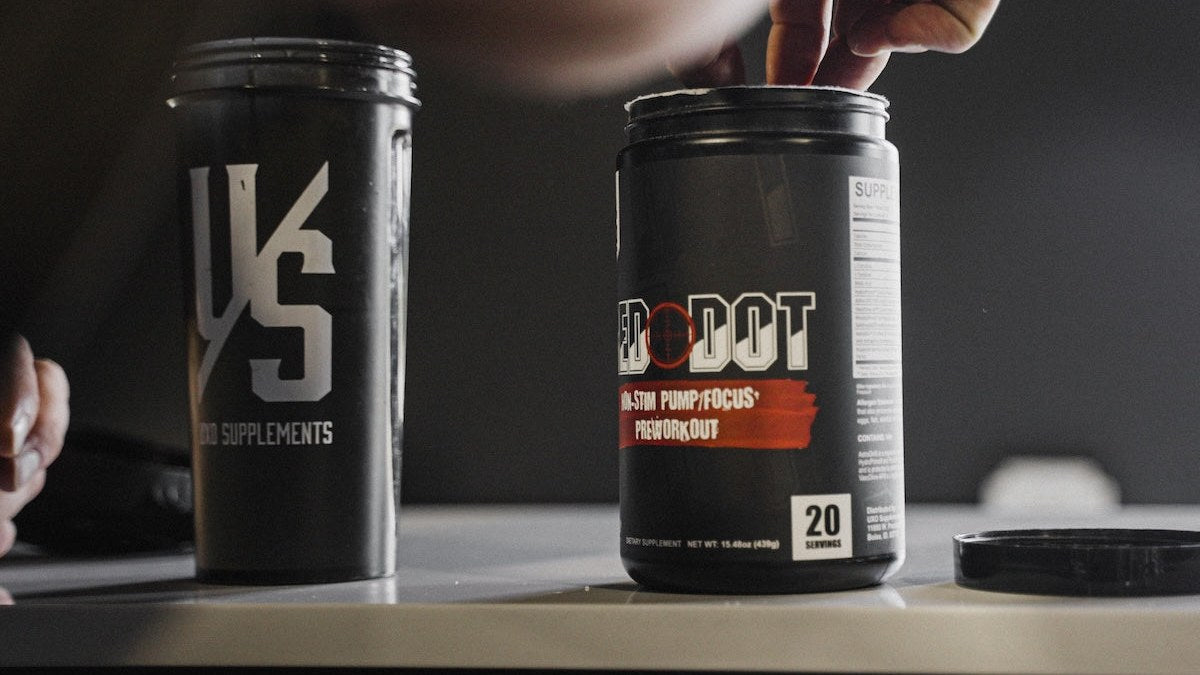
Red Dot is the stim-free pre-workout for serious training — 9g citrulline, 4g tyrosine, VasoDrive-AP, glycerol. Skin-splitting pumps and razor focus without caffeine.

Focus is a system you build, not a mood you wait for. Seven tactics that hold up through a real session.
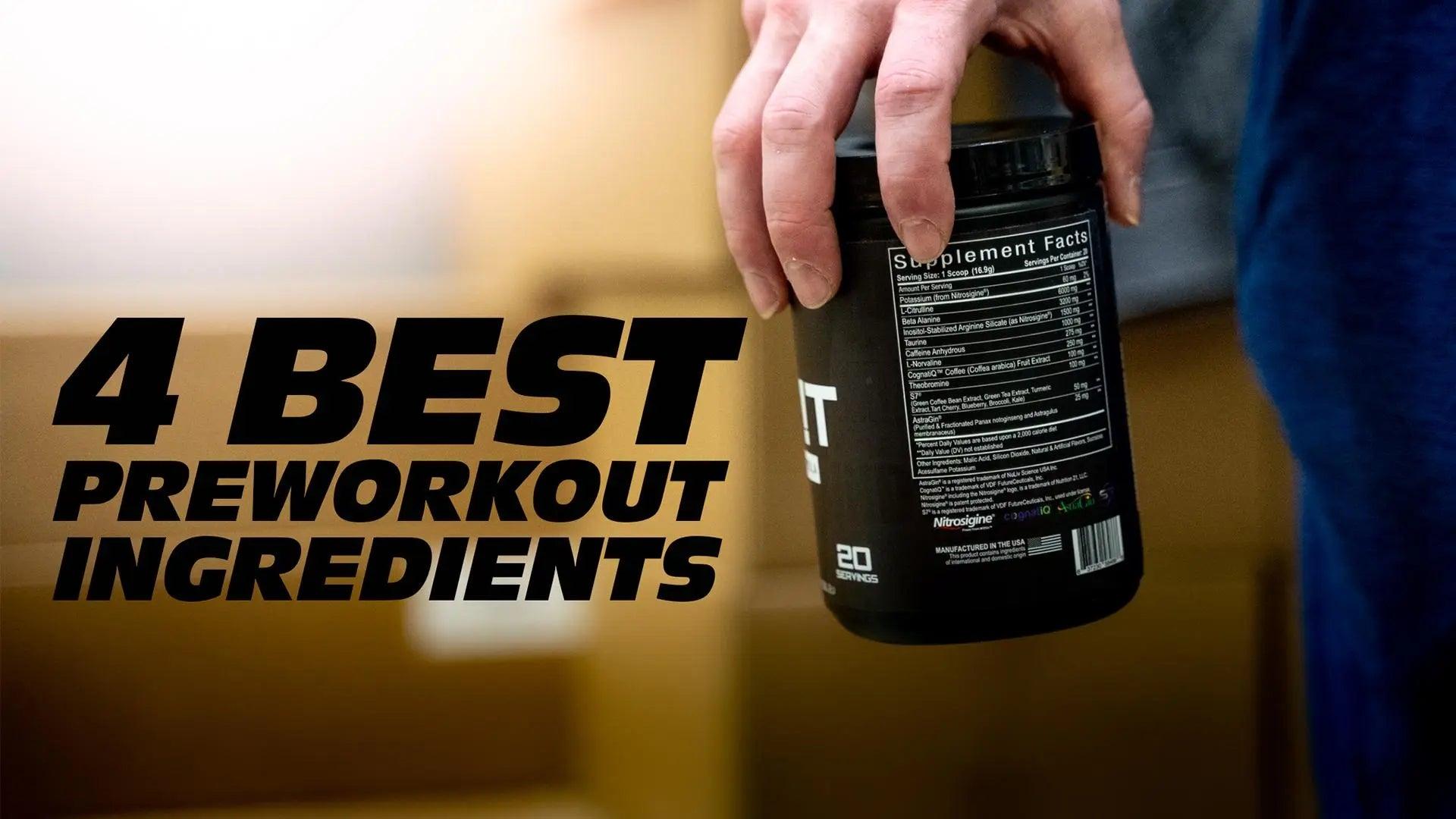
Strip away the marketing — these are the 4 ingredients that actually drive pre-workout performance: L-Citrulline, Beta-Alanine, Nitrosigine®, CognatiQ®. Plus what to avoid and why dose matters.