



The 3% Rule: Turn Any Rep Max Into a 1RM Percentage
By Jon Klipstein, U.S. Army Combat Veteran & Founder of Die Tryin Co., and Garrett Ussery, NASM-CPT & 2025 Idaho Cup Overall Champion
INTENSITY ISN'T HOW HARD IT FELT
Ask ten lifters what "high intensity" means and you'll get ten answers about effort, sweat, and how destroyed they were afterward. That's not what the word means in strength training.
Intensity is the weight on the bar expressed as a percentage of your one-rep max. It's a number, not a feeling. And once you can convert between reps and percentages in your head, programming stops being guesswork.
The 3% Rule is the shortcut that makes that conversion easy: every rep past one costs you roughly 3% of your 1RM. That's it. From that single sentence you can build the entire chart.
| REP MAX | % OF 1RM | WHAT IT'S FOR |
|---|---|---|
| 1RM | 100% | Testing. Rarely a training tool. |
| 2RM | 97% | Peaking, max strength |
| 3RM | 94% | Max strength |
| 4RM | 91% | Strength |
| 5RM | 88% | Strength, the classic working range |
| 6RM | 85% | Strength crossing into size |
| 7RM | 82% | Hypertrophy with a strength bias |
| 8RM | 79% | Hypertrophy |
| 9RM | 76% | Hypertrophy |
| 10RM | 73% | Hypertrophy, volume work |
Important: a "rep max" means an all-out set. Your 8RM is the weight you can get exactly eight reps with and no ninth. If you left two in the tank, that wasn't an 8RM and the math doesn't apply.
ESTIMATING YOUR 1RM WITHOUT TESTING IT
You don't need to max out to use percentages, and for most lifters most of the time, you shouldn't. Work backwards from a set you already did.
Say you pressed 200 lbs for a hard set of 8. An 8RM sits at 79% of your max, so divide: 200 ÷ 0.79 = 253 lbs estimated 1RM. Now every percentage on the chart is available to you without ever loading a true single.
Run it the other direction to program. Want to work at a genuine 8-rep intensity? Take 79% of 253 and you're back at 200 lbs. Want a lighter volume day at 10 reps? 73% of 253 is about 185 lbs.
The rule also solves the "how much do I add" problem. If you hit 10 reps at 200 lbs and clearly had more in you, that set was easier than a true 10RM, so bump the load by about 6% (two reps' worth) to roughly 212 lbs and try again. That's a reasoned jump instead of grabbing the next plate up and hoping.
THE MATH IN A REAL WEEK
Say your estimated bench max is 253 lbs from that set of 8. A two-day-per-week bench structure built off that number looks like this: heavy day at 91% for sets of 3, which is 230 lbs, leaving a rep in reserve on most sets. Volume day at 76% for sets of 8, which is 192 lbs, again stopping a rep or two short.
Neither of those is a number you'd have picked by feel. Left to instinct, most lifters take the heavy day too light and the volume day too heavy, and end up training the same middling intensity twice a week while believing they've programmed variety.
Six weeks later you re-test with a hard set of 5. If you hit 225 for 5, that's 225 ÷ 0.88 = 256 lbs, and the whole chart shifts up with it. That's the loop: estimate, program, execute, re-estimate. Nothing exotic, and it beats guessing every time.
WHERE THE RULE BREAKS DOWN
Here's the honest part, and it matters more than the chart.
It falls apart past 10 or 11 reps. Beyond that, the relationship stops being linear and individual endurance dominates. Two lifters with identical maxes can differ by five reps at 65%. Don't extend the chart to 15 or 20.
Lower body behaves differently than upper body. Most people get more reps at a given percentage on squats and leg press than on bench, partly due to muscle fiber composition and the sheer amount of muscle involved. If the chart feels off on your legs, that's expected, not a mistake.
Estimates run high, and estimation error is real. According to PubMed, Macarilla and colleagues tested velocity-based 1RM prediction in 17 resistance-trained men and found predictions overestimated actual squat 1RM by roughly 29-39 kg and bench 1RM by roughly 7-9 kg, with wide limits of agreement (J Hum Kinet, 2022). That study tested a different prediction method than the rep-based one here, but the lesson transfers: predicted maxes are planning tools, not numbers to load the bar with as if they were tested. And squat predicts worse than bench.
Treat your estimated 1RM as a starting point that gets corrected by what actually happens under the bar. Your training log beats the calculator.
HOW TO USE THIS IN A REAL WEEK
Percentages are how you stop training the same way every session. A simple structure:
- Heavy day: 88-94% for sets of 3-5. Low volume, long rests, full focus. This is where max strength gets built.
- Volume day: 73-79% for sets of 8-10. More total work at a load you can execute cleanly.
- Leave reps in reserve on most sets. The chart is built on all-out sets, but you shouldn't train that way every session. Programming at 79% for 6 instead of 8 is a deliberately submaximal set, and that's correct most of the time. Failure is a tool, not a standard.
- Re-estimate every 6-8 weeks. Your max moves. A chart built on a number from last spring is programming you for a weaker lifter than you are now.
- Warm up to the percentage properly. A working set at 90% needs a real ramp, not two token sets. Details in the 4-phase warm-up.
This is what separates a program from a workout. If you want the full picture of how load, volume, and progression fit together, the complete muscle building guide covers the framework this chart plugs into, and most people who stall aren't lacking effort, they're lacking structure.
FREQUENTLY ASKED QUESTIONS
What is the 3% rule in lifting?
Each rep beyond a single subtracts about 3% from your 1RM. A 2RM is around 97%, a 5RM around 88%, a 10RM around 73%. It's a linear approximation of the standard rep-max relationship that holds reasonably well out to about 10 reps.
How do I calculate my 1RM from a set of 8?
Divide the weight by 0.79. A hard set of 8 at 200 lbs estimates a 253 lb max. Use the percentage from the chart that matches the reps you actually completed to failure.
Is a percentage chart better than just going by feel?
They work together. Percentages give you a plan and keep you from drifting into the same comfortable weight every week. Feel tells you when today isn't the day for the number on the sheet. Ignore either one entirely and you'll stall.
Why does the chart feel wrong on squats?
Lower body typically allows more reps at a given percentage than upper body. If you're consistently beating the chart on squats and matching it on bench, that's normal. Adjust your personal chart rather than forcing the standard one.
Should I test my true 1RM?
Occasionally, if you compete or you enjoy it. For most lifters, estimating from a hard set of 3-8 gives you everything you need at a fraction of the fatigue and risk. Testing maxes has a recovery cost that has to be earned back.
How often should I update my numbers?
Every 6-8 weeks, or any time a working set feels dramatically easier than the chart says it should. Stale numbers under-load you.
READY TO GEAR UP?
Percentage work on heavy days demands focus, not just hype:
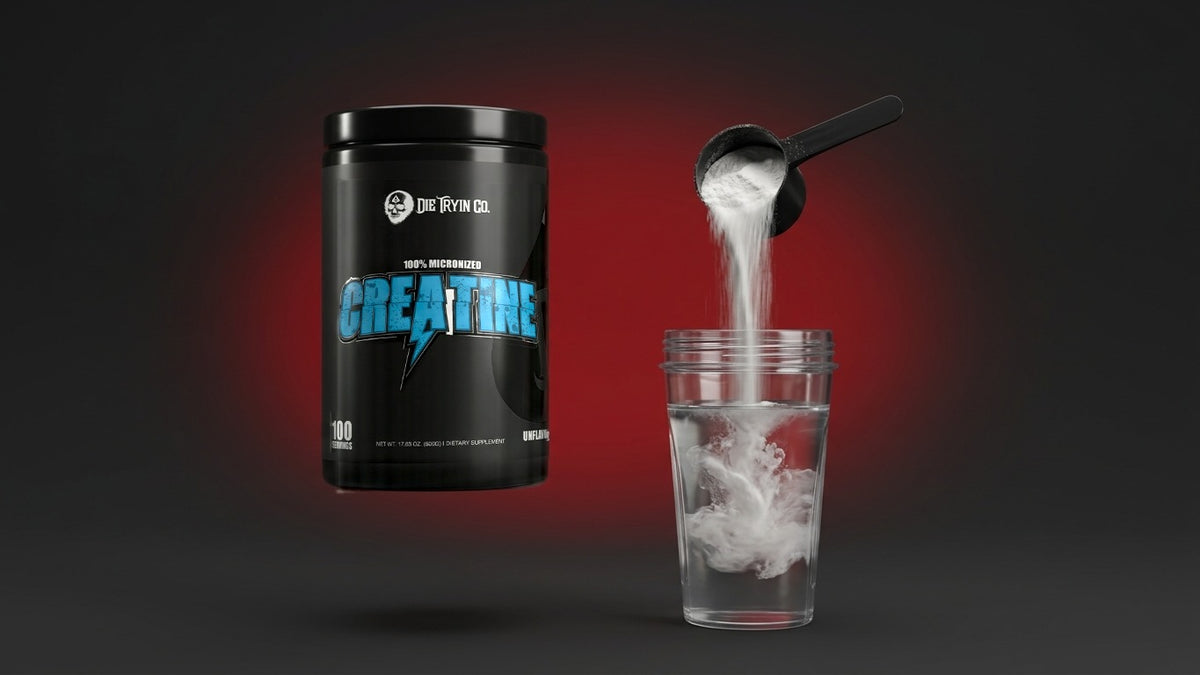
- Micronized Creatine Monohydrate — 5g daily. The single most supported supplement for strength and repeat-effort work.
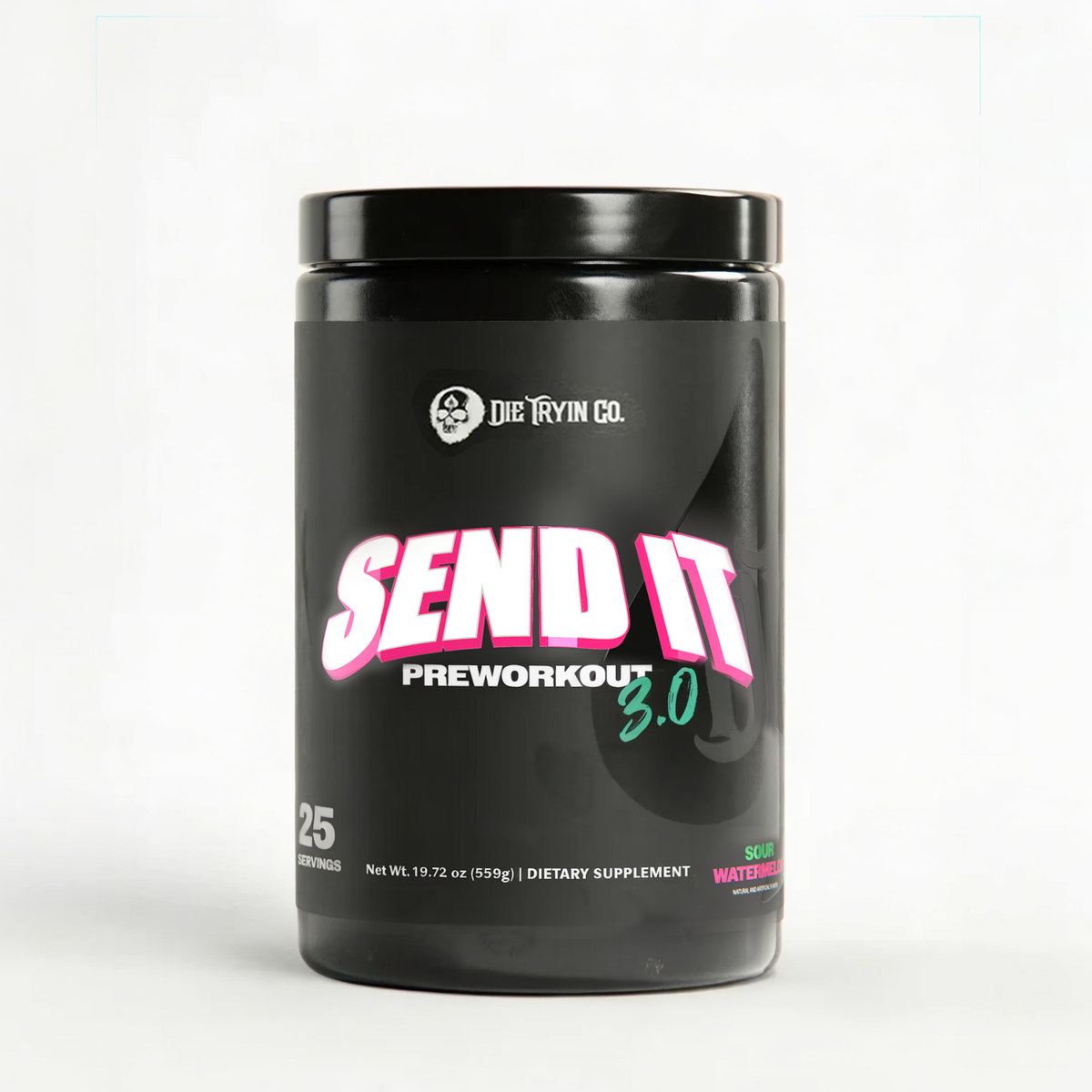
- SEND IT 3.0 — the daily driver. Clinical doses and extended-release caffeine for volume days.
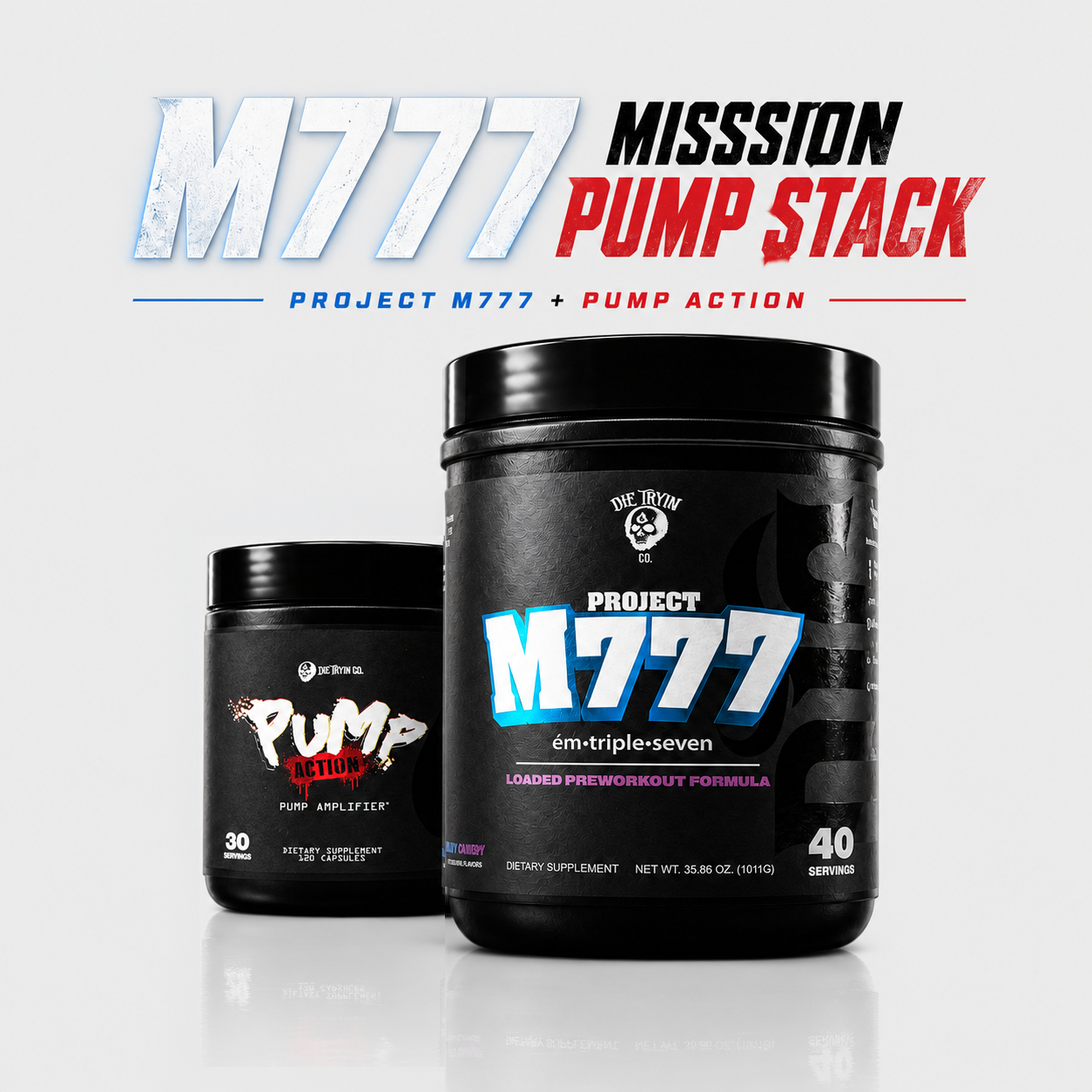
- M777 Mission Pump Stack — for the 90%+ days when the bar is genuinely heavy.
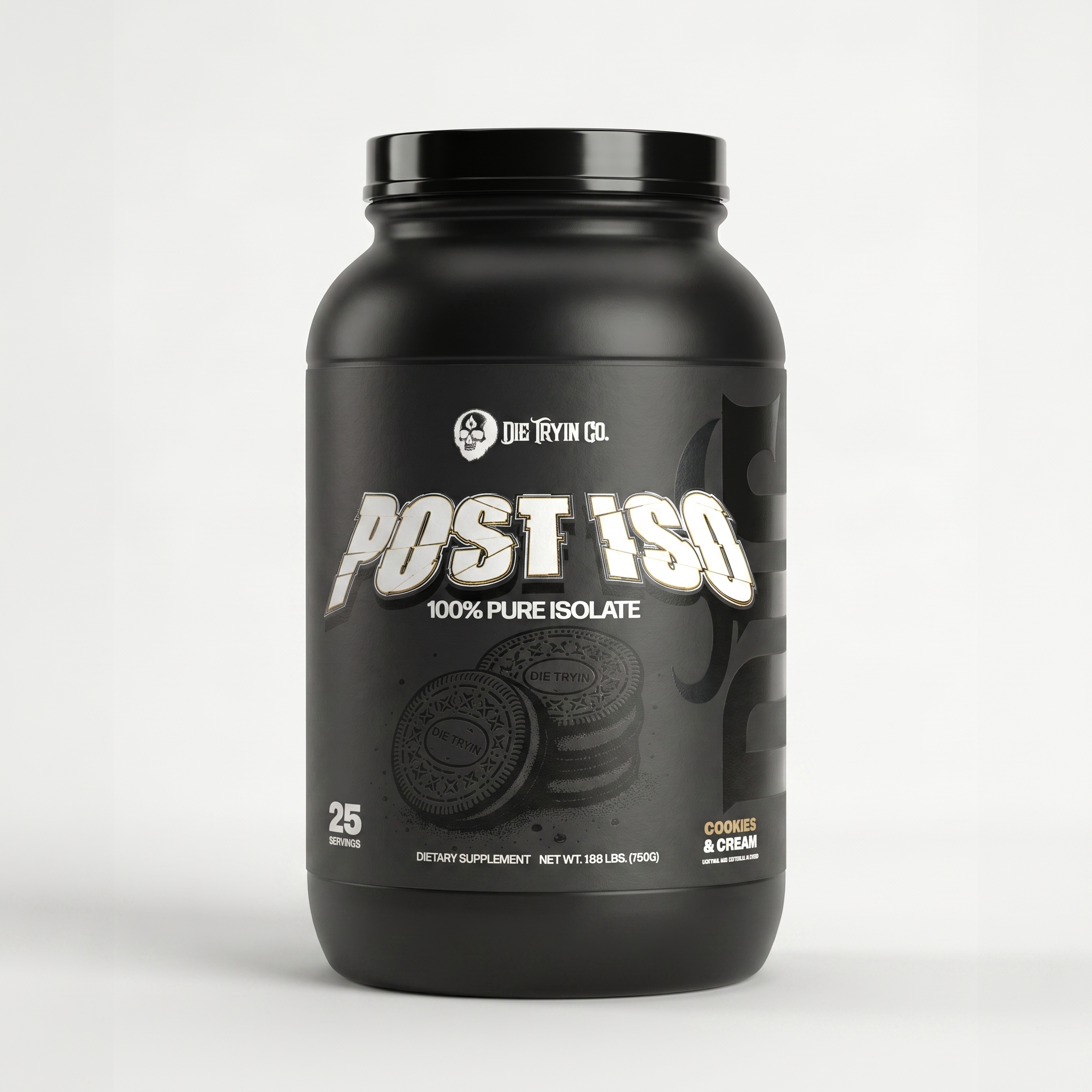
- Post Iso — 24g whey isolate to pay back what heavy sets take out of you.
- Straight Leg Joggers — for the days you live in the rack.
- Not sure where to start? Take the quiz.
Numbers on a sheet don't lift the weight. But they'll tell you honestly whether you're progressing or just sweating. Consistency beats intensity.
ALWAYS FORWARD.

GEAR THAT FITS THIS POST
The products this article actually talks about. Real doses, disclosed labels, veteran owned.

Read more
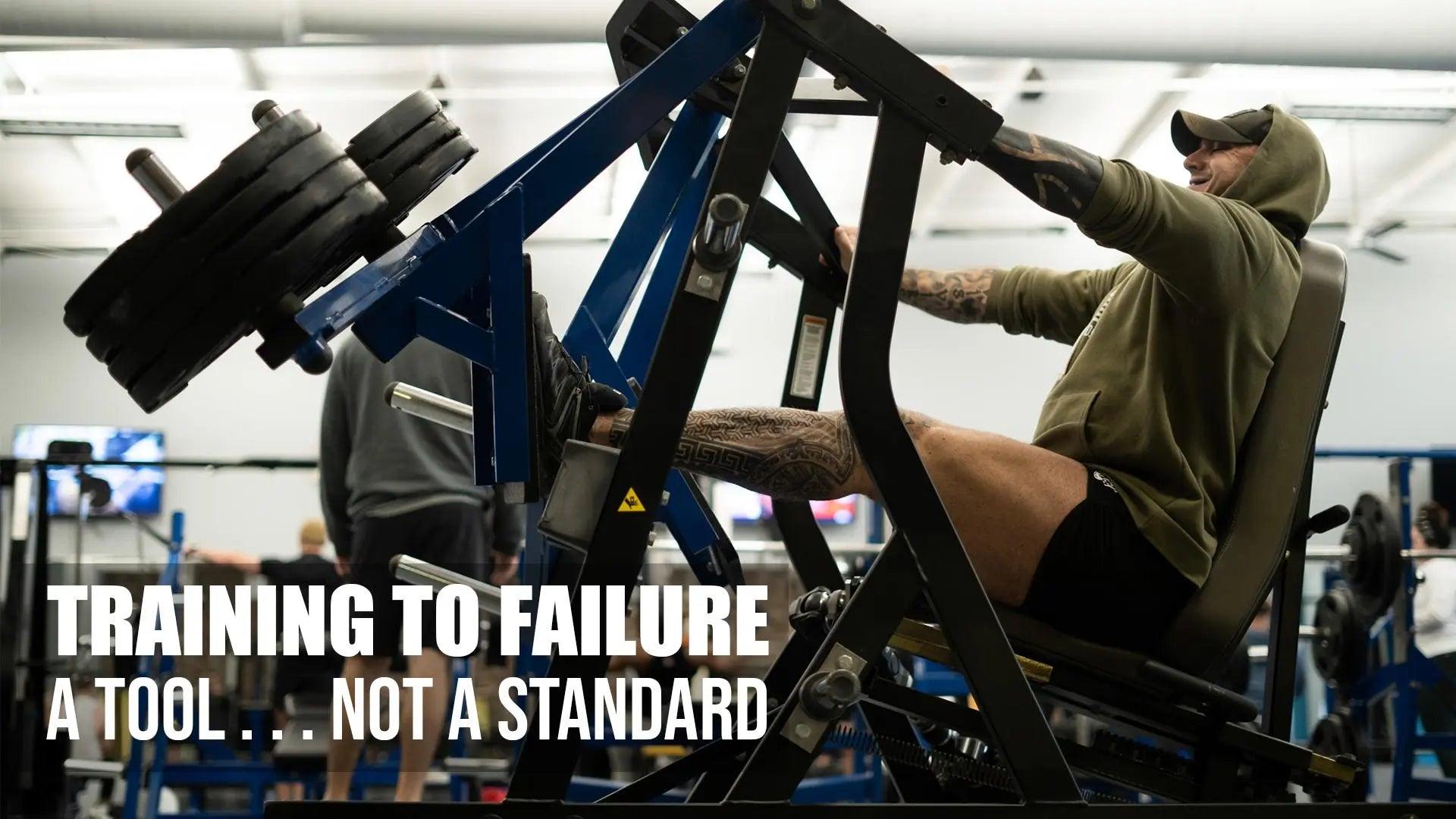
Training to failure is a tool, not a default. Here is what the research actually says for size and for strength, what the fatigue costs you, and the exact spots where taking a set to the wall earns...

Five minutes on a treadmill is not a warm-up. Here is the four-phase ramp that actually preps you to lift heavy, plus what the research says about foam rolling and static stretching.

The complete playbook for building muscle that actually lasts. Training, nutrition, recovery, and the supplements that move the needle — no hype.
The reason most lifters never see results isn't a bad program or weak motivation. It's inconsistency. Here's what actually builds physiques — and why the basics work.
Your gut lining runs the same creatine energy system as your muscles. Here is what the research shows on stomach upset, IBS, colitis and leaky gut, and exactly where the human evidence stops.

Creatine gummies can work if the creatine is actually in them, and lab tests keep finding it often is not. Here is why a scoop of Creatine Monohydrate powder still wins.