




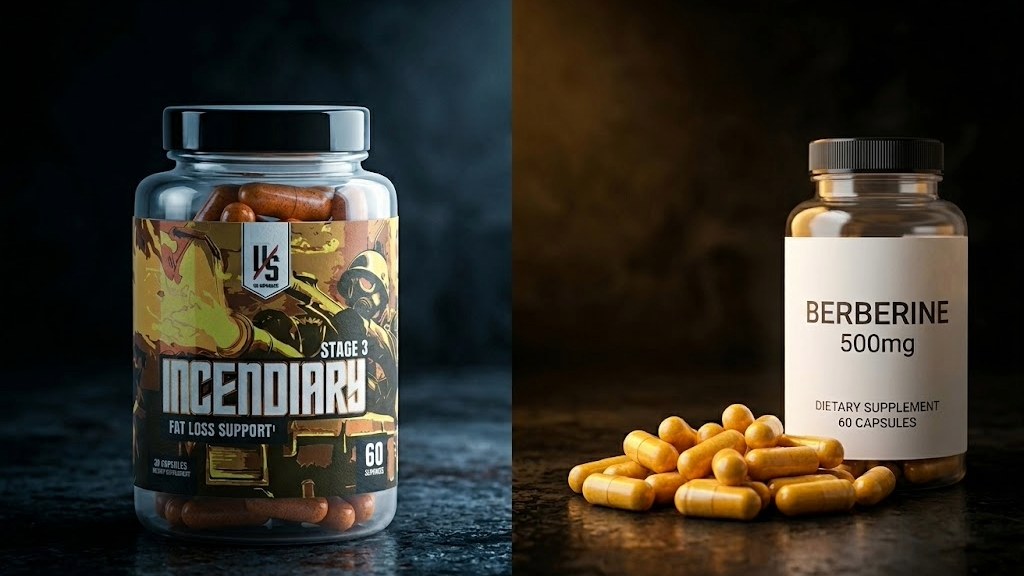
GlucoVantage vs Berberine: Which GDA Actually Works?
By Jon Klipstein, U.S. Army Combat Veteran & Founder of Die Tryin Co.
Science reviewed by Onur Oncer, BS Physiology and peer-reviewed published researcher.
GLUCOVANTAGE VS BERBERINE: THE REAL DIFFERENCE
If you’ve done any research on carb partitioning supplements, you’ve seen both: GlucoVantage (the patented branded form in our Incendiary Stage 3 formula) and standard berberine (sold by every supplement brand on Amazon). They’re related compounds, but they’re not the same thing — and the difference matters more than the marketing makes obvious.
This is the honest comparison. What each actually is, what the research shows, and which one fits which use case. No marketing pitch — both forms have real upsides and real limits.
If you’re new to the category, read our lifter’s guide to GDAs first — this post assumes you already know what a glucose disposal agent does and you’re trying to decide which one to buy.
QUICK ANSWER: THE COMPARISON AT A GLANCE
| FACTOR | GLUCOVANTAGE (DHB) | STANDARD BERBERINE |
|---|---|---|
| What it is | Dihydroberberine — the bioavailable metabolite | Berberine HCl — the parent compound |
| Bioavailability | Significantly higher per Moon 2021 | Poor — most metabolized in gut wall before absorption |
| Typical dose | 100–200mg per meal | 500–1,500mg per meal |
| Daily intake load | 1–2 capsules with biggest carb meals | 3–6 capsules across the day |
| GI side effects | Minimal | Common at effective doses (cramping, loose stool, nausea) |
| Cost per dose | Higher per capsule, comparable per result | Lower per capsule, but more capsules needed |
| Best for | Lifters wanting clean efficacy with minimal GI issues | Budget-conscious users with no GI sensitivity |
WHAT THEY ACTUALLY ARE
Berberine
Berberine is a yellow alkaloid extracted from plants like Berberis, Coptis, and goldenseal. It’s been used in traditional Chinese and Ayurvedic medicine for centuries, and modern research has confirmed it activates AMPK — the cellular energy sensor that improves glucose uptake into muscle cells, supports fatty-acid oxidation, and reduces hepatic glucose production. The strongest data is in type-2 diabetic and metabolic-syndrome populations (Guo et al., 2021).
Dihydroberberine (DHB / GlucoVantage)
Dihydroberberine is what your body actually does with berberine. When you take berberine orally, the gut converts much of it to DHB before it crosses into the bloodstream. GlucoVantage skips that conversion step by supplementing DHB directly. Result: better absorption, lower effective dose, fewer GI side effects from undigested berberine sitting in your gut.
THE BIOAVAILABILITY GAP (WHY THIS MATTERS)
This is the real story behind the comparison. Standard berberine has a well-documented bioavailability problem — estimates put oral absorption in the single-digit percent range, meaning most of a 500mg dose never reaches systemic circulation. That’s why effective protocols use big doses: you’re overdosing the gut to get a small effective dose into the blood.
Research on dihydroberberine shows substantially improved pharmacokinetics — higher peak plasma concentrations and longer effective duration from the same oral dose (Moon et al., 2021). In practical terms: lifters report similar effects from 100–200mg of DHB as from 1,000–1,500mg of standard berberine, with cleaner GI tolerance.
The marketing claim of “5x more potent” is the supplement industry’s version of this. The honest version: it’s not that DHB is intrinsically stronger; it’s that more of it actually makes it into your bloodstream from the same dose. The mechanism in the cell is the same. The delivery is better.
WHICH ONE FITS YOUR USE CASE
Use GlucoVantage if:
- You’ve tried standard berberine and had GI issues (cramping, urgency, loose stool)
- You don’t want to swallow 3–6 capsules per day
- You want a cleaner, more consistent effect with less dose-to-effect variability
- You’re stacking with other supplements and want simpler protocols
- You value time and convenience over per-mg cost
Use standard berberine if:
- You’ve never had GI issues with high-dose supplements
- You’re on a tight supplement budget and need to optimize per dollar
- You don’t mind multi-capsule daily protocols
- You’re using it primarily for metabolic-health reasons rather than acute carb partitioning around meals
Both work. Both activate AMPK. Both improve insulin signaling. The difference is delivery efficiency and side-effect profile — not whether the underlying mechanism functions.
THE HONEST LIMITATIONS OF BOTH
Marketing pages skip this section. We don’t.
Neither will reverse a calorie surplus. A GDA improves how your body handles a given carb load. It doesn’t override calorie math. Eat 1,500 calories above maintenance and you’ll gain fat regardless of which form you take.
Both have weaker effects in already insulin-sensitive lifters. If you’re lean and active with no metabolic dysregulation, your insulin response is already efficient. The upside scales with how much dysregulation you start with.
Neither “converts stored fat into energy.” That’s a marketing line that gets recycled across supplement brands. The actual mechanism: improved AMPK activity supports fatty-acid oxidation in tissues that are already oxidizing fat (muscle, liver). It doesn’t mobilize fat stores acutely the way a stimulant lipolytic might.
Berberine and DHB both interact with blood-sugar medications. If you have diabetes or take any glucose-lowering drugs, talk to your doctor before adding either — combined effects can drop blood sugar too low.
FAQ
Is GlucoVantage worth the price difference over standard berberine?
For most lifters, yes — if you factor in the smaller daily pill load and the lower GI side-effect rate. For users without GI issues who don’t mind taking 4+ capsules a day, standard berberine is the cheaper-per-result option.
Can I take both together?
You can, but there’s no real reason to. They activate the same pathway through the same mechanism. Stacking them doesn’t produce additive benefits — just more compound in your system. Pick one.
How fast do GDAs work?
Acute effects (better post-meal energy, less bloating) show up within 1–2 days of consistent use with carb meals. Body-composition shifts take 4–8 weeks of consistent use paired with appropriate calories and training. Don’t expect dramatic week-one results from either form.
What about other GDAs — inositol, chromium, banaba leaf?
Each has its own evidence base. Inositol has the strongest data for women with PCOS. Chromium has weaker evidence in healthy lifters than its marketing suggests. Banaba leaf (Glucosol) has limited data. For most physique-focused lifters, DHB or berberine outperform the rest of this category based on existing research.
Does GlucoVantage cause GI side effects?
Minimal in most users. The biggest difference vs standard berberine: DHB absorbs efficiently in the small intestine instead of sitting around as undigested compound in the gut. That’s why GI tolerance is dramatically better.
Is GlucoVantage natural?
Yes — dihydroberberine occurs naturally as a berberine metabolite in your own body when you take standard berberine. GlucoVantage is a manufactured supplement form of the same molecule. Same compound, different delivery.
WHICH ONE SHOULD YOU PICK?
Bottom line: if you want the cleanest, most consistent experience with minimal GI fallout and a simple 1–2 capsule daily protocol, GlucoVantage (in Incendiary Stage 3) is the right pick. If you’re budget-driven and don’t mind a higher pill load, standard berberine still works at higher doses.
The mistake we see most often: lifters buy cheap standard berberine, take one 500mg capsule a day, experience nothing, and conclude GDAs don’t work. The actual issue is dose — either 1,500mg/day of standard berberine, or 100–200mg of DHB. Underdose either form and you’ll see nothing from either.
READY TO GEAR UP?
If you’re ready to start optimizing carb partitioning:
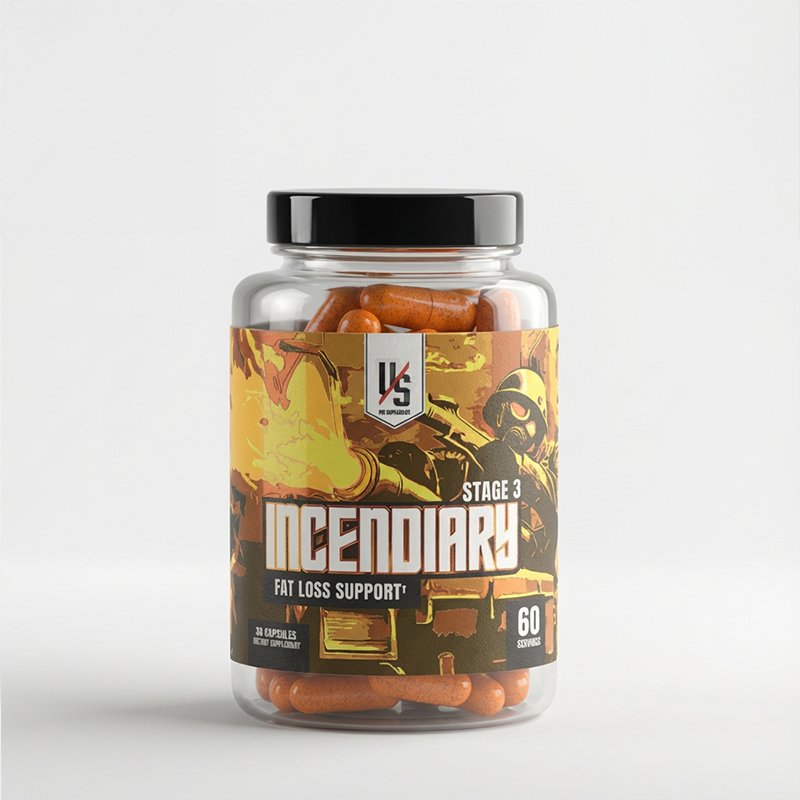
- Incendiary Stage 3 with GlucoVantage — dihydroberberine GDA, 1–2 capsules with biggest carb meals
- Incendiary Stage 2 — thermogenic fat-loss stack companion for the cut
Go deeper on the strategy side: our complete lifter’s guide to GDAs covers the mechanism, when to use, and the limitations in more depth. Ultimate Guide to Fat Loss covers the bigger picture (deficit, protein, training, supplements — in that order). Carb cycling covers how to time the carbs you’re taking a GDA with.
Not sure where to start? Take the DTC supplement quiz — two minutes, dialed-in stack recommendation.
ALWAYS FORWARD.

GEAR THAT FITS THIS POST
The products this article actually talks about. Real doses, disclosed labels, veteran owned.
Read more
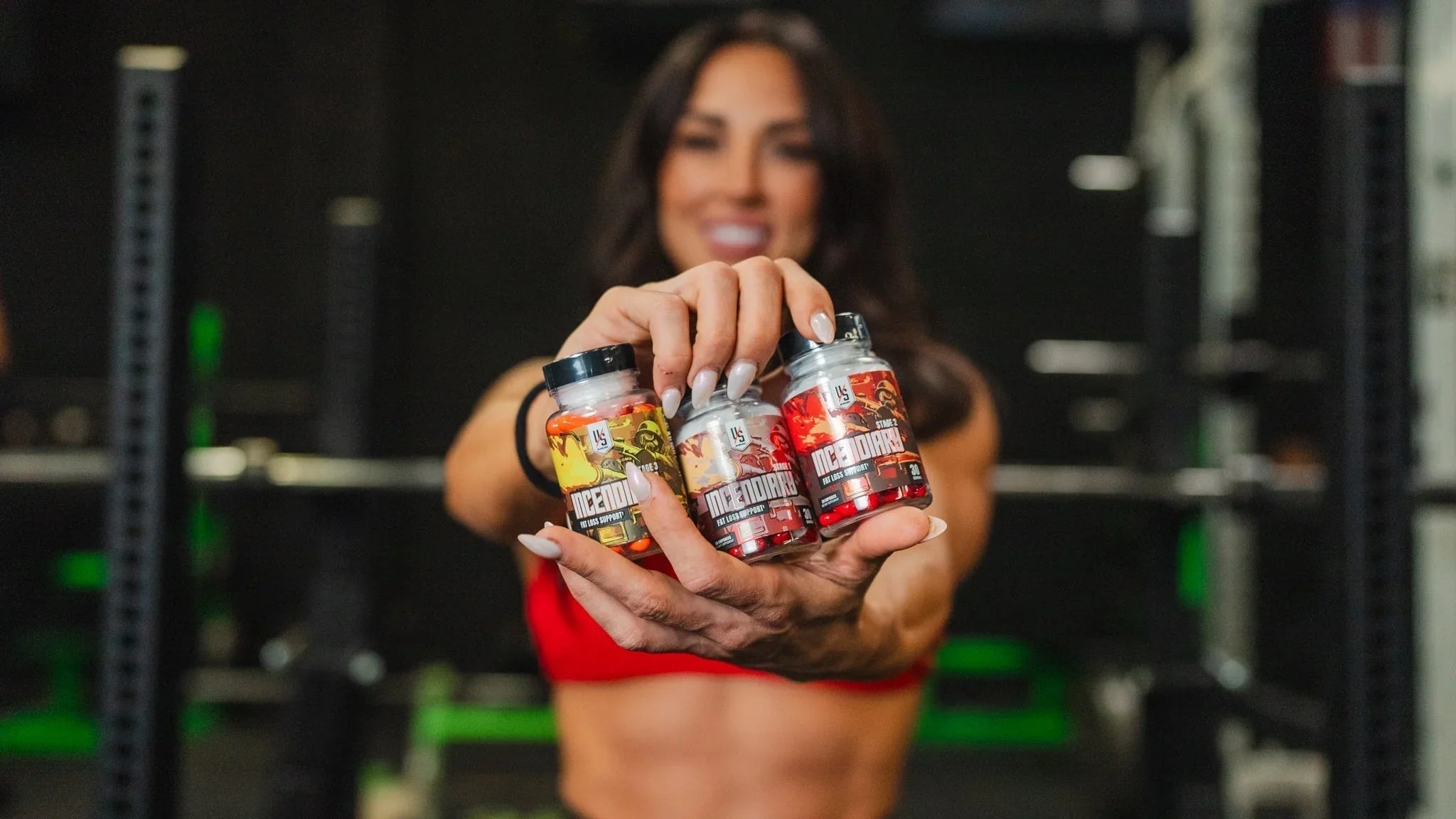
Glucose disposal agents (GDAs) help lifters store carbs in muscle, not fat. Here's how GlucoVantage works, who should use one, and who shouldn't.

The no-BS playbook for losing fat without losing muscle. Energy balance, protein, training, sleep, and the supplements that actually help.

Carb cycling means rotating high, low, and moderate carb days around your training. Here's how it works — and the honest truth about whether it burns more fat.
Your gut lining runs the same creatine energy system as your muscles. Here is what the research shows on stomach upset, IBS, colitis and leaky gut, and exactly where the human evidence stops.

Creatine gummies can work if the creatine is actually in them, and lab tests keep finding it often is not. Here is why a scoop of Creatine Monohydrate powder still wins.
Flavor doesn't change what creatine does; taking it every day is what counts. How to pick flavored or unflavored, what to mix it with, and how long it lasts once mixed.