



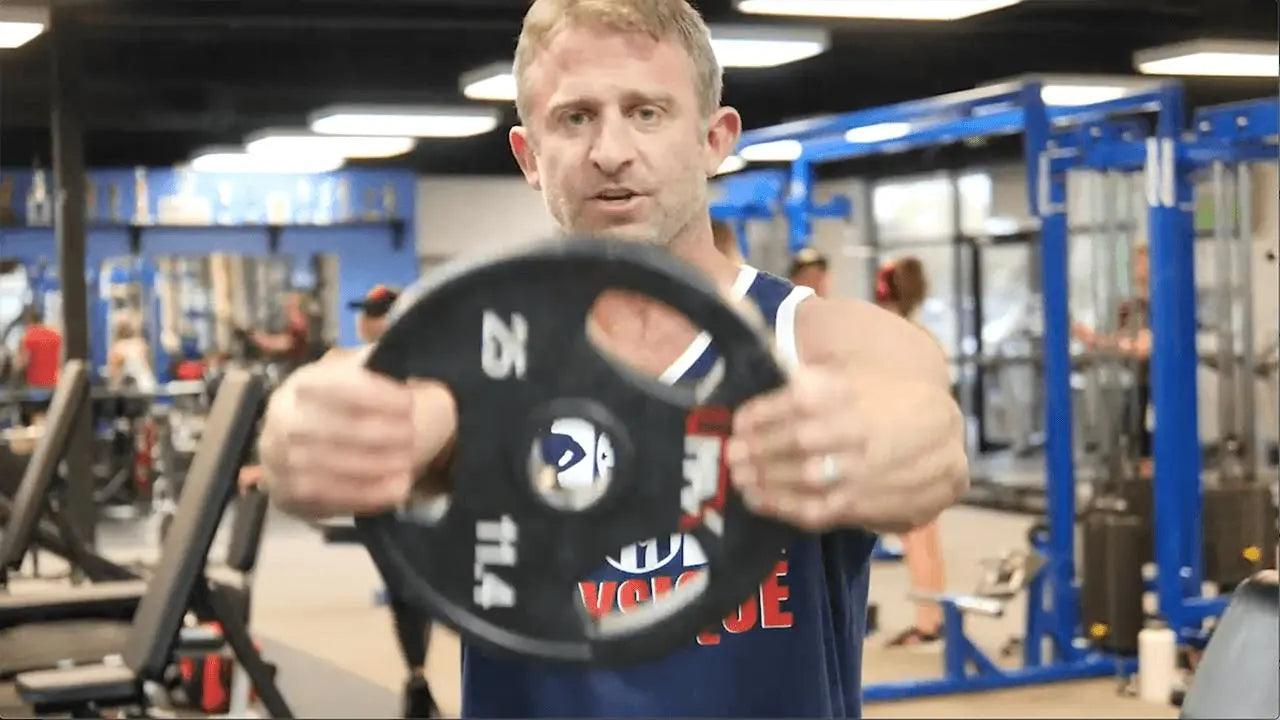
Plate Front Raises: A Better Way to Build Front Delts
By Jon Klipstein, U.S. Army Combat Veteran & Founder of Die Tryin Co., and Chet, Die Tryin Co. Athlete
Protocol verified by Chet — the technique demonstrated in the video is his actual front-delt training approach.
A PLATE INSTEAD OF DUMBBELLS — AND WHY IT MATTERS
Most lifters do front raises one way: grab two dumbbells, raise them in front of you, lower, repeat. It works. The front delt gets stimulated. No problem.
But there’s a simple swap that hits the front delt harder — and forces the inner head of the deltoid to do more of the work. Chet shows you in 30 seconds. Use a plate instead of dumbbells. Squeeze at the top of every rep.
Here’s why it works, how to execute it, and how to plug it into your shoulder day.
WATCH THE TIP (30 SECONDS)
What Chet says in the video (transcript)
“Continue with one of my favorite muscle groups — shoulder. Got another exercise for you. A lot of people use dumbbells when they’re doing their shoulders, with their front delts, raising them like that. Perfectly fine exercise. But I like using the plate. The plate allows us to get a little more tension on the shoulders, and also by squeezing the shoulder real hard we can really emphasize the inner portion of the delts. And that really brings the front delts out. Another tip for you.”
WHY A PLATE HITS THE FRONT DELT HARDER THAN DUMBBELLS
The front delt — the anterior head of the deltoid — sits on the front of your shoulder. It’s the muscle that gives your shoulder cap its rounded, capped look from the front. Build it and your overall shoulder development reads forward and three-dimensional. Underdevelop it and your shoulders look flat even when your medial delts are working.
A standard dumbbell front raise is a fine exercise. But two dumbbells in two hands let your stronger arm carry more of the work, and the grip is comfortable enough that you can muscle through reps without ever really feeling the delt squeeze.
A plate changes both problems. Both hands grip the same plate, which forces them to share the load evenly. The flat surface of the plate locks your wrists into a neutral grip and demands more forearm and stabilizer engagement to keep the plate level — that recruitment chains up into the delt. And the symmetrical hold gives you a clean isometric position at the top of each rep where you can deliberately squeeze the front and inner portion of the shoulder. The hypertrophy research is clear that mechanical tension on the target muscle is one of the primary drivers of growth, and intentional muscle activation amplifies it. The plate variation + the squeeze cue combine both.
HOW TO EXECUTE THE PLATE FRONT RAISE
Light plate. This is a feel-and-isolate exercise. Most lifters reach for too much weight on front raises — the plate forces you to stay honest because you can’t cheat as easily with momentum.
Setup. Stand tall, plate held between both hands at hip level, hands gripping the flat sides of the plate (one on each side, fingers spread). Slight bend in the elbows. Don’t lock out.
Execution. Raise the plate straight out in front of you, arms parallel to the floor, plate at shoulder height. Don’t go higher — above shoulder level the work shifts onto the upper traps.
The squeeze. At the top of every rep, pause for a beat and consciously squeeze the front and inner portion of your delt. This is the cue Chet emphasizes — it’s the whole reason the variation works. Without the deliberate squeeze, you’re just doing a slower dumbbell raise with a plate.
Eccentric. Lower slowly. Two to three seconds down. Maintain tension all the way back to the start position. Don’t crash the plate to your hips.
Rep range. 12-15 reps per set. If you can’t hit 12 strict reps with a hard squeeze at the top, the plate is too heavy. Drop to a lighter plate. The point is feel, not load.
HOW TO PROGRAM IT INTO YOUR SHOULDER DAY
Plate front raises aren’t a replacement for compound shoulder work — they’re an isolation finisher. Slot them in toward the end of your shoulder session, after the heavier movements (overhead press, dumbbell press) and after your lateral raise work.
Three sets of 12-15 with a deliberate squeeze at the top is a clean starting point. Add a fourth set when the third feels easy. If front delts are your lagging area, you can pre-fatigue them with plate raises at the start of the session before the heavier compounds — light weight, high reps, full ROM, big squeeze.
Plug them into your week via a push/pull/legs or upper/lower split — shoulders hit on push day in both structures.
BEYOND PLATE FRONT RAISES
One technique change won’t single-handedly build delts. The whole shoulder needs work — front, side, and rear — with the right volume and frequency.
For medial (side) delt width, read the companion tip: pinky-up lateral raises for bigger side delts — another simple grip change that biases more work onto the target muscle. For the full medial delt playbook, the top 5 ways to build bigger side delts is the canonical guide. For rear delts (the part most lifters skip), read the rear delt breakdown.
For a complete shoulder day in action from Chet himself, watch Chet’s massive shoulder day — full session, multiple angles, the plate front raise in context. For women’s shoulder training, see Jenna’s shoulder day. And if you’re working the rest of the upper body, Garrett’s bicep growth guide + tricep guide round out push and pull days. The full programming framework lives in the Muscle Building pillar.
FAQ
Why a plate instead of dumbbells?
Two hands on the same plate force both arms to share the load evenly (no stronger arm carrying the weak side), and the flat-surface grip recruits more forearm and stabilizer involvement that chains into the delt. The clean symmetrical hold also lets you cleanly squeeze the front delt at the top of every rep — that intentional squeeze is the whole point.
What size plate should I use?
Start with a 10 or 25-pound plate depending on your current shoulder strength. The goal is hitting 12-15 strict reps with a hard squeeze at the top. If you can’t squeeze, drop the weight. Big plate, no feel = wasted set.
Does this replace dumbbell front raises?
No — add it. Standard dumbbell front raises still have their place. Plate front raises are the variation you add when you want to bias more of the work into the front and inner portion of the delt specifically.
How high should I raise the plate?
Shoulder height. Stop when your arms are parallel to the floor. Going higher (above shoulder level) shifts the work onto the upper traps and reduces the load on the front delt — which is the opposite of what you want.
Will my front delts feel sore the next day?
Often yes — especially if you’ve been training front raises without a deliberate squeeze for years. The pause at the top with conscious activation hits tissue that fast, momentum-driven reps tend to skip. New soreness in a familiar exercise usually means the cue is working.
How does this fit with the pinky-up lateral raise tip?
The two tips target different parts of the shoulder. Pinky-up lateral raises bias the medial delt (side, for width). Plate front raises bias the front and inner delt (for the rounded cap from the front). Pair them in the same shoulder day for full coverage — one for width, one for cap.
READY TO GEAR UP?
Big training breakthroughs aren’t usually new exercises — they’re small refinements that let you hit the right muscle harder with the same effort. Plate front raises with a deliberate squeeze are exactly that. Cheap, easy, no new equipment beyond a plate.
Need a stack to back the work? SEND IT 3.0 for pre-workout focus and pump, Creatine Monohydrate for the training volume that builds delts over time. Or take the quiz for a stack matched to your goals.
ALWAYS FORWARD.
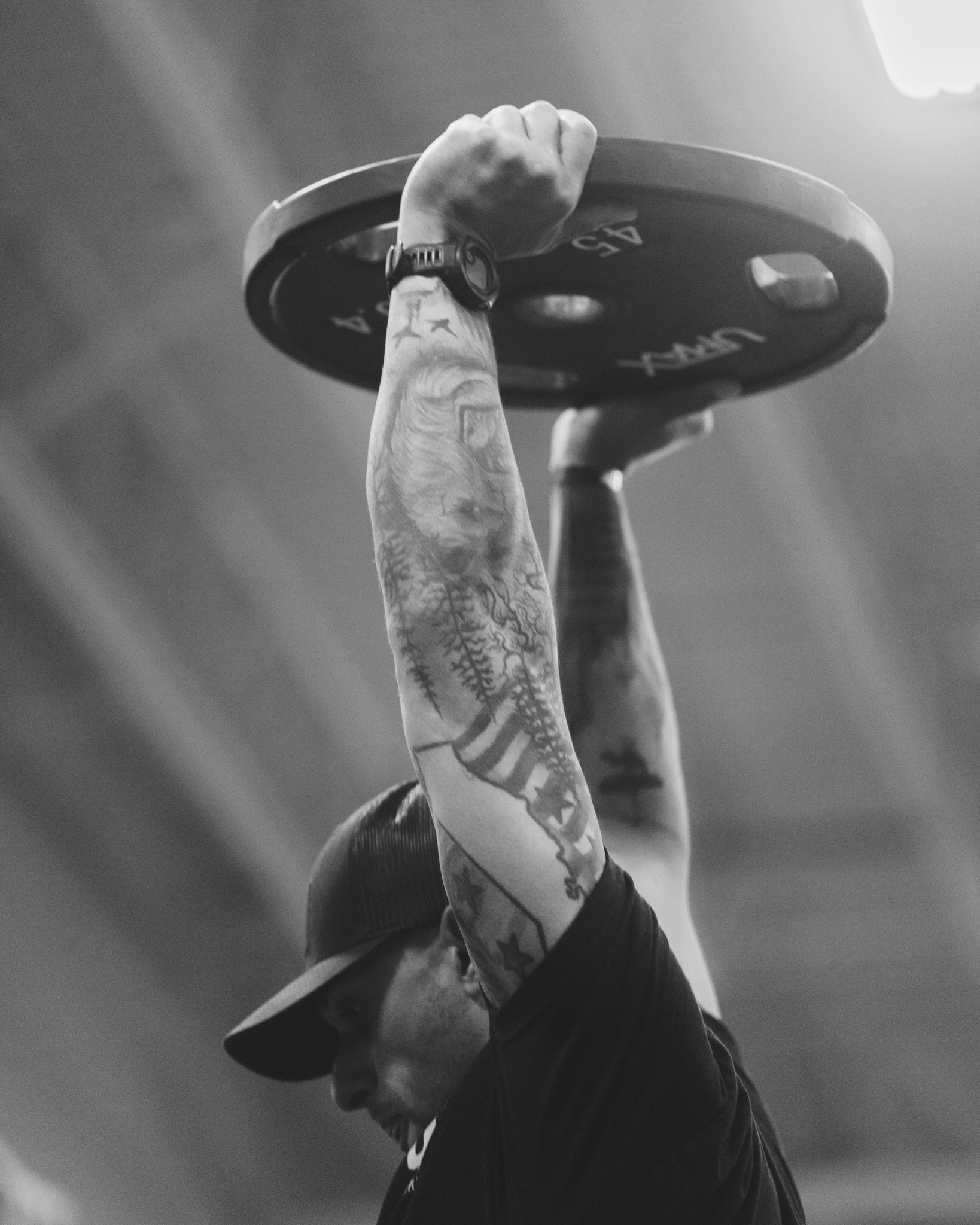
GEAR THAT FITS THIS POST
The products this article actually talks about. Real doses, disclosed labels, veteran owned.

Read more

There's no perfect split — only the one you'll stick to. PPL vs. upper/lower broken down, plus how to choose the best workout split for your week.
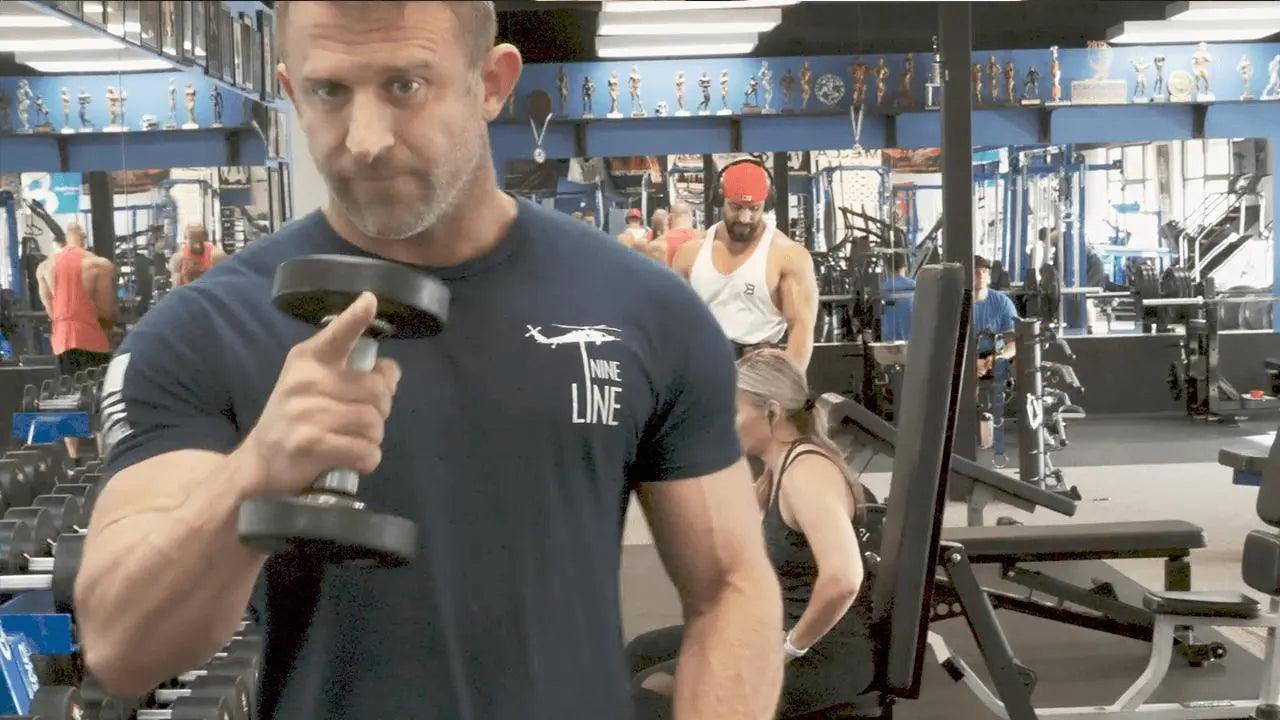
A 60-second technique tip that biases more work onto the medial delt — the side of your shoulder. Costs nothing, builds width.
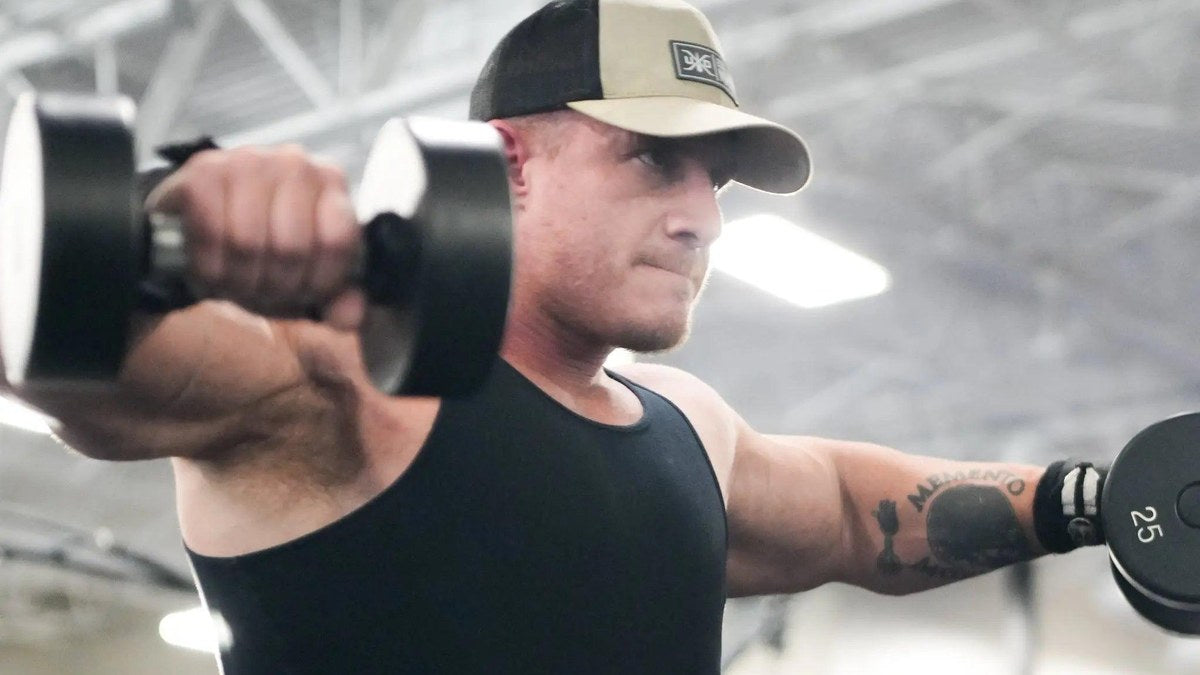
The side delt barely participates in your presses. Five research-backed moves that build actual width, from hand position to the dumbbell-vs-cable verdict.
The posterior deltoid is the one head you can't see, can't feel when your traps take over, and barely touch when you press. Here's how to fix all three.
DTC trainer Chet Nichols walks you through his shoulder day — tempo-driven working sets, reverse-grip overhead press, the brutal FST-7 lateral protocol, and why he saves rear delts for back day.

DTC athlete Jenna Fiscus walks you through her shoulder day — rotator cuff warmup, 5 main exercises, a 15-15-15 burnout, and a plank-circuit abs finisher.