




Pinky-Up Lateral Raises: A Grip Change for Bigger Side Delts
By Jon Klipstein, U.S. Army Combat Veteran & Founder of Die Tryin Co., and Garrett Ussery, NASM-CPT & 2025 Idaho Cup Overall Champion
A SIMPLE GRIP CHANGE THAT FORCES MORE GROWTH
Most lifters do lateral raises the same way: palms facing down, dumbbells out to the sides, raise to shoulder height. Standard. Nothing wrong with it.
But there’s a small variation that hits the medial delt harder — the side delt — and most lifters never use it. It costs nothing. It doesn’t require new equipment, more weight, or extra time. You just change where your pinkies point.
Here’s the tip, the mechanics behind why it works, and how to plug it into your shoulder day.
WATCH THE TIP (60 SECONDS)
What the video covers (transcript)
Chet:
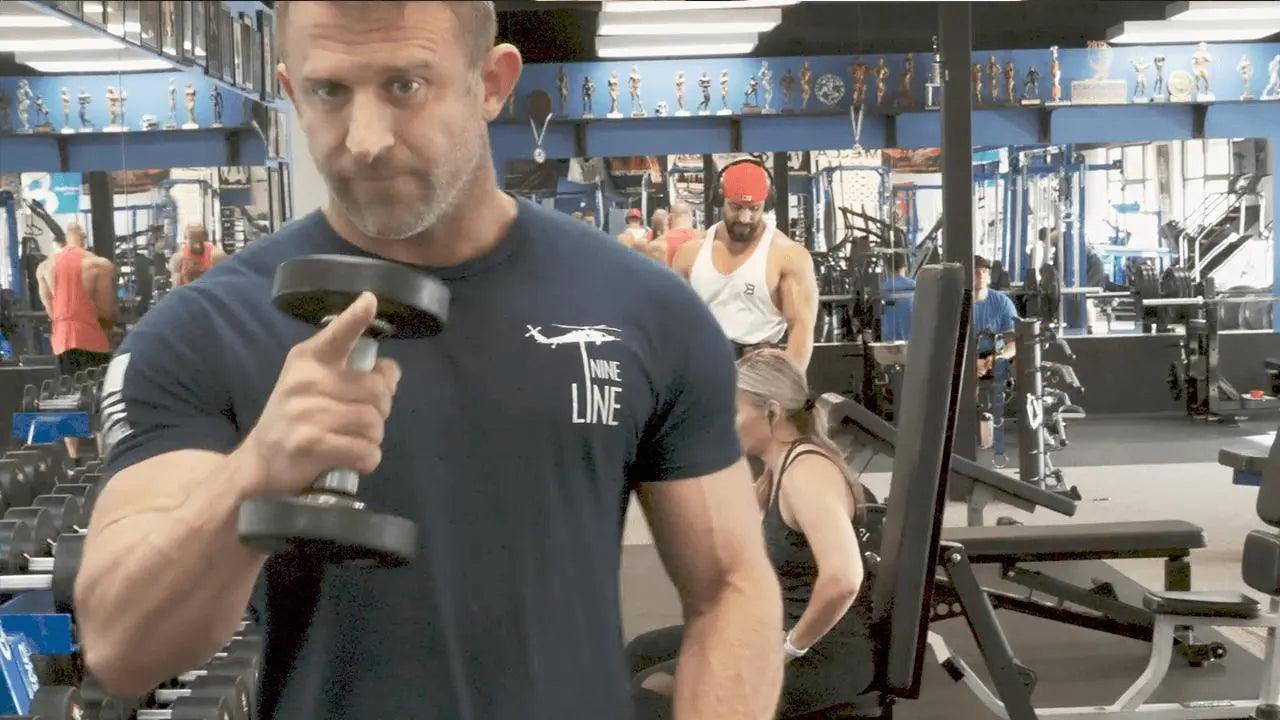
“Today I’m going to talk about my favorite muscle group — shoulders. I absolutely love them. So we’re doing lateral raises, which is really good for size. Most people put their palms over their raises — absolutely nothing wrong with that. This is a little bit different. Instead of putting your palms together, put them like this — raise your pinkies in the air. Hitting them this way, you will hit your medial delts a lot harder, and you might just get a little extra growth out of them.”
WHAT “PINKIES UP” ACTUALLY CHANGES
The medial deltoid — the side of your shoulder — is the muscle that creates width. Build it and your shoulders look wider, your waist looks smaller by contrast, and your overall frame reads more athletic. Underdevelop it and your shoulders look narrow and front-heavy.
Standard lateral raises (palms down) recruit the medial delt well, but a chunk of the work spills over into the anterior (front) delt and the upper traps. That’s where most lifters lose tension on the target muscle — the side delt does some work, but other muscles share the load.
Tilting the pinkies up — rotating the forearm so the thumb points slightly down — changes the line of pull. The arm internally rotates at the shoulder. That biomechanical shift biases the load away from the front delt and traps and onto the medial delt specifically. More tension on the target muscle = more growth stimulus. The hypertrophy research is clear: mechanical tension on the working muscle is one of the primary drivers of growth. The grip change concentrates that tension where you want it.
HOW TO EXECUTE THE PINKY-UP VARIATION
Light dumbbells. This is a feel-and-isolate exercise, not a strength move. Most lifters use too much weight on lateral raises — pinky-up forces you to use less, which is the point.
Setup. Stand tall, dumbbells at your sides, slight bend in the elbows. Don’t lock out.
Grip. Rotate the dumbbells so your pinkies are slightly higher than your thumbs — like you’re pouring water out of a pitcher at the top of each rep.
Execution. Raise the dumbbells out and slightly forward (not straight to the side — about 30 degrees forward of pure lateral). Stop at shoulder height. The pinky stays up. Pause for a beat at the top, feel the side delt squeezed.
Eccentric. Lower slowly. Two to three seconds down. The eccentric is where most of the growth stimulus lives — don’t throw the weight back to your sides.
Rep range. 12-20 reps per set. Higher reps with lighter weight outperform low-rep heavy on isolation work. If you’re still strict at rep 15, the weight is right.
HOW TO PROGRAM IT INTO YOUR SHOULDER DAY
Pinky-up lateral raises aren’t a replacement for everything — they’re an addition. Slot them in as the second or third movement of your shoulder day, after a heavier compound (overhead press, dumbbell press, or machine shoulder press).
Three sets of 12-15 reps at the end of your lateral raise volume is a clean starting point. Add a fourth set when the third gets too easy. If side delts are your main lagging area, you can run pinky-up laterals at the start of the session as a pre-fatigue movement — light weight, high reps, full ROM — before the heavier compounds.
Plug them into your week via a push/pull/legs or upper/lower split — shoulders get hit on push day in either structure.
BEYOND PINKY-UP LATERAL RAISES
One technique change won’t single-handedly build delts. The whole shoulder needs work — front, side, and rear — with the right volume and frequency.
For the full medial delt playbook, read the top 5 ways to build bigger side delts — the comprehensive guide this tip lives inside. For front delt work, the front delt training tip covers another grip-and-angle variation. For rear delt growth (the part of the shoulder most lifters under-train), read the rear delt breakdown.
For a complete shoulder day in action, watch Chet’s massive shoulder day — full session, multiple angles, programming you can copy. And if you’re also working on arms, Garrett’s bicep growth guide + tricep guide round out the upper body. The full programming framework lives in the Muscle Building pillar.
FAQ
Why pinkies up specifically?
Rotating the forearm so the pinky is higher than the thumb internally rotates the shoulder. That shifts the line of pull off the front delt and traps and onto the medial delt — the side of the shoulder — where you want the work. More tension on the target muscle = better growth stimulus.
How much weight should I use?
Less than you think. Pinky-up lateral raises are a feel-and-isolate movement. If you can’t hit 12-15 strict reps, the weight is too heavy. Cheating reps defeats the purpose — you lose the mechanical tension on the target muscle.
Will this replace standard lateral raises?
No — add it to your shoulder day, don’t replace. Standard palm-down lateral raises still have their place. Pinky-up is the variation you add when you want to bias more of the work to the medial delt specifically.
How often should I train shoulders?
Two times per week is the sweet spot for most lifters. One heavy compound-focused day (overhead press, push press) plus one isolation-focused day where pinky-up laterals fit perfectly.
Will my shoulders feel different the next day?
Often yes. Lifters who’ve been training laterals heavy for years sometimes feel medial delt soreness for the first time after switching to pinky-up reps with lighter weight and slower tempo. That’s usually a sign the variation is hitting tissue the standard version was missing.
Does this work for the long head of the lat too?
No — pinky-up is a lateral raise cue for the shoulder. For lat width, the analogous concept is full ROM pulldowns and pullovers. Different muscle, different cue.
READY TO GEAR UP?
The big training breakthroughs aren’t usually new exercises — they’re small refinements that let you hit the right muscle harder with the same effort. Pinky-up lateral raises are exactly that. Cheap to add, easy to execute, real growth payoff when you actually feel the side delt working.
Need a stack to back the work? SEND IT 3.0 for pre-workout focus and pump, Creatine Monohydrate for the training volume that builds delts over time. Or take the quiz for a stack matched to your goals.
ALWAYS FORWARD.
GEAR THAT FITS THIS POST
The products this article actually talks about. Real doses, disclosed labels, veteran owned.

Read more
There's no perfect split — only the one you'll stick to. PPL vs. upper/lower broken down, plus how to choose the best workout split for your week.
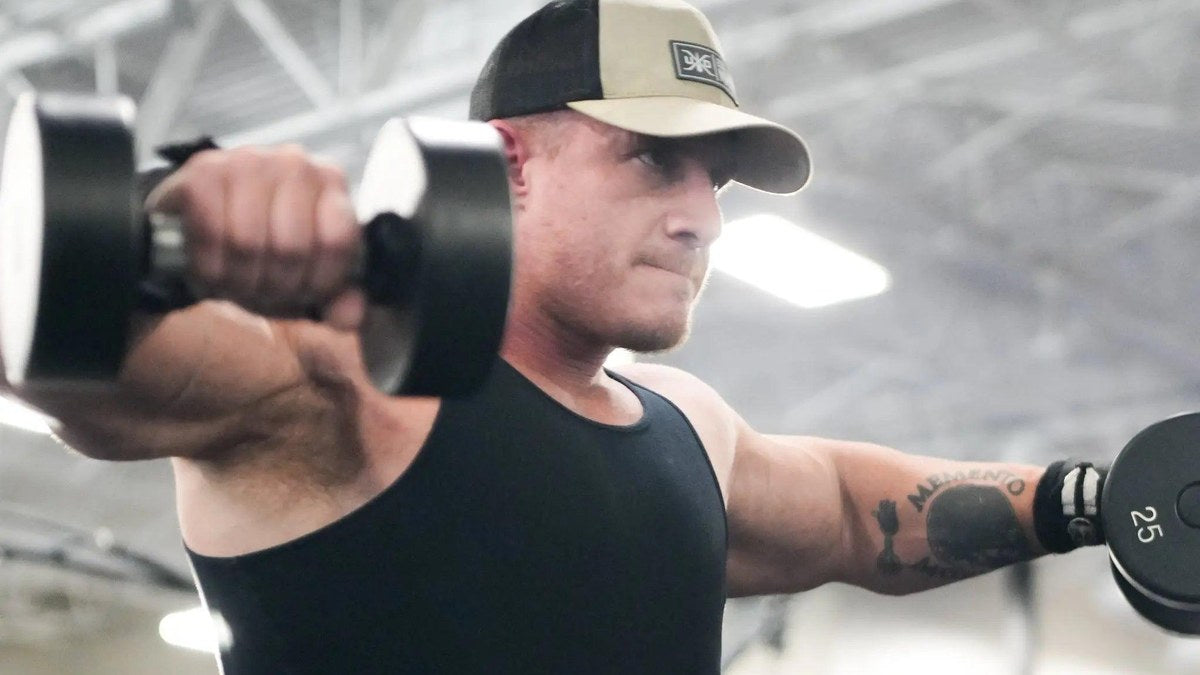
The side delt barely participates in your presses. Five research-backed moves that build actual width, from hand position to the dumbbell-vs-cable verdict.
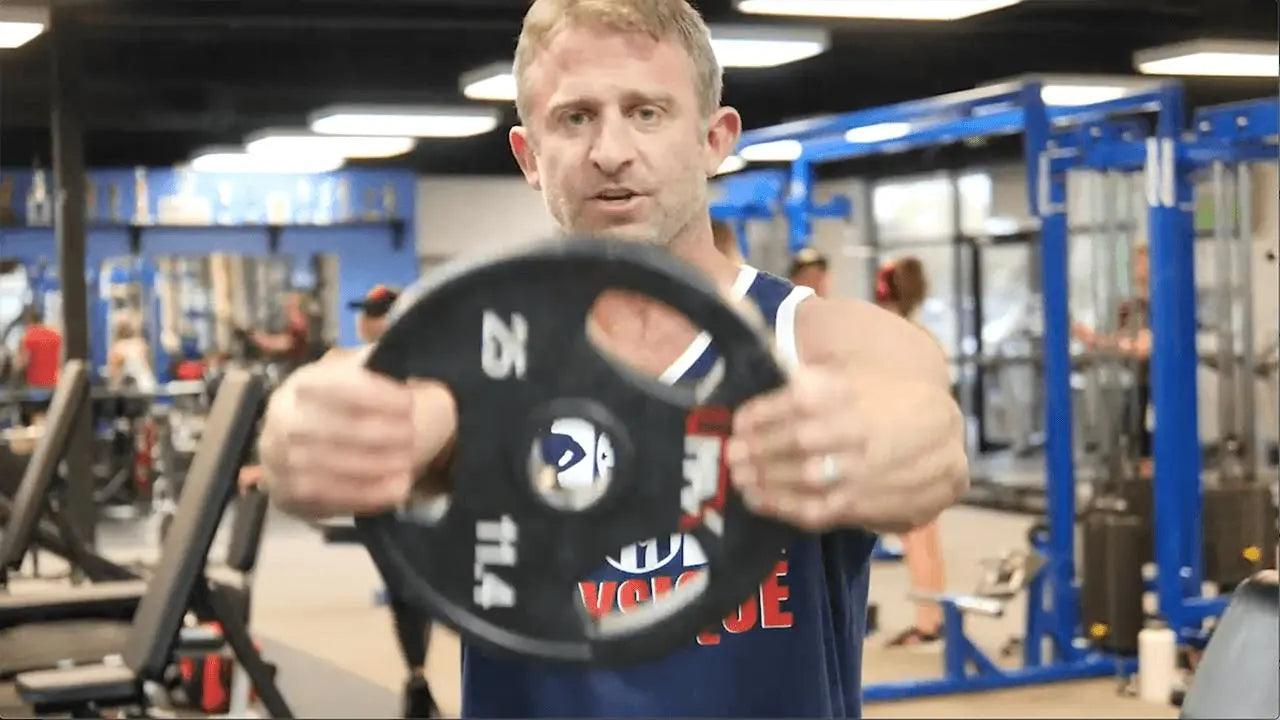
A 30-second technique tip from Chet — swap dumbbells for a plate, squeeze hard at the top, build the front and inner portion of the delt.
The posterior deltoid is the one head you can't see, can't feel when your traps take over, and barely touch when you press. Here's how to fix all three.
DTC trainer Chet Nichols walks you through his shoulder day — tempo-driven working sets, reverse-grip overhead press, the brutal FST-7 lateral protocol, and why he saves rear delts for back day.
Bigger biceps don't come from endless curls. The real strategy: anatomy, training mistakes, the 4 best exercises (incline curl, hammer, cable, preacher), sets/reps, and recovery.