

Chet's Massive Shoulder Day: FST-7, Tempo, Reverse Grip
By Jon Klipstein, U.S. Army Combat Veteran & Founder of Die Tryin Co., and Chet Nichols, Die Tryin Co. Trainer
Protocol verified by Chet Nichols — the workout demonstrated in the video is his actual shoulder day routine.
SHOULDERS BUILD THE 3D LOOK — AND CHET TRAINS ALL THREE HEADS
Most lifters train shoulders like one muscle. Press something overhead, do a few side raises, walk out. The shoulder is actually three distinct heads — front (anterior), side (medial), and rear (posterior). Train them as one and you get the same shape most lifters complain about: flat from the front, narrow from the side, and underdeveloped at the back.
Chet trains them like three. His shoulder day is built around tempo discipline, a reverse-grip press for the front-delt and chest-delt tie-in, and the brutal FST-7 protocol on lateral raises. He also runs rear delts on a different day entirely — pulling a page directly out of legendary bodybuilding coach Charles Glass’s playbook.
Here’s the full protocol, the science behind the tempo, and how to run a version of it in your own week.
WATCH CHET RUN THROUGH HIS SHOULDER DAY
This video is from our Die Tryin Co. archive. UXO Supplements is now Die Tryin Co. — same crew, new name.
What Chet says in the video (transcript)
“When I’m first warming up, especially the shoulders, I kind of like to take a real nice slow tempo — speed up on the contraction and slow down on the eccentric. However, about the last four or five reps, I really like to do a few partial reps to really get that blood flow going. It just sets me up for a really good workout.
This was my first working set, and the main difference is we added more weight to it and still kept a slow tempo, but I really didn’t do any burnout partials at the end — trying to save my strength for the other two sets.
Now I’m on my working sets. I’m really focusing more on the tempo of the workout. We want to pretty much have an explosive concentric motion — which is the contraction of the muscle — but we want to slow down the tempo a little bit on the eccentric. It’s about half the speed of what I’m pressing up. What this allows is a slower eccentric motion, which is a major aspect of hypertrophy. So we’re going to optimize our gains by really accentuating that eccentric motion. Hypertrophy: 8 to 12 rep range, about a one-second concentric and a two-second eccentric is going to give you the most bang for your buck.
For my second exercise, I really like to throw in reverse-grip barbell overhead presses. For me I really feel this in the front delts — and doing it this way kind of gets that tie-in between the chest and delt, giving that nice 3D look to the shoulders. Because in just about every category, you’re going to be seen at different angles, so you’ve got to make sure you bring up the front delts, the medial delts, and of course the rears too. A lagging one of those parts will throw you off when you’re hurting on the stage. And if you’re going to the beach, you don’t want to look disproportionate — because we are talking about the glamour muscles here, right?
So today we’re doing three exercises. We’ve already done overhead press shoulders with the machine. Then we did the reverse-grip barbell overhead press. The third one we’re going to do is FST-7 lateral raises.
I typically do not work my rear delts on shoulder day. I take a page out of Charles Glass’s playbook — he likes to hit the rear delts after back day. By working the back first and really fatiguing it, then hitting your rear delts, you don’t have the back take it over. You can emphasize that effect a little more. So today it’s just going to be medial delts and front delts.
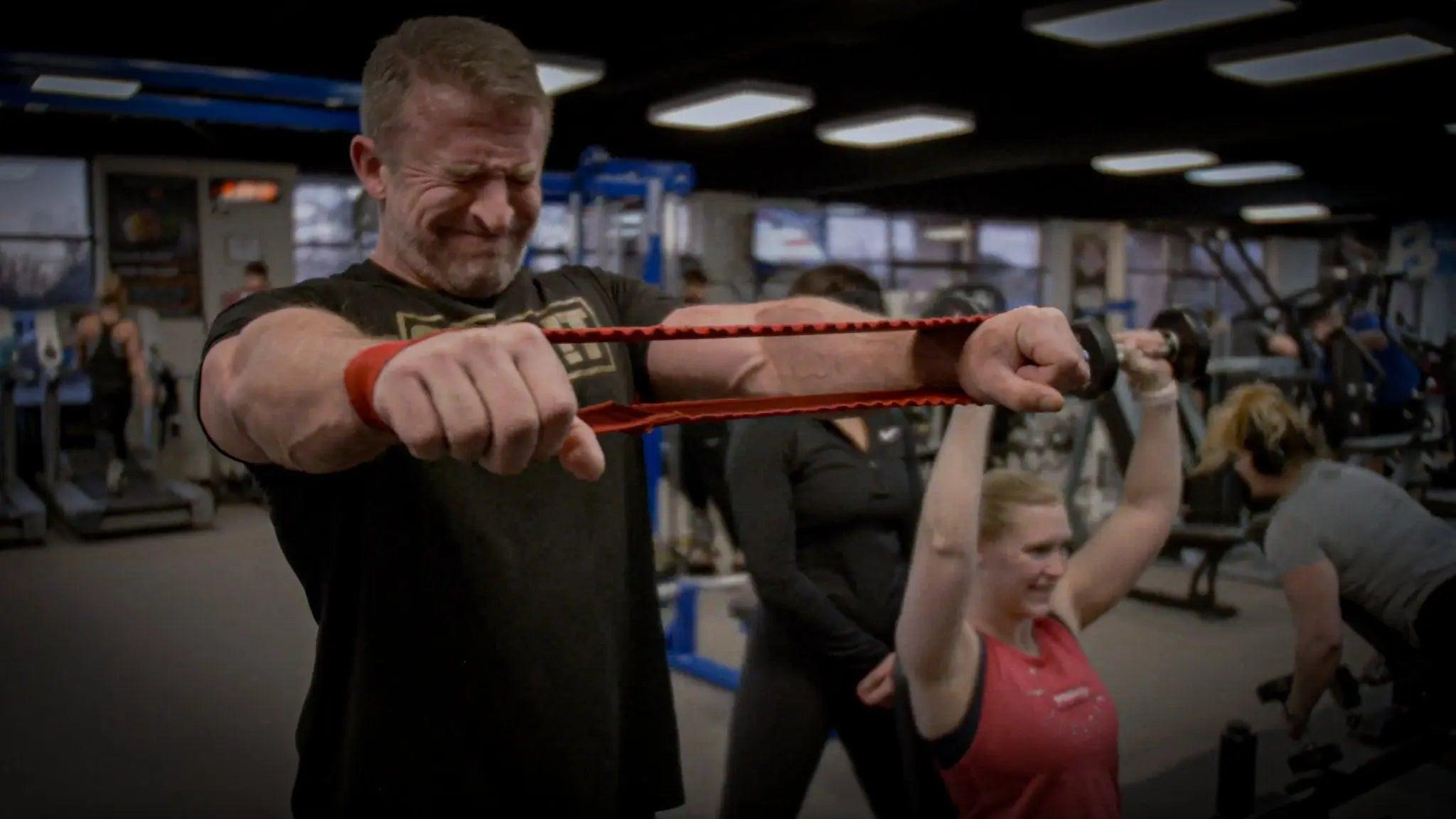
FST-7 — FST stands for Fascia Stretch Training. The 7 stands for 7 sets. In between sets, you’re either contracting the muscles, flexing them, or doing isometrics — something like that for 20 seconds. Which is why I’m using a band, because then I have a spotter. By pulling out as hard as I can for 20 seconds, to the point I have nothing left in me, then you’ve done it right. Then you rest for 20 seconds, then you repeat the process. This is a 7-set workout, and it’s brutal.
Now we’re going with a band up top on these. Have you got the band or somebody holding your arms up — if you can go longer than 20 seconds, you’re not doing it hard enough. Typically you want to go in the 12-15 rep range with your weights. That one I barely got through 11 reps, so it’s time to drop the weights down — otherwise my form will be compromised too much. You don’t want to compromise your form. A little bit of body English maybe okay on the last couple of reps, but if you start to have to use it too much, throw that ego out the door. Drop your weights and do it correctly.
First time I use resistance with the bands. This third set I’m going to do a little stretching — one of my favorite stretching exercises. Cross the hands around the shoulders, take deep breaths in, and when you let it out, try to stretch a little further. It actually should feel pretty good.
So again, you do 7 sets, typically 12 to 15 rep range, stretch/flex/iso for 20 seconds, rest 20 seconds, repeat. FST-7 training for you.”
“EXPLOSIVE CONCENTRIC, SLOW ECCENTRIC” — THE TEMPO PRINCIPLE
Chet’s entire shoulder day is built around tempo discipline. He says it directly:
“Hypertrophy: 8 to 12 rep range, about a one-second concentric and a two-second eccentric is going to give you the most bang for your buck.”
This is the locked tempo for growth-focused training. Explosive on the way up (the muscle shortens, the contraction phase). Slow on the way down (the muscle lengthens under load, the eccentric phase). The eccentric is where most of the hypertrophic stimulus actually comes from — the hypertrophy research confirms that mechanical tension across the eccentric phase is one of the strongest drivers of muscle growth.
Most lifters do the opposite: they grind on the way up (because the weight is heavy), then drop it back down with no control on the eccentric. They’re skipping the half of the rep that builds the most muscle. Chet’s 1-second-up / 2-second-down protocol locks the tempo in. If it feels too easy, the weight isn’t the problem — the tempo is.
REVERSE-GRIP OVERHEAD PRESS — FRONT DELT + CHEST TIE-IN
Chet’s second exercise is a reverse-grip barbell overhead press. The grip change shifts the load forward onto the anterior delt and into the top of the chest, creating what he calls the “3D look” of a developed shoulder cap from the front:
“In just about every category, you’re going to be seen at different angles, so you’ve got to make sure you bring up the front delts, the medial delts, and of course the rears too. A lagging one of those parts will throw you off when you’re hurting on the stage. And if you’re going to the beach, you don’t want to look disproportionate.”
The principle: shoulders are visible from every angle — front, side, back. A complete shoulder needs work in all three planes. Reverse-grip overhead pressing biases the load toward the anterior delt specifically (the part of the shoulder most visible from the front and the part that ties into the upper chest).
For another simple front-delt biasing technique, see Chet’s plate front raise tip — the trap-grip / pinkies-in cue that hits the front and inner portion of the delt. For medial delt width (the side of the shoulder that creates V-taper), the pinky-up lateral raise tip covers the grip variation Chet doesn’t address in this video.
FST-7 LATERAL RAISES — FASCIA STRETCH TRAINING
Third exercise. This is where the session gets brutal. Chet explains:
“FST stands for Fascia Stretch Training. The 7 stands for 7 sets. In between sets, you’re either contracting the muscles, flexing them, or doing isometrics — something like that for 20 seconds. Then you rest for 20 seconds, then you repeat the process. This is a 7-set workout, and it’s brutal.”
FST-7 is a bodybuilding training protocol developed by Hany Rambod that uses high-volume sets with short rest periods and active stretch/isometric work between sets to drive blood and nutrients into the target muscle. The 20-second isometric load between sets keeps continuous tension on the working muscle while delivering an intense pump.
The execution: 7 working sets of lateral raises at 12-15 reps each, with a 20-second band-resisted isometric hold between every set, then 20 seconds of rest, then back to the next set. Total time under tension over the 7 sets is significant — which combines mechanical tension with metabolic stress. Both are drivers of hypertrophy per the same Schoenfeld research cited above.
Chet uses a band as a stand-in for a spotter holding his arms up during the isometric. If you have a training partner, they can press down on the dumbbells while you hold position. Either tool works.
WHY CHET SKIPS REAR DELTS ON SHOULDER DAY
This is one of the smarter programming moves in the whole session. Most lifters tack rear delts onto the end of shoulder day and wonder why they never grow. Chet doesn’t do that:
“I typically do not work my rear delts on shoulder day. I take a page out of Charles Glass’s playbook — he likes to hit the rear delts after back day. By working the back first and really fatiguing it, then hitting your rear delts, you don’t have the back take it over. You can emphasize that effect a little more.”
The principle: rear delts share movement patterns with the upper back (rhomboids, mid-traps). If you train both in the same session with back going first, the back is fresh and dominates the work — your rear delts barely get loaded. If you flip the order or split them onto a different day, the rear delts actually get isolated.
Charles Glass — legendary IFBB Pro bodybuilding coach, often called “the godfather of bodybuilding coaching” — has trained dozens of pros using this same strategy. Chet’s applying it directly. For the dedicated rear-delt programming, see grow bigger rear delts — pair it with your back day per the Charles Glass / Chet protocol.
This connects naturally to back-day programming. Jenna’s back day shows a complementary upper-body session structure on the other side of the split — together, the two sessions cover the entire upper body across a week.
WARMUP AND WORKING-SET PROGRESSION
Chet’s session ramps from light warmup to heavy working sets with smart tempo discipline throughout. His warmup philosophy:
“When I’m first warming up, I take a real nice slow tempo — speed up on the contraction and slow down on the eccentric. The last four or five reps, I do a few partial reps to really get that blood flow going. It sets me up for a really good workout.”
The partial reps at the end of the warmup are doing a specific job — pre-pumping the working muscle so the first working set has full blood flow to the target tissue. This is a small detail most lifters skip; it pays off over the rest of the session.
His progression across working sets: add weight, keep the slow tempo, drop the burnout partials on the first working set to preserve strength for the remaining sets. By the third or fourth working set, he’s fully into the tempo-driven 1-second-up / 2-second-down rhythm with no extra burnout work — the volume itself is doing the work.
FORM OVER EGO — CHET’S NON-NEGOTIABLE
One last principle worth pulling out separately:
“Typically you want to go in the 12-15 rep range. If you can’t get 12, drop the weight. You don’t want to compromise your form. A little body English maybe okay on the last couple of reps, but if you start to have to use it too much, throw that ego out the door. Drop your weights and do it correctly.”
This is what separates trainer-level coaching from gym-bro programming. The weight on the bar doesn’t matter if the form isn’t loading the target muscle. Chet calls out the exact point: a little momentum on the final couple reps is fine, but if you’re cheating from rep 5 on, you’re wasting the set. Drop the weight, do it right, and the muscle actually grows.
HOW TO RUN THIS IN YOUR OWN WEEK
The full programming implication of Chet’s session: shoulders are trained on a dedicated day, rear delts get added to back day, and tempo discipline runs through every working set. Plug this into a push/pull/legs or upper/lower split:
PPL split: shoulders go on push day; rear delts on pull day after back work. Three exercises per shoulder session (one compound machine press, one reverse-grip barbell press, one FST-7 lateral) is enough volume when run with this tempo.
Upper/lower split: shoulders are one block of the upper session; rear delts get added to the other upper session after back work.
For the rest of the upper body, pair this with Chet’s sister content on plate front raises and Garrett’s pieces on biceps and triceps. The full programming framework lives in the Muscle Building pillar. For women’s shoulder programming with a similar rotator-cuff-warmup approach, see Jenna’s shoulder day.
FAQ
What does FST-7 stand for?
Fascia Stretch Training, 7 sets. It’s a bodybuilding protocol developed by Hany Rambod that uses high-volume sets with short rest periods and isometric/stretch work between sets to drive blood and nutrients into the target muscle.
Why slow eccentric instead of just heavy weight?
The eccentric phase (lowering) is one of the strongest drivers of muscle growth per the hypertrophy research. Chet’s 1-second-up / 2-second-down ratio doubles the time under tension on the eccentric without requiring more weight. More tension on the muscle = more growth signal.
Why train rear delts on back day instead of shoulder day?
Rear delts and upper-back muscles share movement patterns. On shoulder day, the rear delts get less direct work because they’re always assisting the bigger shoulder movements. On back day after the big rowing/pulldown work, you can isolate the rear delts when the back is already fatigued — they take more of the load instead of riding along.
Do I need a band for FST-7 lateral raises?
If you have a training partner, they can press down on the dumbbells during the 20-second isometric instead. The band is just the no-spotter solution. Same principle either way: maintain isometric tension on the working muscle between sets.
How heavy should the dumbbells be on FST-7 laterals?
Light enough that you can hit 12-15 strict reps with the slow eccentric tempo on every set. Chet calls out the test: if you only get 11 strict reps, drop the weight. The point is hitting all 7 sets with full ROM and form intact — not maxing out on set one and grinding through the rest.
How often should I train shoulders this hard?
Twice a week is the standard for most lifters who want shoulder growth. This Chet session would be the heavy/volume day; the second shoulder day could be lighter accessory work or technique tips like the pinky-up lateral raise variation.
Will FST-7 work for other muscle groups too?
Yes — FST-7 is most often used on smaller muscle groups (shoulders, biceps, triceps, calves) where you can sustain 7 sets without breaking form. Bigger compound lifts (squat, deadlift, bench) are usually too taxing to run FST-7 protocols on without burnout.
READY TO GEAR UP?
Run Chet’s protocol. Slow eccentric, explosive concentric, 12-15 reps. Reverse-grip presses for front-delt and chest tie-in. FST-7 laterals for the brutal burnout. Skip rear delts — save them for after back day.
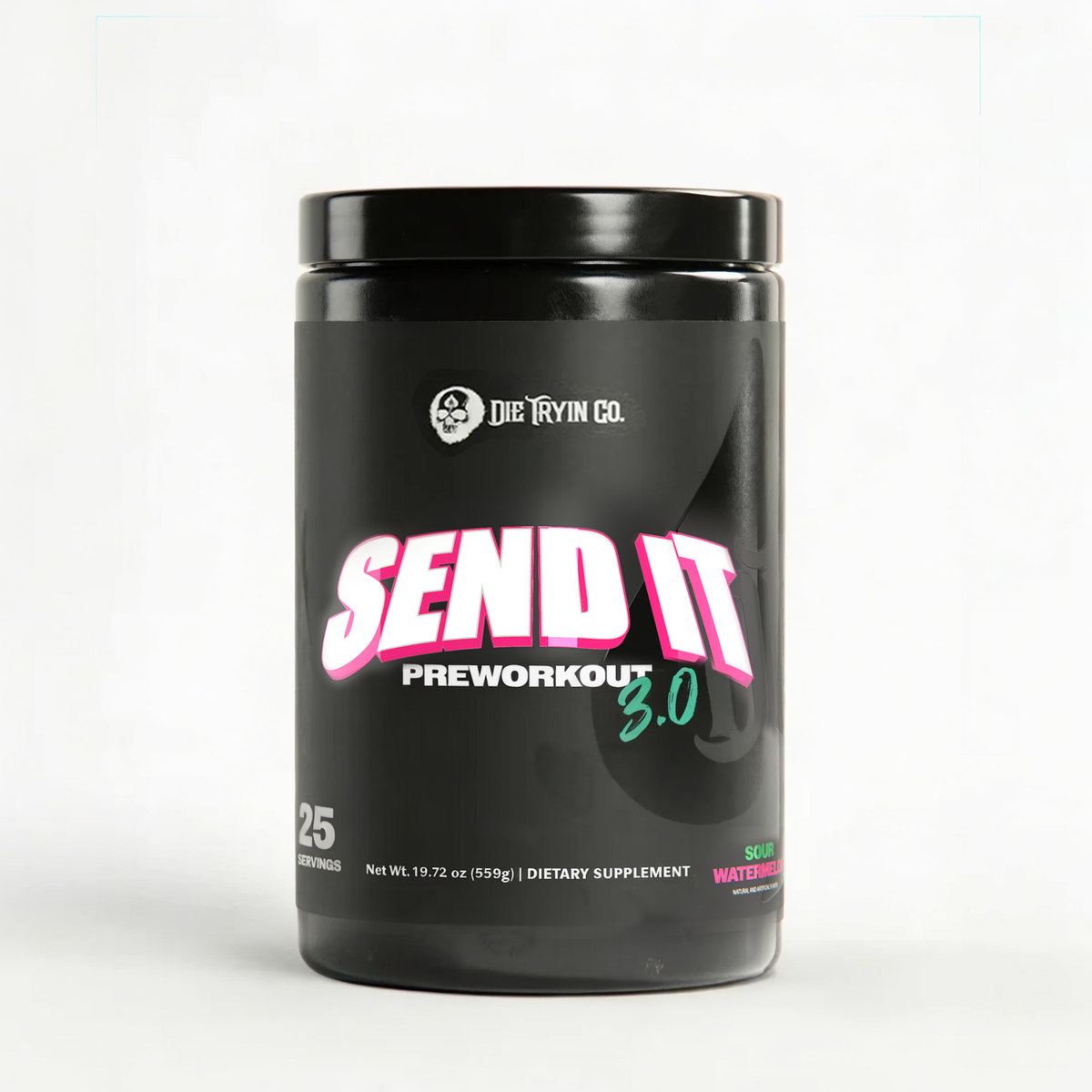
Need the stack to back the volume? SEND IT 3.0 for the pre-workout focus and pump that gets you through 7 sets. Creatine Monohydrate for the training volume that builds delts over time. Or take the quiz for a stack matched to your goals.
ALWAYS FORWARD.
GEAR THAT FITS THIS POST
The products this article actually talks about. Real doses, disclosed labels, veteran owned.

Read more
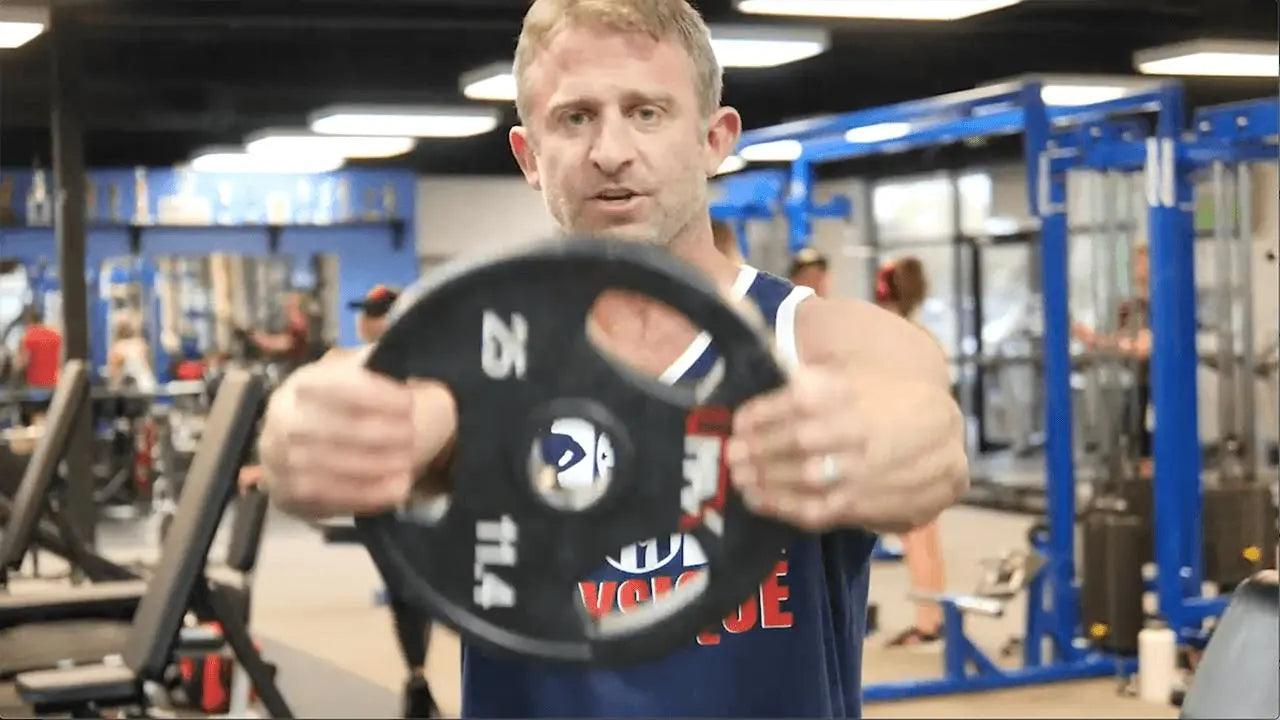
A 30-second technique tip from Chet — swap dumbbells for a plate, squeeze hard at the top, build the front and inner portion of the delt.
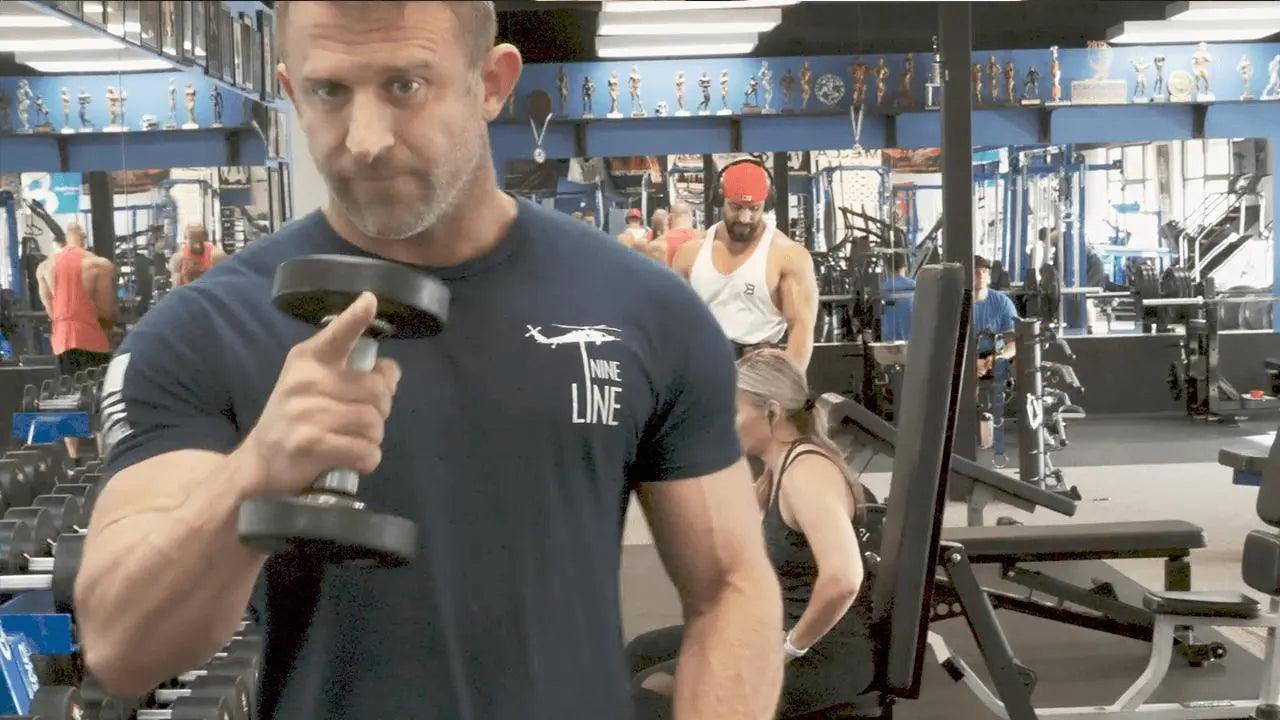
A 60-second technique tip that biases more work onto the medial delt — the side of your shoulder. Costs nothing, builds width.
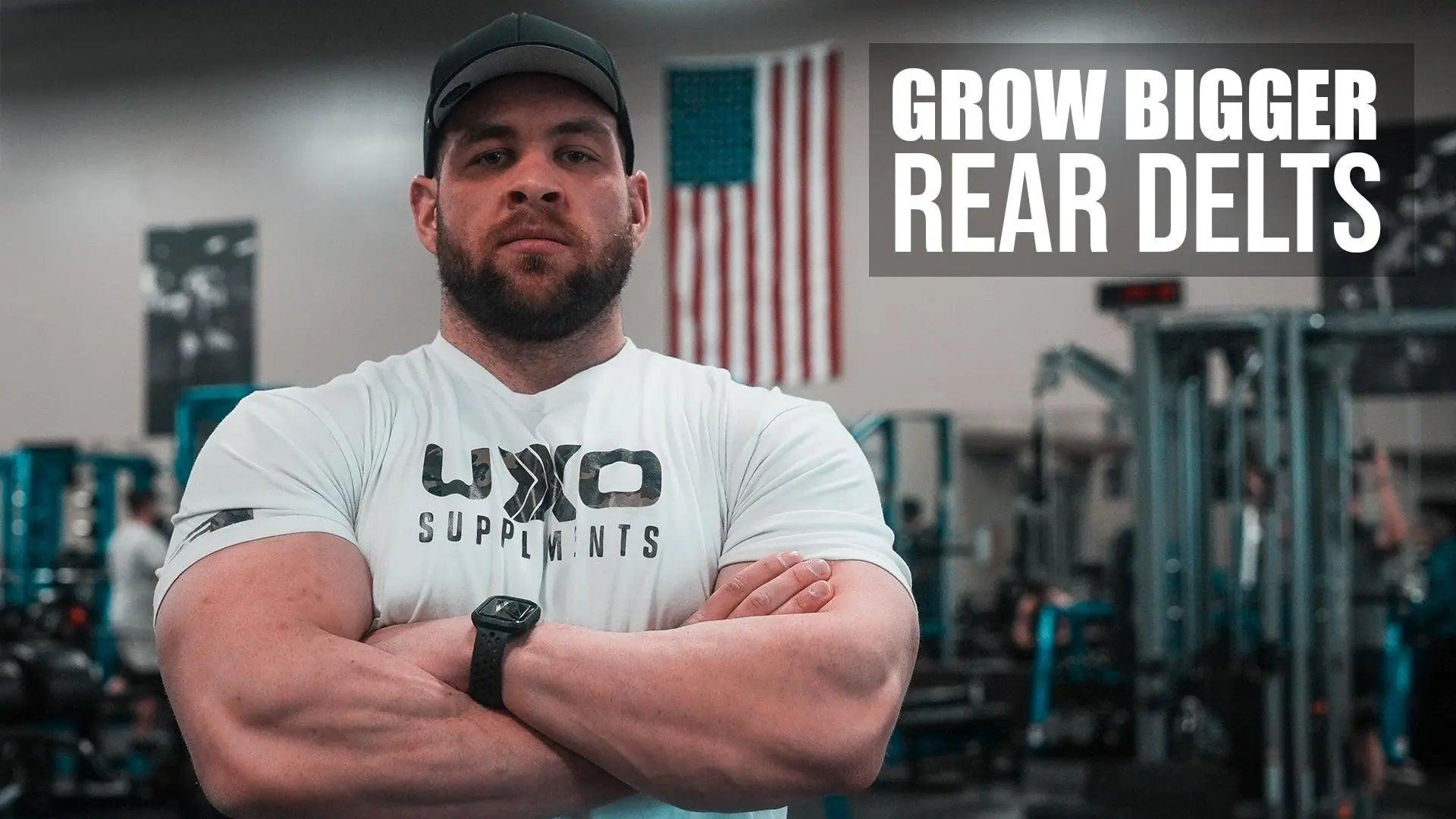
The posterior deltoid is the one head you can't see, can't feel when your traps take over, and barely touch when you press. Here's how to fix all three.
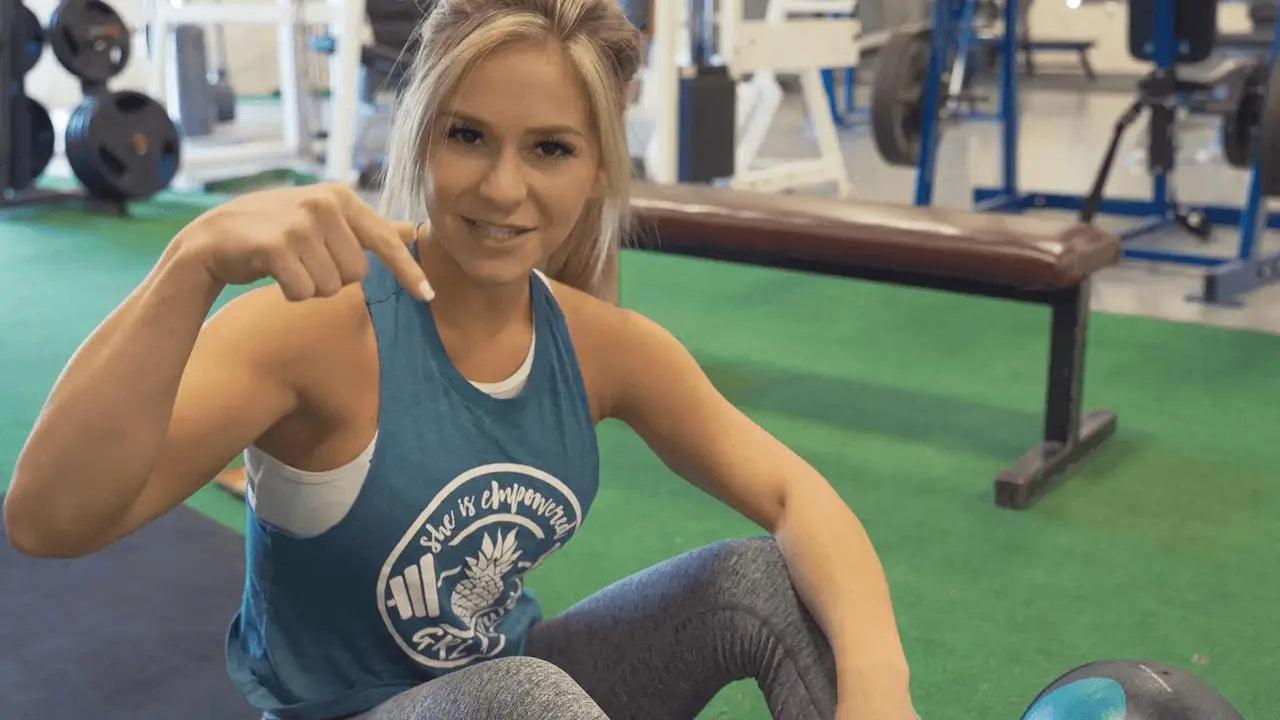
DTC athlete Jenna Fiscus walks you through her complete back day — width, thickness, and the supplement stack she runs alongside it.
There's no perfect split — only the one you'll stick to. PPL vs. upper/lower broken down, plus how to choose the best workout split for your week.
Bigger biceps don't come from endless curls. The real strategy: anatomy, training mistakes, the 4 best exercises (incline curl, hammer, cable, preacher), sets/reps, and recovery.