



Garrett's Pre-Workout Cocktail: A Coach's Real Stack
By Jon Klipstein, U.S. Army Combat Veteran & Founder of Die Tryin Co., and Garrett Ussery, NASM-CPT & 2025 Idaho Cup Overall Champion
Protocol verified by Garrett Ussery from his current training routine. Science reviewed by Onur Oncer, BS Physiology and peer-reviewed published researcher.
THE STACK A COMP COACH ACTUALLY RUNS
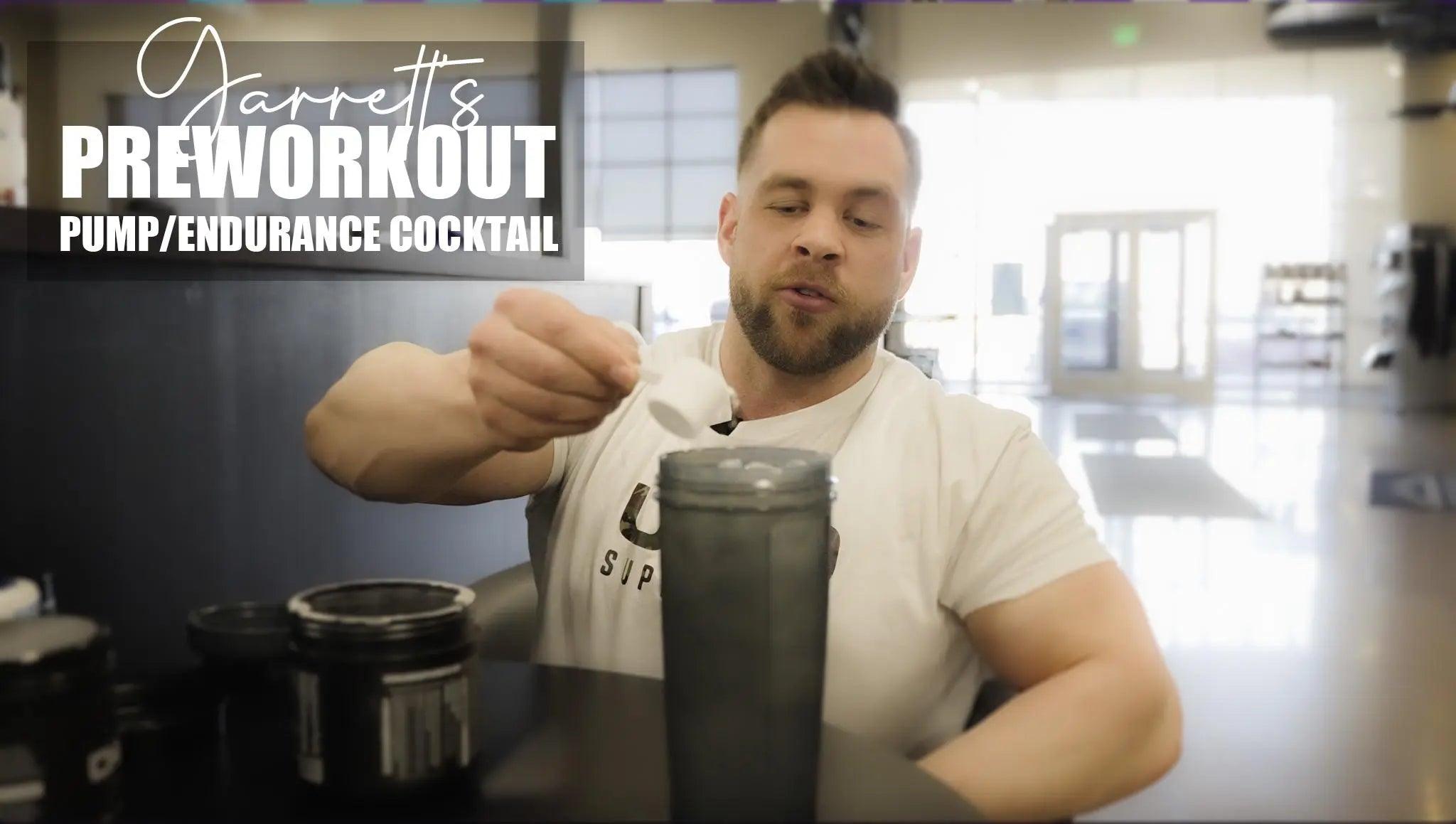
Most pre-workout content online is hype — influencers slamming a scoop, claiming it’s the strongest formula on the planet. This isn’t that. Garrett Ussery is a NASM-certified coach, the 2025 Idaho Cup Overall Champion, and a competition prep trainer at The Mecca Gym in Boise. The video below shows the stack he actually takes before training — followed by the full reasoning, the research, and the “why” behind every choice.
(Heads up: the video shows two of our older SKUs — Pre-V2 and Charlie Mike. The current Die Tryin Co. lineup replaces those with SEND IT 3.0 and our EAAs. Same role, evolved formula. The principle below — switch pre-workouts as needed, sip don’t slam, EAAs intra, daily creatine — doesn’t change.)
What Garrett says in the video (transcript)
“We’re here at The Mecca Gym, going to train some chest today. I’m going to show you a little bit about my supplements that I take while I train. So I take the Pre-V2 — I usually switch between this and the SEND IT just depending on how I’m feeling, but the Blue Frost is one of my favorite flavors. So we do a scoop of this. I like to personally drink mine while I train. I know a lot of people like to take theirs 30 minutes before, but for me personally, I burn through the stimulants too fast and then I crash halfway through, so I just kind of sip on it through my whole workout. All right, next we have Charlie Mike. This is your EAAs — it has the PeakO2 in it and it has a hydration matrix, so this just kind of keeps my endurance going so I don’t burn out too quickly. So Charlie Mike does already have pink Himalayan sea salt in it, but personally I like to add more. Salt is a big part of my diet — every meal. Intra-workout mix gets some salt also — helps with a good pump. Lastly we have creatine. Creatine is a supplement we should be taking every day, not just on rest or not just on training days. Not only does it help the body produce more ATP, but it also helps with brain energy and neuroprotection. So everyday supplement, not just for training days.”
Now the deeper breakdown — why each piece of this stack works the way Garrett says it does.
WHY GARRETT SWITCHES BETWEEN TWO PRE-WORKOUTS
“I usually switch between this and the SEND IT just depending on how I’m feeling.” That single line is more sophisticated than most lifters’ entire supplement protocol.
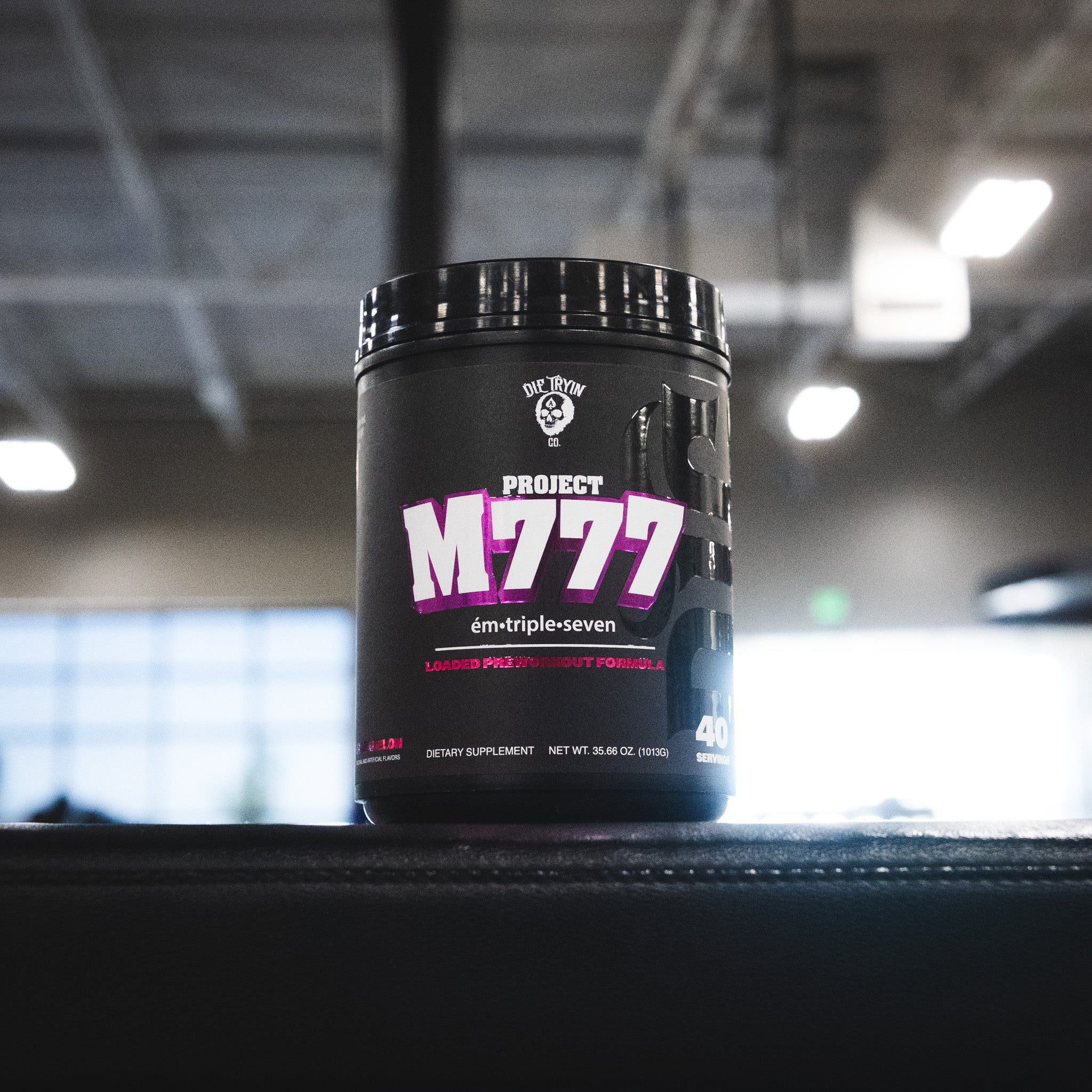
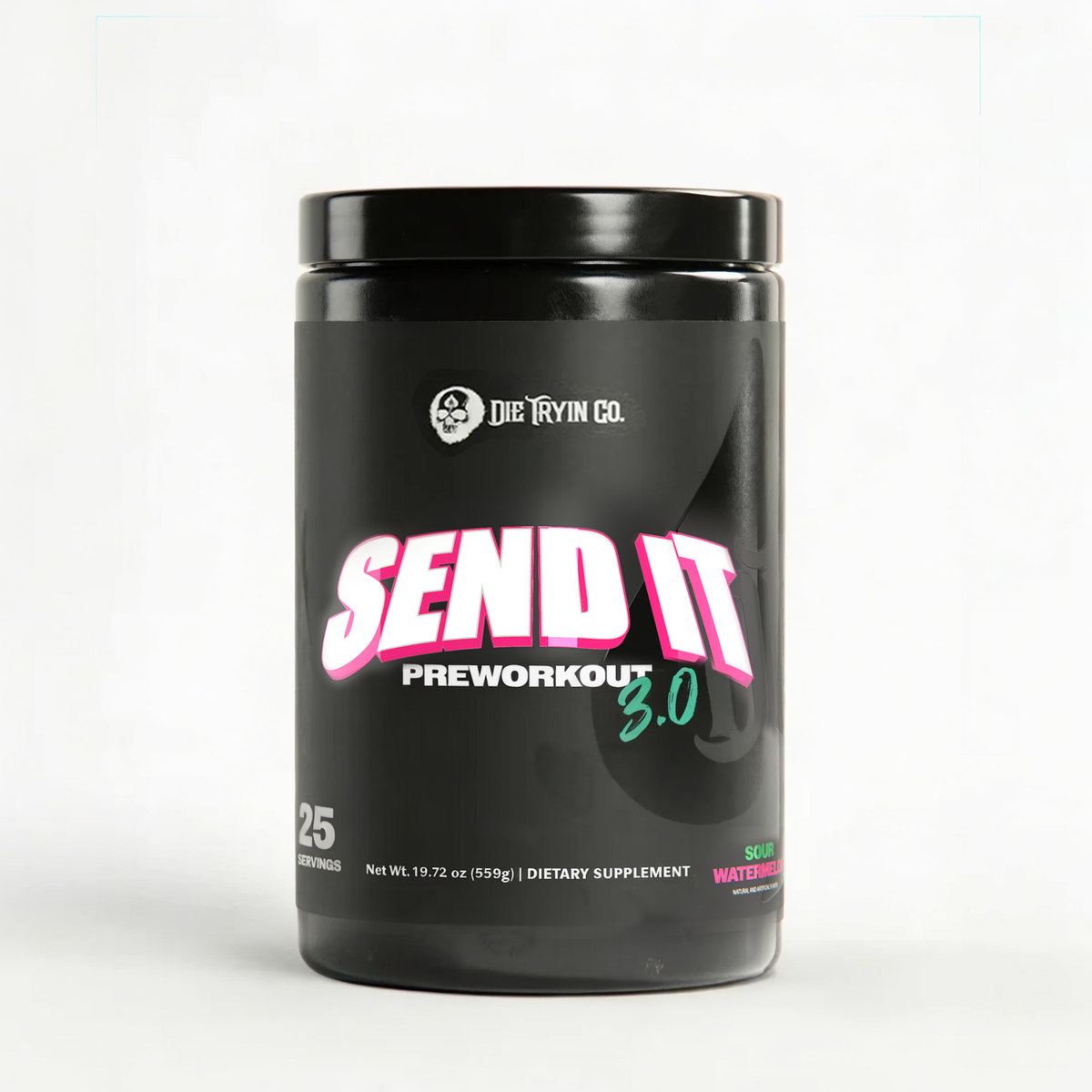
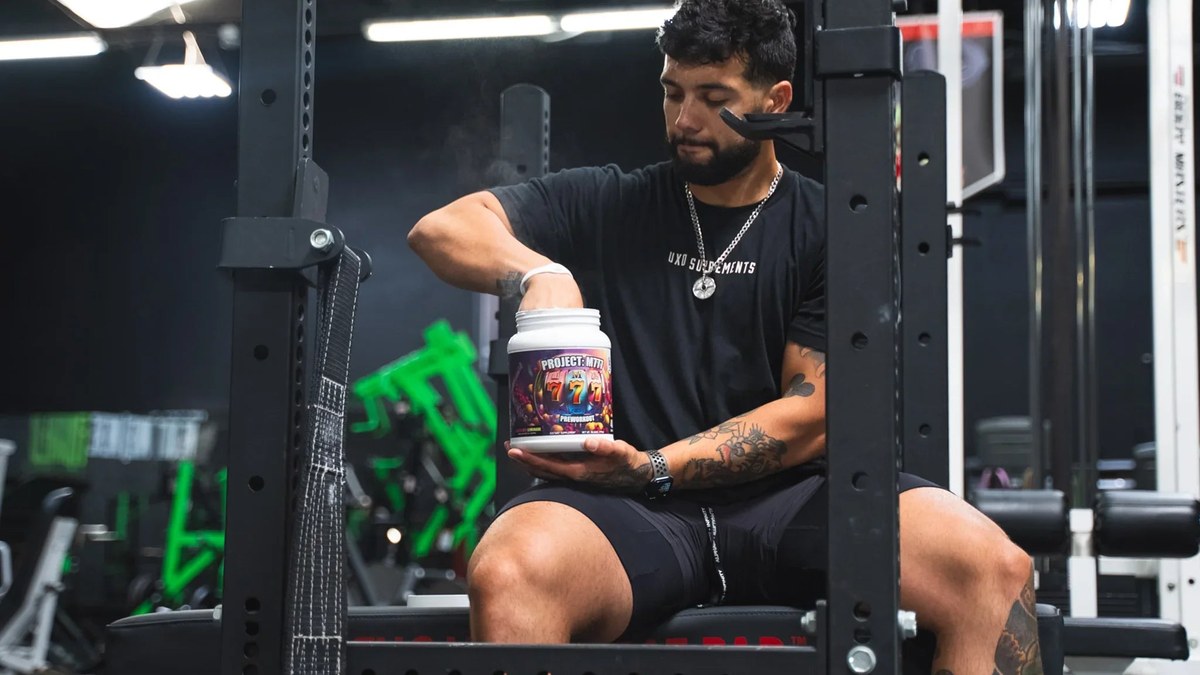
Rotating pre-workouts (or pulsing stim levels) is a real strategy. Caffeine tolerance builds quickly — regular daily users develop blunted alertness and performance response within 1–4 weeks, and the only fix is dose variation or a break. Garrett uses two different formulas to keep the response sharp on the days that matter. On heavy chest, leg, or back days he’ll pull Project M777 (the max-stim formula) or SEND IT 3.0 (daily driver). Easier days, he can scale down or skip. Full breakdown of how to rotate without losing effect: How Often Should You Take Pre-Workout?
WHY HE SIPS INSTEAD OF SLAMMING
“I burn through the stimulants too fast and then I crash halfway through, so I just kind of sip on it through my whole workout.” This is the most overlooked tweak in pre-workout strategy — and it’s rooted in basic pharmacology.
Caffeine has a half-life of roughly 5 hours and peaks in blood plasma 30–60 minutes after ingestion (ISSN caffeine position stand, 2021). Slam a scoop 20 minutes pre-workout and your caffeine peak hits during your warm-ups, then declines through your working sets — the exact opposite of when you need it. Garrett’s sip strategy spreads the dose across 45–75 minutes, which extends the perceived energy window and prevents the “crash on set six” problem. Individual caffeine metabolism varies (fast vs. slow CYP1A2 genotypes), and lifters who burn through stimulants fast benefit most from spreading the dose. If you’ve crashed mid-workout, try sipping for two weeks. More on caffeine timing: Is Pre-Workout Bad for You? covers the safety side; Should You Take Pre-Workout Every Session? covers cycling.
WHY BLUE FROST MATTERS FOR THE SIP METHOD
“Blue Frost is one of my favorite flavors.” This isn’t just personal preference — it’s strategic for the sip approach. Sipping a flavor for 60+ minutes means you need something that doesn’t taste exhausting by minute 40. Sharp, over-sweet pre-workout flavors are fine when you slam them in 10 seconds; they become unbearable over a long workout. Clean profiles like Blue Frost are built for endurance drinking, which is exactly the use case Garrett needs.
WHY EAAS DURING THE WORKOUT (NOT JUST BCAAS AFTER)
“This is your EAAs — it has the PeakO2 in it and it has a hydration matrix, keeps my endurance going so I don’t burn out too quickly.” Three things going on here:
1. EAAs vs. BCAAs. EAAs include all nine essential amino acids your body can’t make on its own. BCAAs are just three of them — leucine, isoleucine, valine. Research consistently shows EAAs trigger muscle protein synthesis more effectively than BCAAs alone, especially when total daily protein intake is in the right range (ISSN nutrient timing position stand, 2017). BCAAs are a 1990s product. Skip them — DTC EAAs delivers all nine.
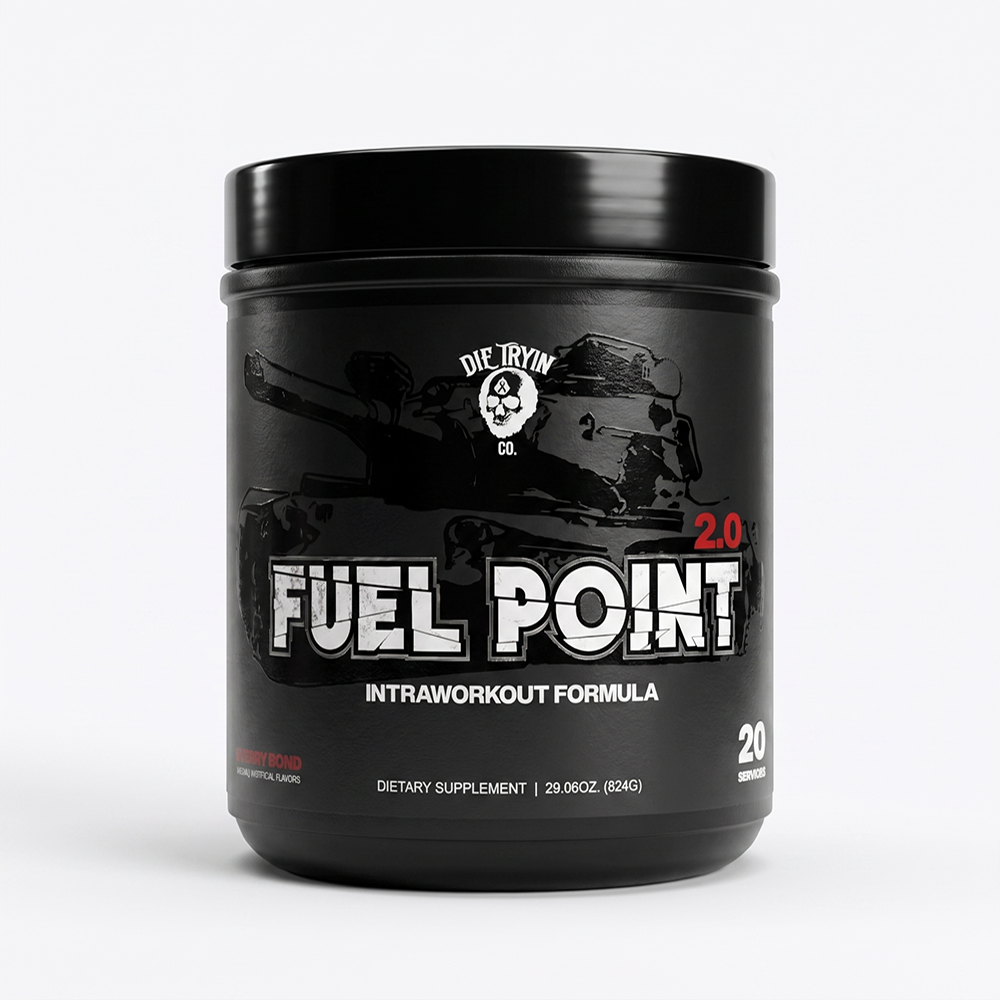
2. PeakO2. A patented blend of six functional mushrooms (Cordyceps, Reishi, King Trumpet, Shiitake, Lion’s Mane, Turkey Tail) studied for endurance, oxygen utilization, and time-to-exhaustion improvements in resistance-trained adults. Standard dose: 4g. Garrett says the older Charlie Mike in the video had PeakO2; Fuel Point 2.0, which replaced our EAAs, does not. The endurance angle is exactly why Garrett notices he “doesn’t burn out too quickly” on the back half of long sessions.
3. The hydration matrix. Intra-workout hydration with sodium, potassium, and supporting electrolytes outperforms plain water for endurance and pump output. Dehydration at even 2% body weight loss drops performance measurably, and the average lifter loses more than that during a hard 60-minute session.
THE SALT TRICK GARRETT ADDS ON TOP
“Charlie Mike does already have pink Himalayan sea salt in it, but personally I like to add more — salt is a big part of my diet, every meal. Intra-workout mix gets some salt also — helps with a good pump.”
Garrett’s sodium-for-pump observation is grounded in real physiology. Sodium pulls water into the muscle cell (intracellular hydration), expands plasma volume, and supports the vasodilation that produces a visible, full pump. Lifters running low-sodium diets often complain that pumps feel flat regardless of how much L-Citrulline or Nitrosigine they take — because the pump-driving ingredient is working, but there’s not enough fluid volume to amplify the effect. A pinch of extra salt in the intra-workout shaker (around ¼ teaspoon, ~575mg sodium) is a free upgrade if your overall sodium intake is moderate. If you’re already loading sodium aggressively, skip it. For the chemistry of pump enhancers, see our deep-dive on VasoDrive-AP and our breakdown of the 4 best pre-workout ingredients.
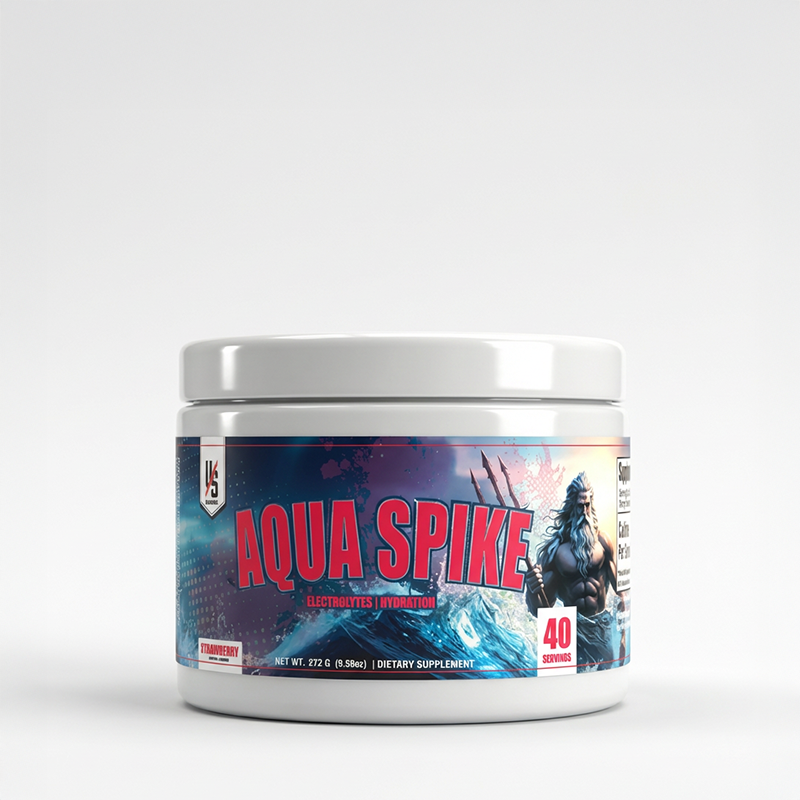
For heavier sweat sessions, Aqua Spike is the more aggressive standalone electrolyte option.
WHY CREATINE IS A DAILY SUPPLEMENT — NOT JUST TRAINING DAYS
“Creatine is a supplement we should be taking every day, not just on rest or not just on training days.” Daily is the simplest way to keep your muscles full of creatine.
Creatine works through muscle saturation, not acute pre-workout effects. To get the performance benefit, intramuscular creatine stores need to stay topped up. That means roughly 3–5g per day (ISSN creatine position stand, 2017). Skip a few days and stores start to drop. Studies that gave creatine only on training days got mixed results, so take it every day, rest days included. The ISSN’s comprehensive review concluded creatine monohydrate is “the most effective ergogenic nutritional supplement currently available” for high-intensity exercise — but only when used consistently.
Garrett takes DTC Creatine — standalone micronized monohydrate, no proprietary marketing. 5g daily. For more on why monohydrate beats every “novel form” on the market: Creatine Monohydrate vs. HCL. For timing: When to Take Creatine.
THE BRAIN SIDE: ATP AND NEUROPROTECTION
“Not only does it help the body produce more ATP, but it also helps with brain energy and neuroprotection.” Both halves of that statement check out.
Creatine’s primary mechanism is regenerating ATP — the cellular currency that fuels muscle contractions, especially in the 0–10 second “phosphocreatine system” window that dominates strength work. More phosphocreatine = more reps before fatigue. That’s why creatine produces measurable strength gains in nearly every population studied.
The brain effects are newer research but increasingly well-established. Creatine crosses the blood-brain barrier and supports cerebral energy metabolism. Studies link supplementation to improvements in mental fatigue, working memory under sleep deprivation, and cognitive function in older adults. Animal models also show neuroprotective effects in traumatic brain injury and neurodegenerative conditions. This is why Garrett keeps it daily even during cuts — the brain benefit doesn’t turn off when fat loss starts. Full breakdown on creatine safety + benefits: Creatine Myths Busted.
THE STACK SUMMARY: WHY THESE THREE TOGETHER
Three supplements, three distinct jobs no other supplement in the stack does:
- Pre-workout (sipped): acute energy, focus, pump, endurance — spread across the session to avoid the crash
- EAAs intra-workout: muscle protein support during training + electrolytes and hydration for endurance
- Daily creatine: chronic strength, ATP regeneration, recovery, brain energy, and neuroprotection from year-round saturation
No filler. No 12-supplement “maximum performance stack” that costs $300 a month. Three supplements, each one doing a job the others can’t.
WHEN GARRETT ADJUSTS THE STACK
Late-night training: Swap SEND IT 3.0 for Red Dot (stim-free pump + focus) so caffeine doesn’t wreck sleep. Long-duration sessions (90+ minutes): Add Fuel Point to the intra-workout shaker for carb fuel. Last eight weeks of comp prep: Same stack, keep creatine in — the “cut creatine for water weight” instinct is wrong. Intracellular water is the look you want on stage; cosmetic dryness happens during the actual peak week, not from dropping creatine four weeks out.
FAQ
Should I sip pre-workout like Garrett or take it 30 minutes before?
Both work. Up-front dosing peaks caffeine 45–60 minutes after intake. Sipping spreads the dose so caffeine never peaks and never crashes. If you train 45 minutes or less, take it before. If you train 60+ minutes and you’ve crashed mid-workout, sip for two weeks and compare.
Why EAAs instead of BCAAs?
EAAs include all nine essential amino acids; BCAAs include only three. EAAs trigger muscle protein synthesis far more effectively. BCAAs are a 1990s product — skip them.
Do I really need creatine on rest days?
Yes. Creatine works through saturation, not acute pre-workout effect. Daily intake of 3–5g keeps muscle stores topped up.
How much salt should I add to my intra-workout shaker?
Start with ¼ teaspoon (~575mg sodium). Bump to ½ if you sweat heavy or cramp. Skip entirely if you’re on a low-sodium diet or have blood-pressure concerns — always check with your doctor on sodium load.
What is PeakO2 and does it actually do anything?
A blend of six functional mushrooms (Cordyceps, Reishi, King Trumpet, Shiitake, Lion’s Mane, Turkey Tail) studied for endurance and oxygen-utilization benefits. Multiple human trials show improvements in time-to-exhaustion and VO2 max at the 4g dose. PeakO2 is not in the current Fuel Point 2.0 formula.
Can I take all three of these on the same day?
Yes — that’s the point of the stack. Pre-workout before/during training, EAAs intra-workout, creatine any time (morning is easy). At a normal 5 g of creatine a day, the caffeine is not a concern; that worry comes from creatine loading studies.
Why does Garrett switch between pre-workouts instead of using one?
Rotating pre-workouts prevents caffeine tolerance from blunting the response. Stim formulas (M777, SEND IT 3.0) get used on big training days; lighter or stim-free options on easier days. Keeps the response sharp on the days that matter.
READY TO GEAR UP?
Run the same stack Garrett runs before training at Mecca:
- SEND IT 3.0 — daily-driver pre-workout, sipped not slammed
- EAAs — intra-workout: all 9 essential amino acids plus electrolytes for hydration, now inside Fuel Point 2.0
- Creatine — standalone micronized monohydrate, daily
- Red Dot — pump + focus without caffeine for late training
- Aqua Spike — heavy-sweat electrolyte replacement
Not sure where to start? Take the DTC supplement quiz — two minutes, dialed-in stack recommendation, straight to the point. Or go deeper with the Ultimate Guide to Pre-Workout.
ALWAYS FORWARD.
GEAR THAT FITS THIS POST
The products this article actually talks about. Real doses, disclosed labels, veteran owned.


Read more
How often you take pre-workout matters more than how big the scoop is. Real framework for frequency, timing, signs you're overdoing it, and how to cycle the formula to keep it working long-term.
A well-dosed pre-workout is safe for most healthy adults — but the wrong formula causes the side effects everyone fears. Crash, addiction, sensitive stomach, cardiovascular concerns: which are real...
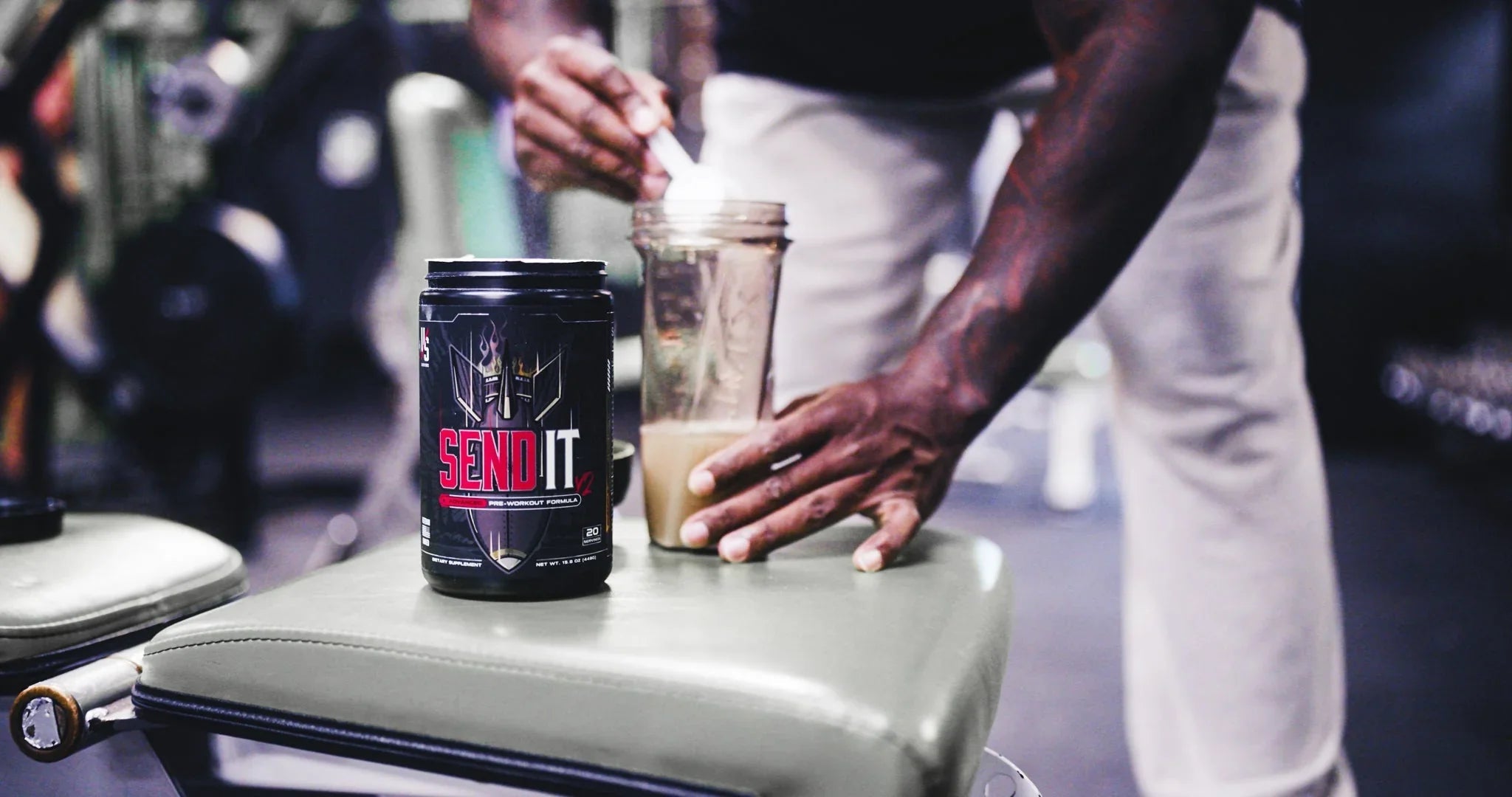
Pre-workout every day — yes or no? The honest answer depends on caffeine dose, training week, and whether you cycle. The smarter framework: match the formula to the day.
The patented, casein-derived pump ingredient inside Project M777 — how VasoDrive-AP drives blood flow, and what the research actually says.
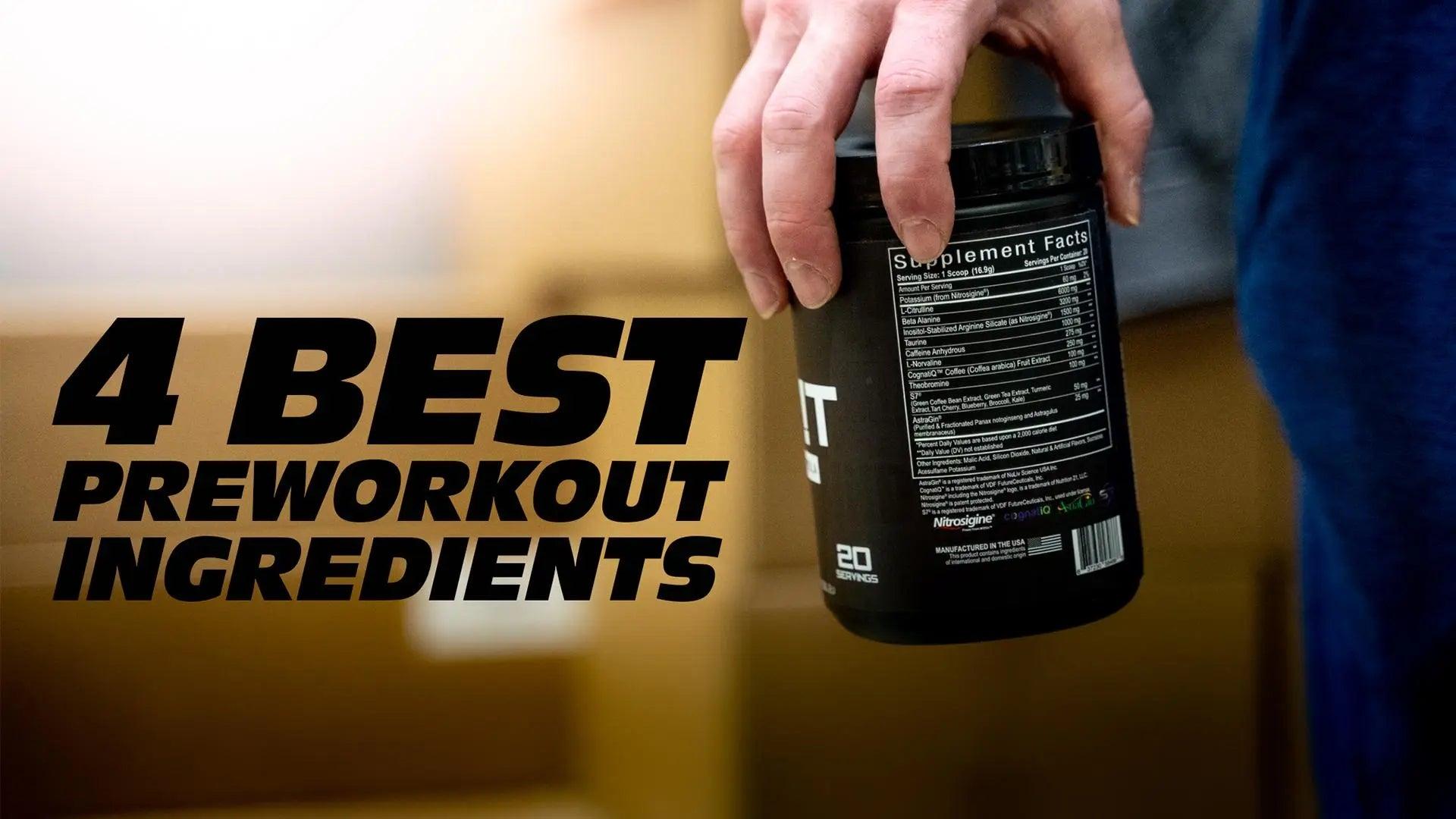
Strip away the marketing — these are the 4 ingredients that actually drive pre-workout performance: L-Citrulline, Beta-Alanine, Nitrosigine®, CognatiQ®. Plus what to avoid and why dose matters.

The supplement industry sells creatine HCL as an upgrade. The honest answer: monohydrate is the proven, better-value gold standard. Here's the real comparison.