





Fitness & Back to School: Why Training Builds the Brain
By Jon Klipstein, U.S. Army Combat Veteran & Founder of Die Tryin Co.
Science reviewed by Onur Oncer, BS Physiology and peer-reviewed published researcher.
YOUR STUDY TIME IS WORTHLESS IF YOU DON’T TRAIN
Listen up. If you’re heading back to school — or sending a kid back — you’re probably thinking about books, schedules, supplies. The thing that’ll actually decide how this year goes? Reps. Movement. Time under the bar or on the treadmill before the textbook ever opens.
The military figured this out decades ago. Soldiers train physically because the body and the brain don’t separate. Performance is one system. The same applies to a fifth-grader struggling with math, a vet using the GI Bill on a tough semester, or anyone trying to focus and retain information at any age.
The research is clean. Exercise builds the brain — literally. Here’s how.
WHAT THE RESEARCH ACTUALLY SAYS
The American College of Sports Medicine and CDC ran a systematic review in 2016 looking at physical activity and academic performance in school-aged kids. The conclusion was about as unambiguous as it gets: physical activity has positive effects on cognitive function and academic achievement. Not “might.” Not “sometimes.” Does.
Same direction in adults. A landmark study by Erickson et al. found that a year of aerobic exercise increased hippocampal volume by 2% in older adults — effectively reversing 1-2 years of age-related brain shrinkage. The hippocampus is the part of the brain that runs memory and learning. They got bigger ones because they moved.
Translation: every minute you spend training is a minute you’re building the actual hardware your brain uses to study, focus, retain information, and perform on the test.
HOW EXERCISE BUILDS THE BRAIN
Three mechanisms do most of the heavy lifting.
BDNF (Brain-Derived Neurotrophic Factor). Think of BDNF as fertilizer for neurons. Exercise — especially aerobic and high-intensity work — spikes BDNF release. Higher BDNF = better learning, better memory consolidation, faster pattern recognition. It’s why you can’t remember a math formula at 2 PM but you can after a 30-minute lift.
Neurogenesis. Your brain is supposed to be done growing in adulthood. It isn’t. The hippocampus continues producing new neurons throughout life — a process called neurogenesis — and exercise is one of the most reliable triggers for it. New neurons = new pathways = better learning capacity.
Blood flow and oxygen delivery. Exercise increases cerebral blood flow. More oxygen and glucose to the brain means sharper concentration, faster processing, less mental fatigue during long study sessions. This is the most immediate effect — you feel it within hours of training, not weeks.
THE PROTOCOL — HOW MUCH, WHAT KIND, WHEN
You don’t need to be in the gym four hours a day. The research says the floor is much lower than people think — the same minimum effective dose framework that runs the rest of our training philosophy applies here too.
| FREQUENCY | DURATION | TYPE |
|---|---|---|
| Minimum | 20–30 minutes/day | Moderate-intensity cardio (brisk walk, jog, bike) before studying |
| Better | 45–60 minutes | Mix of resistance training (3x/week) + moderate cardio (3x/week) |
| Best | 60–90 minutes | Structured strength program 4-5 days + 2-3 days of conditioning, with daily walking on top |
Timing matters too. If you train BEFORE you study, you get acute benefits — sharper focus, better encoding of new information, less mental fatigue. If you train AFTER you study, you consolidate what you learned more effectively in the hours that follow. Both work. The bad option is “I’ll skip the gym today because I have to study.” That’s the trade that costs you on both ends.
NUTRITION + SUPPLEMENTS — THE STACK FOR FOCUS
Training is the engine. Nutrition is the fuel. A brain running on fast food and energy drinks isn’t going to perform regardless of how much you trained that day.
The non-negotiables. Protein at every meal (0.7–1g per pound of bodyweight daily for serious athletes), real food carbohydrates around training, omega-3 fatty acids for membrane health and neurotransmitter function, and enough water to actually be hydrated. If those four are dialed in, you’ve already won 80% of the cognitive performance battle.
Where supplements support the work.
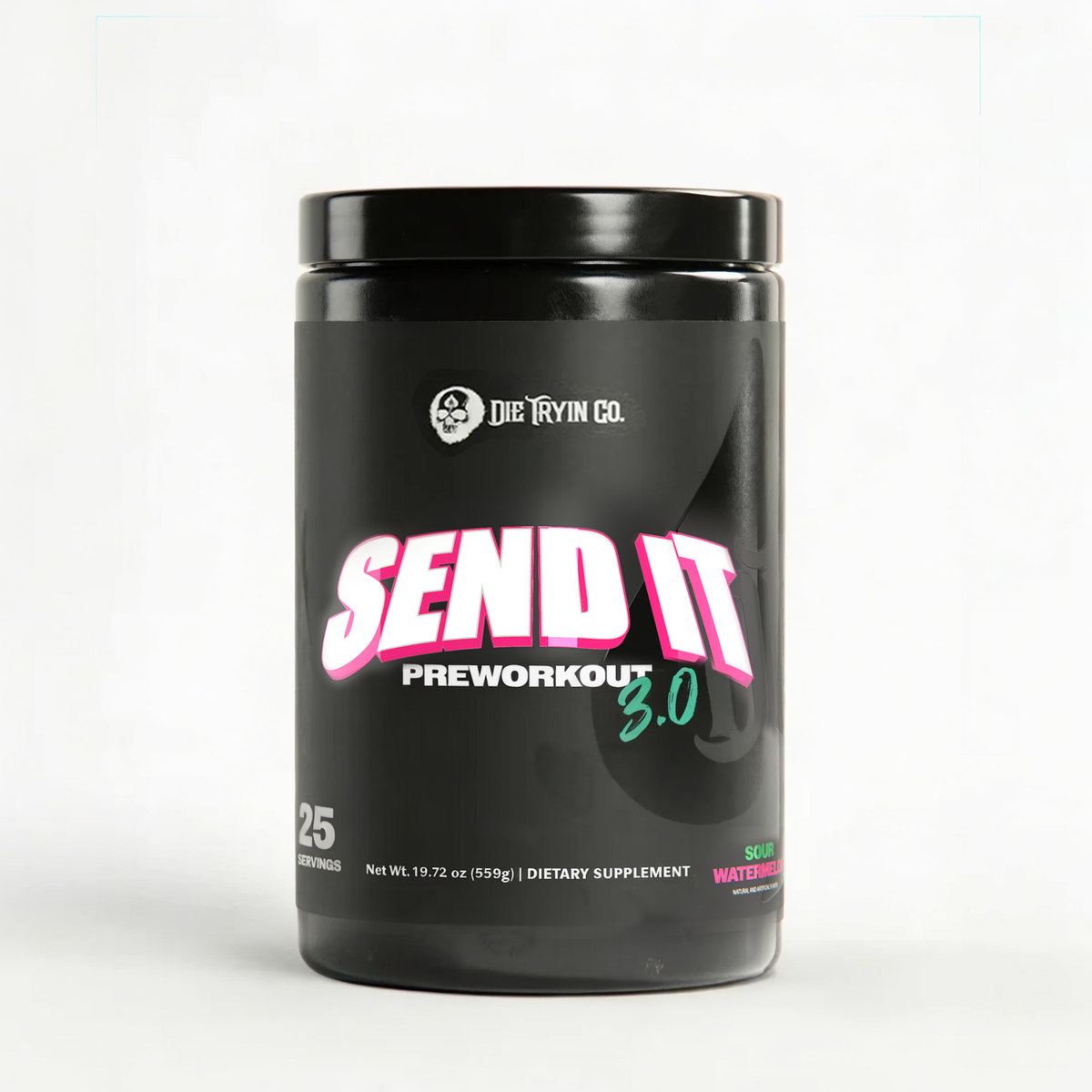
- SEND IT 3.0 for pre-training. Contains Alpha-GPC, L-Tyrosine, and CognatiQ (whole coffee fruit extract supporting BDNF, the rebranded version of the older NeuroFactor) — nootropic compounds with peer-reviewed research on cognitive function and mind-muscle connection. Real doses, not sprinkles.
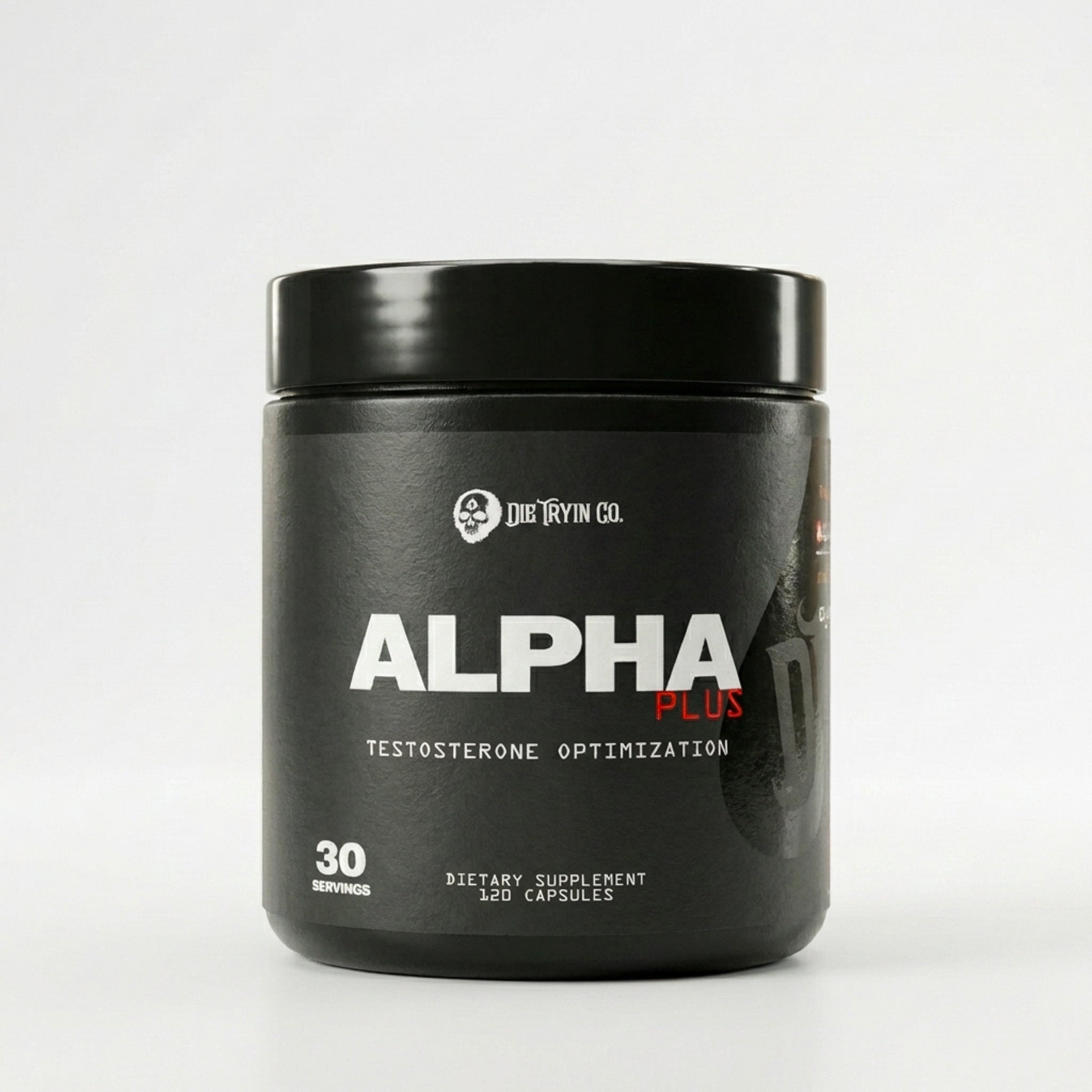
- Alpha+ for adult men — testosterone optimization affects energy, focus, mood, and cognitive drive. Particularly relevant for vets returning to school or any adult balancing work, training, and studying.
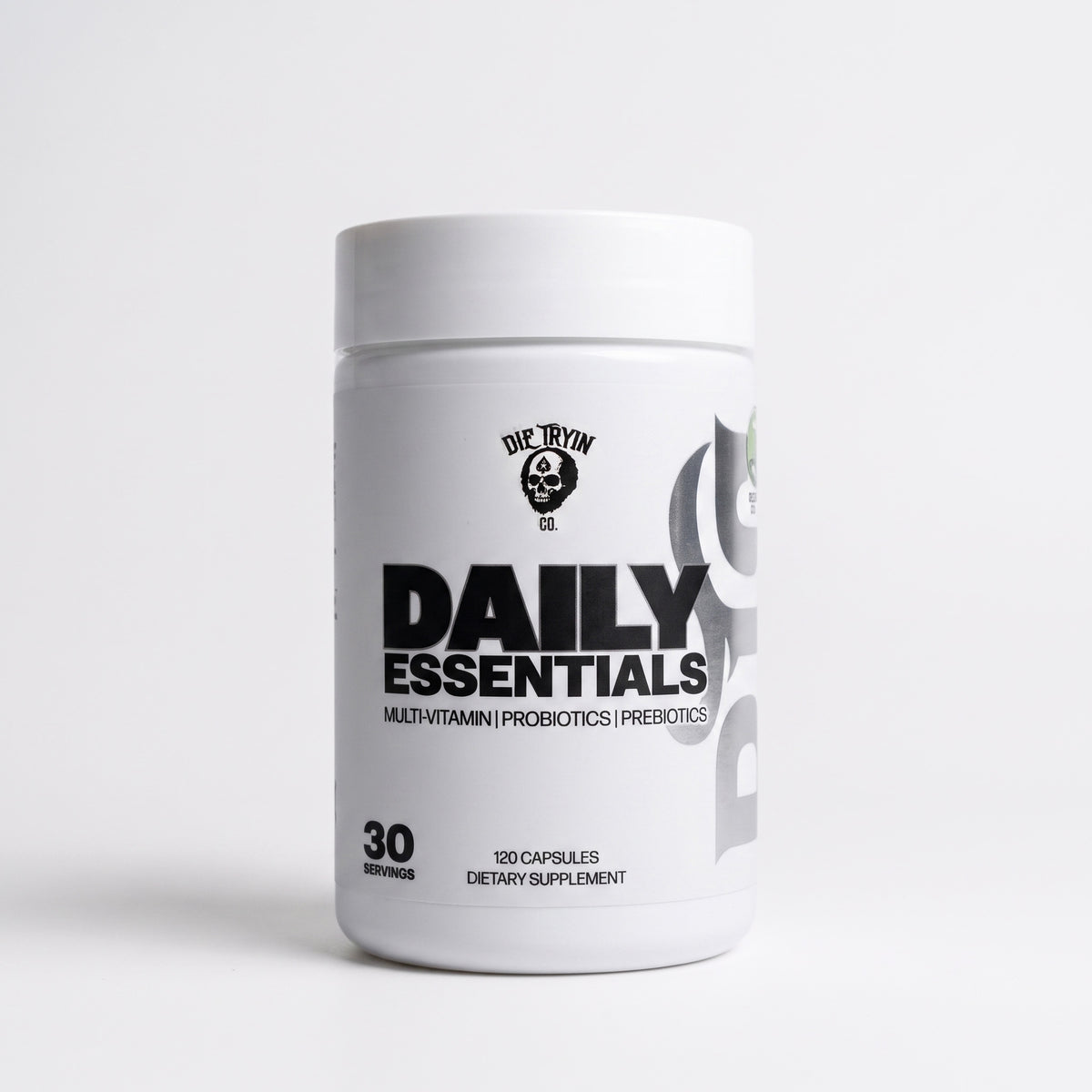
- Daily Essentials covers the micronutrient gaps that affect cognition (B-vitamins, magnesium, vitamin D), plus a gut-health stack that affects the gut-brain axis.
- Ghillie Greens if you’re not eating enough actual greens — nutrient density supports the systemic health that brain function depends on.
THE COMBAT-VET ANGLE — PARENTS AND VETS USING THE GI BILL
This one’s personal. Vets returning to school on the GI Bill are running a hard semester on top of whatever residual stress they brought back. Adult learners juggling family, jobs, and coursework are doing the same. The chronic-stress angle here is real — we covered the cortisol piece in depth in our balancing cortisol post.
The temptation in both cases is to cut training time to make room for studying. That’s the trade that ends with worse grades, worse mental health, and worse outcomes. Training is what gives you the bandwidth to do the rest of the work. Cut sleep before you cut training. Cut Netflix before you cut training. Don’t cut training to study harder. Motivation is temporary; discipline is built — and discipline is what gets you through a 16-week semester or a 4-year program.
For parents: model it. Kids who see their parents prioritize training learn it’s non-negotiable. Get them moving 20-30 minutes a day before homework. Watch the grades. Watch the behavior. Watch them sleep better.
FAQ
Does exercise really improve academic performance?
Yes. The American College of Sports Medicine and CDC consensus position is that physical activity has positive effects on cognitive function and academic achievement in school-aged children, with similar effects documented in adults. Multiple mechanisms drive this: BDNF release, neurogenesis, and improved cerebral blood flow.
How much exercise is enough?
The floor is roughly 20-30 minutes of moderate-intensity activity per day. More is better up to a point. For optimal cognitive benefit, a mix of resistance training and cardio across the week works best.
Should I exercise before or after studying?
Both work. Exercise BEFORE studying improves focus and encoding (better at taking new info in). Exercise AFTER studying improves consolidation (better at locking learned info into memory). The worst option is skipping it.
Does this apply to college students and adults?
Yes, all ages. Adult studies (including Erickson’s landmark 2011 hippocampal-volume paper) show similar cognitive benefits. The brain doesn’t stop responding to exercise after high school.
What if I’m too tired to train AND study?
Counterintuitive answer: training will reduce your fatigue, not add to it. Exercise increases energy levels via improved sleep quality, better circulation, and BDNF/mood effects. Skipping training to “save energy” usually backfires.
What’s the best workout for cognitive performance?
Mixed-modality training. Resistance training drives strength + hormonal benefits (testosterone, growth hormone). Aerobic work drives BDNF and cardiovascular health. Doing both throughout the week beats either alone.
Do supplements really help with focus?
Well-formulated ones with clinical doses can, yes. Alpha-GPC, L-Tyrosine, and CognatiQ have peer-reviewed research supporting cognitive function. Proprietary “focus blends” with hidden doses generally don’t. Read the label.
READY TO GEAR UP?
Back to school. Back to work. Back to whatever you’re training for next. The body trains the brain. Build both.
- SEND IT 3.0 — daily-driver pre-workout with clinical-dose nootropics (Alpha-GPC, L-Tyrosine, and CognatiQ whole coffee fruit extract for BDNF support)
- Alpha+ — testosterone optimization for adult men managing work, training, and study load
- Daily Essentials — chelated multi + gut-health stack that supports the systemic baseline cognition depends on
- Ghillie Greens — nutrient density for anyone not eating enough actual produce
Not sure where to start? Take the quiz — we’ll point you at the right formula in under a minute.
For the deeper read on training discipline and how to build it into the rest of your life, our Ultimate Guide to Training Mindset covers the framework.
ALWAYS FORWARD.
GEAR THAT FITS THIS POST
The products this article actually talks about. Real doses, disclosed labels, veteran owned.

Read more
Overtraining doesn't build faster results — it builds injuries and burnout. The minimum effective dose principle for training, recovery, and smart supplementation.
Most pre-workouts put 500 mg of L-Tyrosine on the label and call it a focus formula. Here's where 7 grams actually comes from, and what it really does.
Chronic high cortisol breaks sleep, drives belly fat, and tanks recovery. The honest physiology + evidence-based strategies to normalize HPA axis function.

Motivation fades. Discipline doesn’t.If progress only happened when you felt inspired, everyone would be winning. The truth is, real change is built in the moments when showing up feels inconvenien...

The honest playbook for building the discipline that actually lasts. Motivation fails — discipline gets built. Here's how.
Your gut lining runs the same creatine energy system as your muscles. Here is what the research shows on stomach upset, IBS, colitis and leaky gut, and exactly where the human evidence stops.